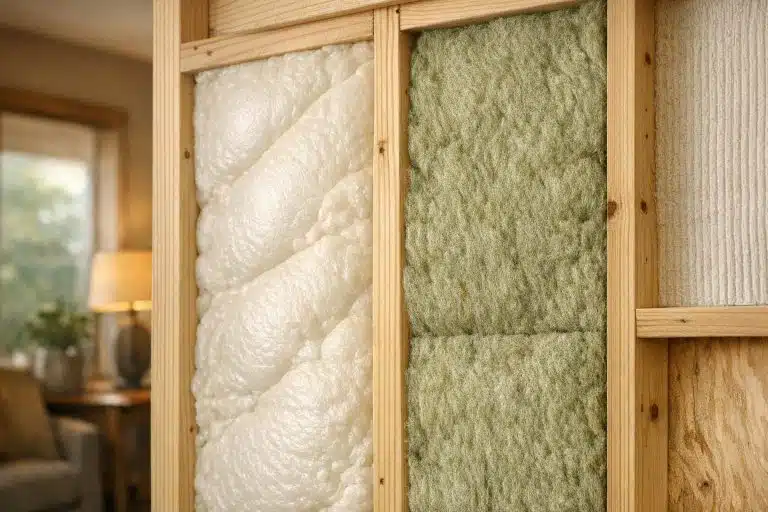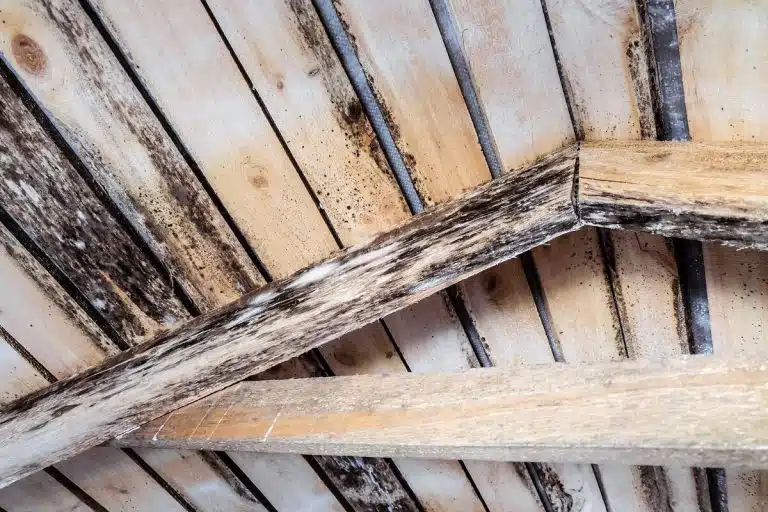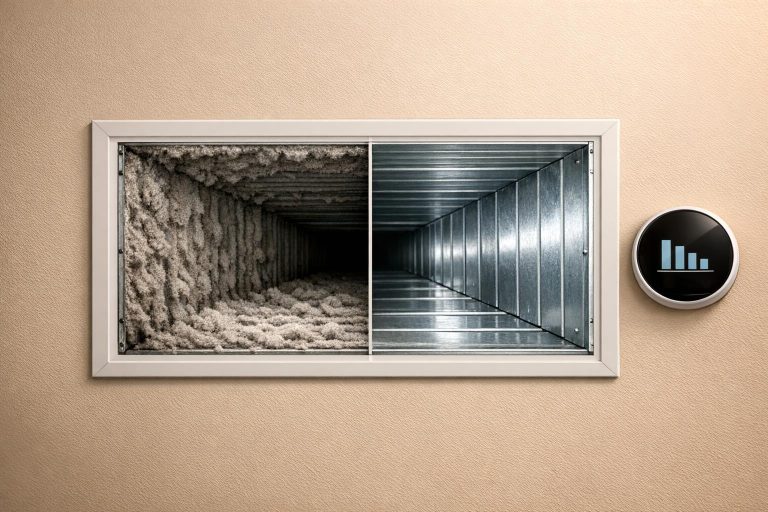

Choosing the right air duct material impacts HVAC performance, energy costs, and indoor air quality. Each material offers distinct benefits and drawbacks, making it essential to match your choice with your system’s needs. Here’s a quick breakdown of the five most common air duct materials:
- Sheet Metal: Durable, mold-resistant, and efficient but requires professional installation and can be noisy.
- Flexible Ducts: Affordable and easy to install in tight spaces but less durable and harder to clean.
- Fiberboard: Budget-friendly with built-in insulation but prone to damage and unsuitable for wet environments.
- Fiberglass: Combines insulation and sound control but may degrade over time, requiring careful maintenance.
- PVC: Moisture-resistant and long-lasting in humid areas but unsuitable for high-heat systems.
Key takeaway: The best material depends on your HVAC setup, budget, and environmental conditions. Regular maintenance, like air duct cleaning services, ensures long-term efficiency and better air quality.
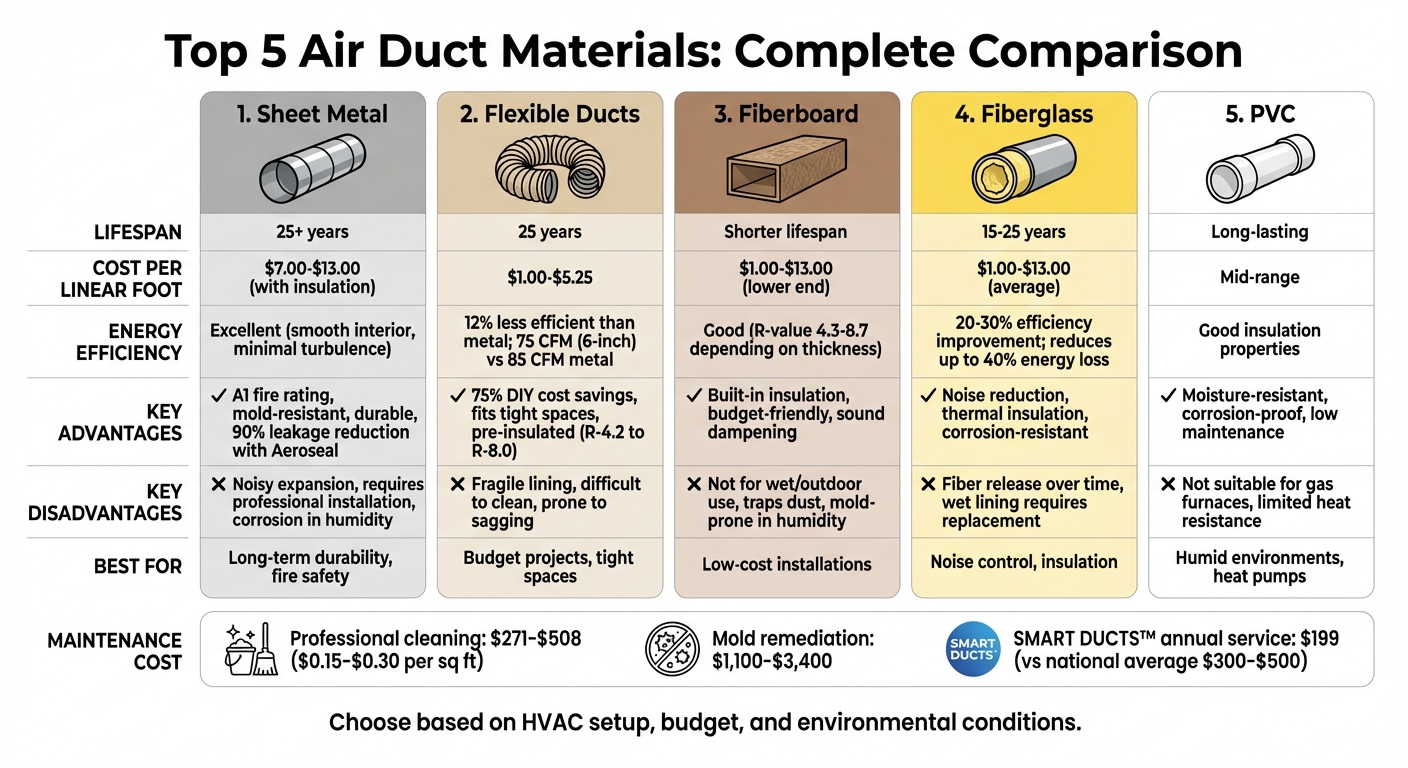
Air Duct Materials Comparison: Pros, Cons, Cost and Lifespan
Flex vs. Metal vs. Duct Board: Differences and Use Cases
sbb-itb-8db64ac
1. Sheet Metal Ducts
Sheet metal ducts, made from materials like galvanized steel, stainless steel, or aluminum, are a dependable choice for both residential and commercial HVAC systems. Their smooth, non-porous interiors allow for efficient airflow while also resisting mold and fungal growth, which helps maintain better indoor air quality. Let’s take a closer look at how these ducts perform in terms of durability, energy efficiency, installation, cost, and maintenance.
Durability
One of the standout features of sheet metal ducts is their impressive durability. Galvanized steel ducts, for example, can last over 25 years with proper upkeep. Their rigid structure makes them resistant to physical damage and earns them an A1 fire rating, meaning they are non-combustible and help slow fire spread. For more demanding environments prone to corrosion, stainless steel is a better option, though it comes with a higher price tag.
Energy Efficiency
When it comes to energy efficiency, sheet metal ducts perform exceptionally well. Their smooth interior reduces turbulence, ensuring better airflow. However, this efficiency hinges on proper sealing and insulation. Technologies like Aeroseal can significantly enhance performance by cutting duct leakage by up to 90%. Without these measures, energy loss could undermine their benefits.
Installation Complexity
The rigidity of sheet metal requires professional installation, especially for stainless steel, which can be challenging to work with in tight spaces. Aluminum, while more flexible, still demands specialized tools for longer duct runs. Poor installation can lead to issues like air leaks and moisture problems, so hiring experienced professionals is essential.
Cost
The cost of sheet metal ducts varies depending on the material. Galvanized steel is often the most affordable option for residential systems. Stainless steel, while more expensive, is ideal for commercial or high-end projects due to its superior durability. Aluminum tends to fall between the two in price but is generally more costly than non-metal alternatives. One downside to sheet metal ducts is the potential for expansion and contraction noises, although proper insulation and sealing can minimize this.
Maintenance Requirements
To keep galvanized steel ducts in good condition, it’s important to control indoor humidity and schedule regular HVAC maintenance and installation services. This includes replacing air filters and ensuring outdoor condenser units remain free of debris, as high humidity can accelerate rusting. In areas with consistently high humidity, upgrading to stainless steel or aluminum may be a better choice since uncoated galvanized steel is more prone to corrosion in such conditions.
2. Flexible Ducts
Flexible ducts are made with a wire coil encased in a thin polymer skin, which includes built-in fiberglass insulation and an outer protective layer. This design makes them a cost-effective choice for HVAC systems, with material costs ranging from $1.00 to $5.25 per linear foot – about half the price of insulated metal ductwork. Their affordability and ability to fit into tight spaces like attics and crawl spaces make them a popular option for residential use, especially where rigid metal ducts can’t be installed.
Durability
One major drawback of flexible ducts is their delicate construction. The thin polymer lining can be easily punctured by sharp objects, and if not properly supported, the ducts can sag over time, significantly reducing airflow. On average, flexible ducts have a lifespan of about 25 years, according to Rene Langer, Senior Comfort Specialist at PICKHVAC.
Energy Efficiency
Flexible ducts are less efficient than their metal counterparts because their ridged interior creates turbulence and friction, which reduces airflow by about 12% compared to smooth metal ducts of the same size. For instance, a 6-inch flexible duct delivers approximately 75 CFM, while a 6-inch metal duct delivers around 85 CFM. To address this, contractors often recommend increasing the duct diameter by 1 inch when switching from metal to flexible ducting. However, installation errors – like kinks, over-compression, or improper hanger placement – can further restrict airflow, making precision during installation critical.
Installation Complexity
The flexibility of these ducts allows them to bend around obstacles and fit into spaces that rigid metal ducts can’t navigate. This adaptability often leads to significant labor savings, with DIY installations potentially cutting total costs by up to 75% compared to professional metal duct installations. However, proper support is essential. Flexible ducts need to be secured with hangers to avoid pinching, which can restrict airflow much like a kinked garden hose. Care must also be taken to avoid compressing the duct, as this increases internal friction and reduces efficiency. Despite these precautions, their ease of installation adds to their overall cost-effectiveness.
Cost
Flexible ducts are not only affordable but also come pre-insulated with an R-value ranging from R-4.2 to R-8.0, eliminating the need for separate insulation. As Rene Langer explains:
By the time insulation is added to the cost of standard metal ductwork, the material cost is almost twice that of flexible ductwork that comes pre-insulated.
For comparison, rigid metal duct materials typically cost between $7.00 and $13.00 per linear foot. Most flexible duct manufacturers also offer warranties of 10 to 20 years, adding an extra layer of reassurance.
Maintenance Requirements
Cleaning flexible ducts can be tricky. The thin polymer lining is vulnerable to damage from standard duct-cleaning brushes and equipment, which means specialized tools and professional expertise are often necessary. Rene Langer cautions:
Because the inner lining of the flex duct is made of thin polymer, it requires specialized cleaning tools.
Many professional cleaners shy away from working with flexible ducts due to the risk of tearing the fragile inner lining. Additionally, the ribbed surface tends to trap dust and debris, making regular maintenance more challenging and requiring extra care to ensure the system remains clean and functional.
3. Fiberboard Ducts
Fiberboard ducts are constructed from compressed resin-bonded glass fibers and feature a foil laminate exterior for added protection. These ducts are often referred to as "self-insulated" because they come with built-in thermal protection, typically providing an R-value of 4.3 per inch. This built-in insulation eliminates the need for additional layers, making fiberboard a budget-friendly option.
Durability
While fiberboard is affordable, it has a shorter lifespan and is more fragile compared to other materials. Cracks during installation can lead to hidden damage, which may release glass fibers into the air over time. It is not suitable for outdoor or wet environments. Fiberboard ducts can handle temperatures up to 250°F (121°C) and air velocities of up to 5,000 feet per minute.
Energy Efficiency
Fiberboard’s integrated insulation provides strong thermal performance. Thicker boards offer even better protection: a 1.5-inch board has an R-value of 6.5, while a 2-inch board can reach an R-value of 8.7. However, the textured interior surface tends to trap dust and debris, which can reduce airflow efficiency over time. Proper sealing of joints is critical to maintaining efficiency. UL-181A-approved methods, such as heat-activated tape, pressure-sensitive tape, or mastic with fiber mesh tape, are essential for optimal performance. The overall energy efficiency heavily depends on precise installation techniques.
Installation Complexity
Fiberboard is lightweight and can be fabricated on-site, making it ideal for custom or tight spaces. However, installation requires specialized tools like V-groove and shiplap cutters or grooving machines to ensure precise joints. Straight sections are typically joined using the V-groove method, while corners and more complex fittings rely on the shiplap method. The quality of the installation – and consequently, the system’s performance – depends on the installer’s skill in aligning joints and applying sealants correctly.
Cost
Fiberboard ducts combine good acoustic and thermal properties with a low upfront cost. Versions with enhanced interiors are available but come at a higher price. The cost of general ductwork installation ranges from $1 to $13 per linear foot, with fiberboard usually falling on the lower end of that range. Its affordability and built-in insulation make it a practical choice for budget-conscious projects that match its performance capabilities.
Maintenance Requirements
The porous, textured interior of fiberboard ducts makes them harder to clean than smooth metal ducts. In humid climates, the fiberglass strands can encourage mold and mildew growth if not properly maintained. Professional air duct cleaning methods typically cost between $271 and $508, or about $0.15 to $0.30 per square foot. If mold develops due to neglect, remediation costs can range from $1,100 to $3,400. Cleaning should be done carefully to avoid releasing glass fiber particles into the air.
4. Fiberglass Ducts
Fiberglass ducts combine the strength of sheet metal with the benefits of built-in insulation and sound control. These ducts are essentially sheet metal ducts coated with fiberglass, either on the inside or outside. This design not only ensures structural durability but also provides thermal insulation to reduce heat loss or gain during air delivery. Additionally, the fiberglass layer helps dampen noise from the HVAC system, making it a quieter option. The material is also resistant to corrosion and, due to its inorganic nature, generally resists mold growth.
Durability
Fiberglass-lined ducts typically last between 15 and 25 years. However, the fiberglass lining can degrade over time, potentially releasing fibers that may pose health concerns. This lifespan is shorter compared to bare sheet metal ducts, which can last 30 to 50 years. While the material helps manage moisture and condensation, any wet or mold-contaminated lining should be replaced, as recommended by the EPA, rather than cleaned.
Energy Efficiency
Fiberglass ducts come with built-in insulation, delivering strong thermal performance right from the start. High-quality ductwork can improve HVAC efficiency by 20% to 30% and calculate energy upgrade savings, thanks to reduced air leakage and better insulation. Considering that air ducts can be responsible for up to 40% of heating and cooling energy loss, this efficiency is a significant advantage. While smooth sheet metal is often praised for its efficiency, fiberglass ducts stand out for their superior thermal insulation and sound-dampening without needing extra layers. That said, maintenance challenges – like the deterioration of fiberglass material or moisture issues – can impact long-term energy performance.
Installation Complexity
Installing fiberglass ducts combines the structural reliability of metal with the need for careful handling of the fiberglass insulation. Professional installation is essential to ensure the lining remains intact and properly sealed. The sheet metal exterior provides better structural integrity compared to fiberboard. On average, ductwork installation costs range from $1,400 to $9,000 for an entire home or about $1 to $13 per linear foot, excluding labor. While these ducts come pre-lined – making the process simpler than fabricating fiberboard – installers must handle them carefully to avoid damaging the fiberglass coating during assembly.
Maintenance Requirements
Fiberglass-lined ducts are harder to clean compared to smooth metal ducts. Cleaning requires soft-bristled brushes to prevent damage to the fibers. Aggressive cleaning methods can dislodge fibers, shortening the duct’s lifespan. If the lining becomes wet or moldy, replacement is the only option. The EPA has not approved any chemical biocides specifically for use in internally-insulated duct systems. Cleaning costs can be higher for fiberglass ducts, and mold remediation expenses typically range from $1,100 to $3,400. To prevent moisture issues, ensure condensate pans drain properly and repair leaks promptly.
5. PVC Ducts
PVC ducts stand out for their ability to resist moisture and corrosion, making them a reliable choice for HVAC systems in damp or corrosion-prone areas. Unlike galvanized steel, which can deteriorate in wet conditions, PVC maintains its integrity and performance over time. This makes it particularly valuable in environments where metal ducts might fail.
Durability
When it comes to humid environments, PVC ducting performs exceptionally well. However, its lower heat resistance limits its use. PVC ducts are not suitable for gas-fired furnaces, as they can’t handle high operating temperatures. Instead, they work best with systems like heat pumps or radiant heating, which operate at lower temperatures.
Energy Efficiency
PVC’s insulating properties help reduce heat loss and gain during air distribution, making it an efficient option for maintaining consistent temperatures. This is especially beneficial when paired with low-temperature systems. Additionally, its moisture resistance ensures that performance remains steady in areas prone to corrosion.
Cost
PVC ducting falls into a mid-range price category. It’s more affordable than metal options like galvanized steel, stainless steel, or aluminum but costs more than flexible ducting. However, its durability in humid conditions can lead to savings over time by reducing maintenance and replacement costs.
Maintenance Requirements
Thanks to its resistance to moisture and corrosion, PVC ducting requires minimal upkeep in damp conditions. That said, it’s crucial to ensure compatibility with your heating system before installation. PVC is best suited for systems like heat pumps or radiant heating and should not be used with gas-fired furnaces due to its sensitivity to high heat. Overall, PVC ducts offer a practical and cost-effective solution for environments where moisture is a concern.
Advantages and Disadvantages
Every duct material comes with its own set of strengths and weaknesses. Weighing these factors can help you make the best choice for your HVAC system.
Sheet metal ducts stand out for their durability, made from A1-rated galvanized steel with non-porous surfaces that resist mold growth. On the downside, they can expand noisily and are prone to corrosion in humid environments if not properly maintained.
Flexible ducts are budget-friendly and perfect for tight spaces due to their easy installation. However, they tend to have shorter lifespans, are more challenging to clean because of their ribbed interiors, and can experience restricted airflow if bent or kinked.
Fiberboard ducts offer built-in insulation and sound-dampening properties at a low cost. But they aren’t ideal for wet or outdoor conditions, and their lifespan is relatively short.
Fiberglass ducts excel in noise reduction and thermal insulation. That said, aging linings can release fibers, and if moisture or mold becomes an issue, they often require replacement rather than cleaning.
PVC ducts are moisture- and corrosion-resistant, making them a reliable option in certain scenarios. However, their limited heat tolerance makes them unsuitable for use with gas-fired furnaces.
To keep your HVAC system running efficiently, consider Envirosmart Solution‘s SMART DUCTS™ service for $199 annually. This includes deep cleaning, a camera inspection, disinfectant treatment, and filter maintenance. Choosing the right duct material is crucial to meeting your system’s specific needs and ensuring long-term performance.
Conclusion
Choosing the best air duct material comes down to understanding your property’s specific needs. Whether you opt for sheet metal, flexible ducts, fiberboard, fiberglass, or PVC, each material has its own strengths that suit different conditions and system setups.
Since air ducts can contribute to energy loss, it’s important to consider factors like your building’s structure, local climate, and whether you’re using a gas furnace or a heat pump. These elements play a big role in determining which material will deliver the best results over time. This highlights how critical it is to choose the right material and maintain it properly for long-term efficiency.
Getting a professional evaluation is key. Experts can assess your space, climate, and HVAC system to recommend the most suitable duct material, helping you avoid costly mistakes and ensuring your system runs efficiently. Once installed, regular maintenance is essential to keep everything working smoothly and to maintain good indoor air quality.
For example, Envirosmart Solution’s SMART DUCTS™ annual cleaning service offers a comprehensive package for $199, which includes deep cleaning, camera inspections, disinfectant treatments, and filter maintenance. Considering the national average for such services ranges from $300–$500, this is a cost-effective way to remove dust, allergens, and mold spores, all while improving airflow and reducing wear on your HVAC system.
Whether you’re installing new ducts or maintaining existing ones, pairing the right material with consistent professional care ensures a comfortable home, lower energy bills, and healthier indoor air for years to come.
FAQs
Which duct material is best for my climate and humidity level?
In choosing the best duct material, your local climate and humidity play a big role. For areas with high humidity, fiberglass or insulated flexible ducts can help reduce mold and moisture problems. Metal ducts are another option – they’re durable but often require additional insulation to handle moisture effectively. Prioritize materials that resist moisture and ensure proper insulation, no matter which type you choose. For personalized guidance, reach out to an HVAC expert like Envirosmart Solution.
Can I mix duct materials in one HVAC system?
Mixing different duct materials in one HVAC system can work, but it takes thoughtful planning. Each material comes with its own characteristics that influence things like airflow, insulation, and how long it lasts. To avoid problems like air leaks, moisture buildup, or reduced efficiency, it’s crucial to ensure all connections are secure and properly sealed. It’s always a good idea to consult a professional HVAC technician to make sure the materials are compatible and the system is installed correctly for peak performance.
When should ducts be cleaned versus repaired or replaced?
If you spot visible dust, mold, or experience a noticeable drop in indoor air quality, it’s a good idea to have your ducts cleaned. On the other hand, if your ductwork shows signs of damage, wear and tear, or isn’t working as it should, repairs or replacements may be necessary. Routine maintenance is key – it helps pinpoint the best course of action to keep your system running smoothly.