
Air sealing stops unwanted air from leaking into your home, improving the air you breathe and saving energy. Gaps around windows, doors, and other openings let in pollutants, allergens, and moisture, which can harm your health and raise energy bills. Sealing these leaks reduces pollutants, prevents mold growth, and lowers energy waste.
Key takeaways:
- Air leaks bring in dust, pollen, and moisture, causing poor air quality and higher energy costs.
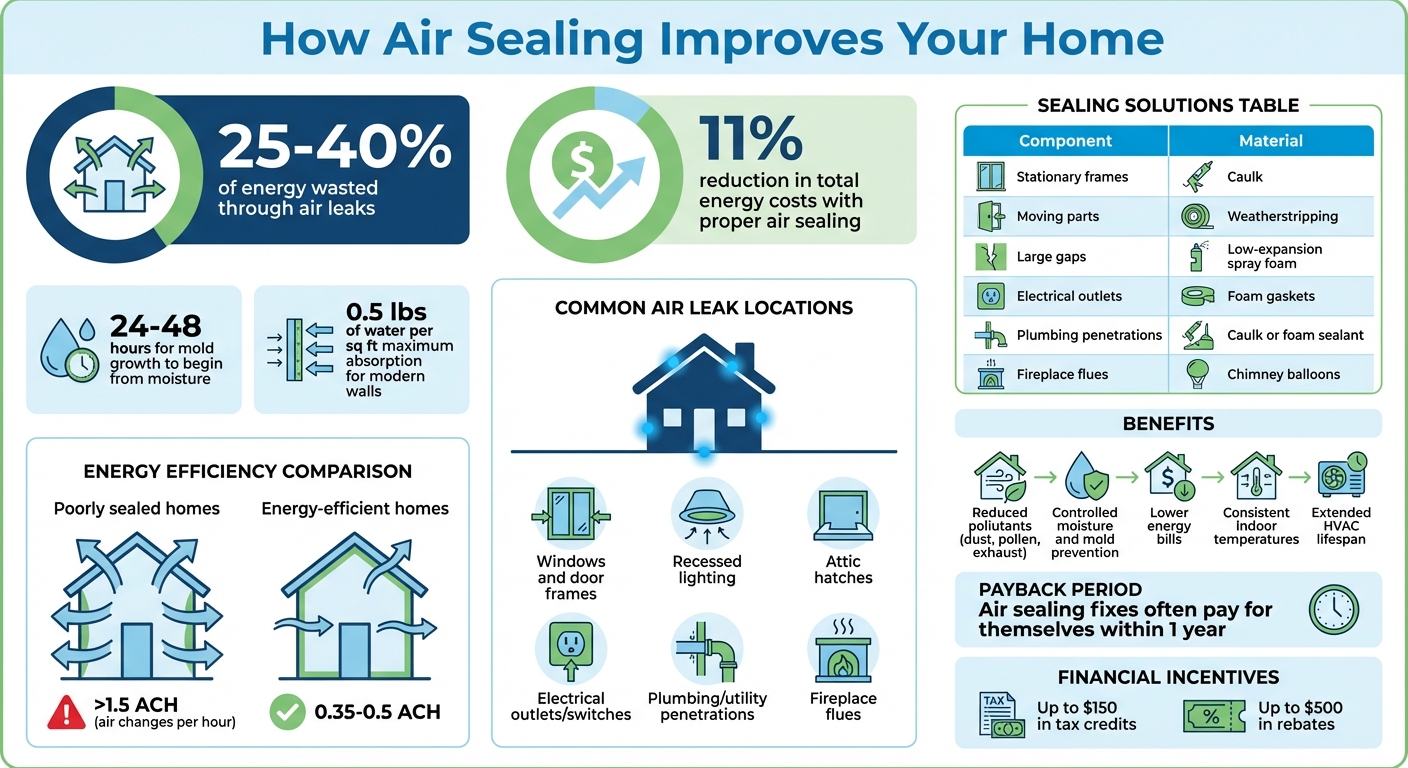
- Moisture issues from leaks can lead to mold growth within 24–48 hours.
- Energy loss from leaks can waste up to 40% of heating and cooling energy.
- Fixes like caulking and weatherstripping are affordable and often pay for themselves in a year.
- Proper ventilation is essential to maintain fresh air after sealing.
Sealing your home keeps pollutants out, stabilizes temperatures, and reduces HVAC strain, making your home healthier and more efficient. Pair air sealing with controlled ventilation for the best results.
Air Sealing Impact on Indoor Air Quality and Energy Costs
Air Sealing a Home Done Correctly
Properly sealing your home is one of the most effective ways to save money on energy bills throughout the year.
sbb-itb-8db64ac
How Air Leaks Harm Indoor Air Quality
Air leaks let outdoor pollutants, moisture, and unconditioned air sneak into your home. These intrusions can have a direct impact on your health, comfort, and even energy costs. Let’s break down how these leaks create problems.
Outdoor Pollutants Enter Through Air Leaks
When there are gaps around windows, doors, or other openings, unfiltered outdoor pollutants – like dust, pollen, vehicle exhaust, and mold spores – can easily make their way inside. These particles often bypass HVAC filters, making their presence in your indoor air even more concerning.
The stack effect plays a big role here. Warm air rises and escapes through your attic, creating a vacuum that pulls outdoor air in through lower-level openings like crawlspaces or door frames. Windy days can amplify this issue, forcing more pollutants indoors, while calmer weather reduces fresh air exchange, which can lead to stagnant air.
You might notice clues of air leaks by spotting dirty streaks on insulation, carpets, or ceiling paint. These marks show where air is filtering through gaps, leaving behind concentrated dust and pollutants. Common areas for leaks include recessed lighting, attic hatches, and gaps around window frames. But pollutants aren’t the only problem – moisture and energy inefficiencies also come into play.
Moisture Problems and Mold Growth
Air leaks can carry moisture inside, creating conditions ripe for trouble. When humid outdoor air meets cooler indoor surfaces, it condenses, leading to water buildup. This moisture can encourage mold growth within just 24 to 48 hours, releasing spores and unpleasant odors into your home.
Modern building materials, like paper-faced drywall, are especially at risk. They hold less moisture and can quickly reach critical levels. For example, a modern wall can only absorb about 0.5 pounds of water per square foot before problems begin.
The stack effect also drives moisture through your home’s structure. Water vapor is pushed through gaps at both the top and bottom of the building – especially near recessed lights, attic hatches, and plumbing vents. This constant movement of moisture not only promotes mold but also reduces the efficiency of your HVAC system, which leads us to the next issue.
Higher Energy Bills and HVAC Problems
Air leaks are a major source of energy loss, accounting for as much as 25% to 40% of wasted energy. When conditioned air escapes, your HVAC system has to work overtime to maintain a comfortable indoor temperature. Meanwhile, unconditioned outdoor air rushes in to replace the lost air, bringing pollutants and moisture with it.
Homes with poor sealing often have an air changes per hour (ACH) score above 1.5, while energy-efficient homes typically range between 0.35 and 0.5 ACH. This difference highlights the energy inefficiency caused by leaks.
The Department of Energy advises:
Relying on air leakage for natural ventilation is not recommended.
This approach is unpredictable – it may lead to too much air exchange during storms or too little during calm weather. Both scenarios can result in higher energy bills and degraded indoor air quality. Addressing air leaks promptly can help create a healthier, more energy-efficient home.
Air Sealing Improves Indoor Air Quality
Unchecked air leaks can bring in pollutants and moisture, but air sealing helps tackle these issues head-on. By controlling airflow, air sealing reduces the intrusion of harmful pollutants and excess moisture. According to the Department of Energy, this practice not only helps lower energy bills but also enhances indoor comfort and the longevity of your home.
The goal is to seal your home as tightly as possible while ensuring you have controlled, mechanical ventilation. This combination keeps random outdoor air out while maintaining a consistent flow of fresh, filtered air. Let’s dive into how to locate these leaks and why pairing sealing with ventilation is so important.
Finding and Sealing Air Leaks
To locate air leaks, you can rely on a blower door test or look for visual signs like dirty spots on insulation or discoloration on ceiling paint. A professional energy assessor can conduct a blower door test to identify exactly where air is escaping.
Once you’ve identified the problem areas, you’ll need the right materials to seal them effectively. Here’s a quick guide:
| Component | Recommended Sealing Material |
|---|---|
| Stationary frames (windows/doors) | Caulk |
| Moving parts (operable windows/doors) | Weatherstripping |
| Large gaps (baseboards/attic) | Low-expansion spray foam |
| Electrical outlets/switches | Foam gaskets |
| Plumbing/utility penetrations | Caulk or foam sealant |
| Fireplace flues | Chimney balloons or fire-resistant materials |
Caulk is perfect for sealing stationary gaps, like those around window and door frames or where utilities pass through walls and ceilings. Weatherstripping works best for movable parts like windows and doors. For hidden drafts, foam gaskets behind electrical outlet and switch plates on exterior walls can make a big difference. If you have an unused fireplace, keeping the damper tightly closed or using a chimney balloon can significantly reduce air loss.
The good news? These fixes often pay for themselves within a year.
Why Proper Ventilation Matters
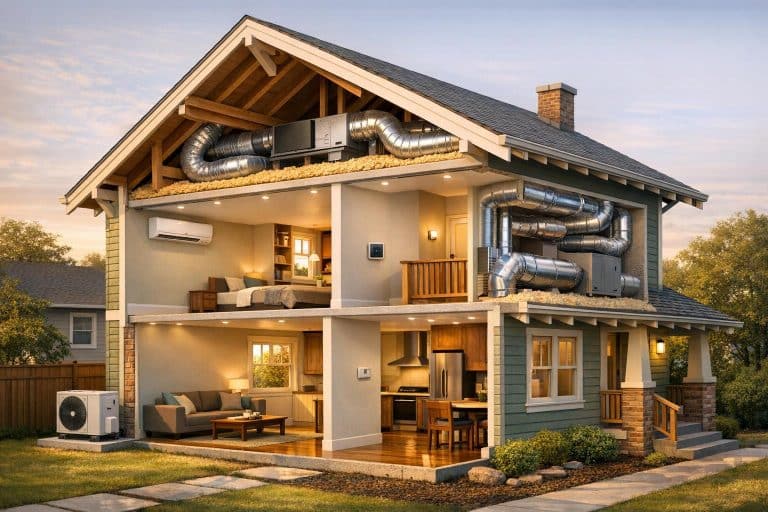
Air sealing is a powerful tool for improving indoor air quality, but it’s not the whole picture. Without proper ventilation, sealing can trap stale air inside your home. That’s why controlled ventilation is critical – it keeps the air fresh and healthy.
The Department of Energy emphasizes this point:
"Relying on air leakage for natural ventilation is not recommended. During cold or windy weather, too much air may enter the house. When it’s warmer and less windy, not enough air may enter, which can result in poor indoor air quality."
Benefits of Air Sealing
Air sealing doesn’t just improve indoor air quality – it delivers a host of perks, from cutting energy bills to boosting comfort and protecting your home’s structure. By sealing gaps and cracks, you can stabilize room temperatures, keep allergens and pollutants outside, and extend the life of your HVAC system. Plus, controlling moisture helps safeguard your home against rot and mold.
Better Indoor Air Quality
When your home is properly sealed, outdoor pollutants stay where they belong: outside. This means less dust, pollen, smoke, and unpleasant odors making their way into your living spaces. Instead of relying on the whims of the wind, you control the air that enters your home, ensuring it’s filtered and clean.
Moisture control is another key advantage. By blocking humid outdoor air from sneaking in, you can maintain consistent humidity levels that help prevent mold growth. As the Department of Energy explains:
Air leakage also can contribute to moisture problems that affect occupants’ health and the structure’s durability.
Lower Energy Costs
Air sealing can lead to an estimated 11% reduction in total energy costs when paired with proper insulation. That’s a noticeable difference in your monthly utility bills.
Your HVAC system also benefits. When air leaks are sealed, your heating and cooling equipment doesn’t have to work overtime to maintain comfortable temperatures. This reduced strain means fewer repairs, lower maintenance expenses, and a longer lifespan for your system. In other words, you’ll save money now and in the long run.
And it’s not just about the savings – air sealing also makes your home more comfortable and enjoyable to live in.
Healthier and More Comfortable Homes
Say goodbye to uneven temperatures. With air sealing, you’ll experience consistent indoor temperatures throughout your home, making every room equally comfortable. No more bundling up in one space while overheating in another.
For allergy and asthma sufferers, air sealing can be a game-changer. By blocking outdoor pollutants and allergens, it creates a cleaner, healthier indoor environment. When combined with controlled ventilation, you get fresh, filtered air on your terms – without the random influx of outdoor irritants.
Envirosmart Solution Services for Air Sealing

Complete Home Services for Indoor Air Quality
Envirosmart Solution provides a comprehensive range of services designed to improve indoor air quality by efficiently sealing your home. Their process starts with advanced diagnostic testing, including blower door tests, thermal imaging, and smoke sticks, to accurately identify air leaks.
Once leaks are located, they use AeroBarrier technology alongside targeted manual repairs to seal problem areas like gaps under baseboards, around electrical fixtures, and in attics and crawl spaces. Their services don’t stop there – they also offer insulation installation, attic and crawl space cleaning, duct sealing, and HVAC maintenance, giving you a one-stop solution for better indoor air quality.
Assistance with Rebates and Incentives
To help reduce upfront costs, Envirosmart Solution handles all the paperwork needed to secure up to $150 in tax credits and $500 in rebates for sealing and AeroBarrier applications. With certified PSE Recommended Energy Professionals on their team, they often apply these rebates directly to the initial project cost, making the process hassle-free for homeowners.
Annual Maintenance Plans
Keeping your home sealed and efficient requires consistent upkeep. Envirosmart Solution offers annual maintenance packages tailored to your needs. Their SMART GOLD™ plan, priced at $699 per year, includes dryer vent cleaning, air duct cleaning, attic and crawl space inspections, and furnace servicing. It also comes with a 20% discount on other services.
For more specific care, the CRAWL SPACE & ATTIC CARE™ plan is available for $199 annually. This package focuses on regular insulation checks, air gap inspections, and rodent monitoring, with a 15% discount on additional recommended services. These plans ensure your home remains energy-efficient and continues to benefit from effective sealing year-round.
Conclusion
Sealing your home against air leaks is an effective way to improve indoor air quality while cutting down on energy costs. By keeping pollutants out, controlling moisture, and eliminating drafts, air sealing creates a healthier and more comfortable living space. According to the Department of Energy, reducing air leakage not only lowers heating and cooling expenses but also enhances durability, boosts comfort, and promotes a healthier indoor environment.
However, achieving the right balance is key. While airtight homes are efficient, they also need proper ventilation to prevent pollutant buildup. Relying solely on uncontrolled air leaks makes it hard to manage fresh air intake. A combination of airtightness and a well-designed ventilation system ensures your home maintains optimal air quality.
For homeowners in the Pacific Northwest, these adjustments are especially important given the region’s unique climate. Envirosmart Solution specializes in air sealing services tailored to these conditions. Their skilled team identifies hidden leaks, applies advanced sealing methods, and ensures your home has proper ventilation.
Additionally, Envirosmart Solution helps homeowners take advantage of rebates and incentives, making air sealing projects more affordable. With their annual maintenance plans, they ensure your home remains efficient and your investment stays protected for years to come.
Ready to improve your home’s air quality and save on energy bills? Visit Envirosmart Solution at https://envirosmartsolution.com to schedule a professional assessment.
FAQs
How do I know if my home is too airtight after sealing?
You can determine if your home is too airtight by keeping an eye on indoor air quality and ventilation. Watch for signs like a buildup of pollutants, persistent moisture problems, mold growth, or complaints about stale or uncomfortable air. A blower door test is a useful tool to identify if your home is sealed too tightly. However, the key to maintaining healthy air is having a proper ventilation system. Controlled ventilation helps manage pollutants and avoids the problems that can arise in homes that are sealed too tightly.
What ventilation do I need after air sealing?
After sealing your home to prevent air leaks, it’s crucial to ensure proper ventilation to keep indoor air fresh and healthy. When a home becomes airtight, the natural flow of air decreases, which can trap moisture, odors, and pollutants. To counter this, consider using controlled mechanical systems like exhaust fans, balanced ventilation systems, or heat recovery ventilators (HRVs). These systems not only improve air quality but also help manage humidity and reduce energy waste. Choose a ventilation approach that aligns with your home’s layout, the local climate, and how the space is used for the best results.
Is a blower door test worth it before sealing?
A blower door test is absolutely worth doing before sealing your home. Why? It helps you locate the exact spots where air is leaking. By identifying these problem areas, you can focus your sealing efforts where they’re needed most.
This approach not only makes your home more energy-efficient but also improves indoor air quality. Sealing leaks reduces drafts and keeps out pollutants, creating a more comfortable living space while optimizing energy performance.