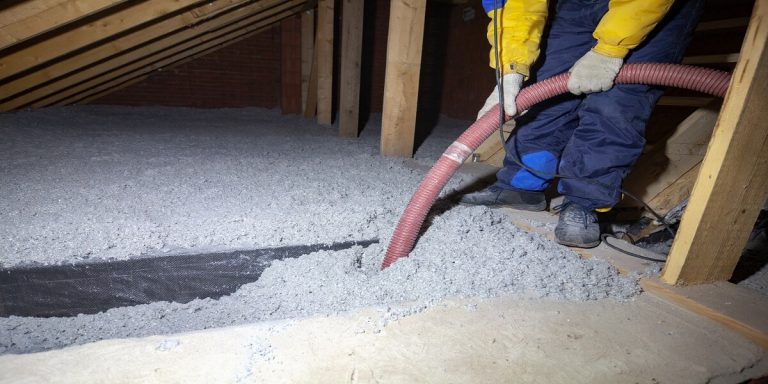

Balancing attic ventilation and insulation is key to protecting your home and managing energy costs. Proper ventilation removes excess heat and moisture, while insulation slows heat transfer, keeping your home comfortable year-round. Here’s why both matter:
- Ventilation: Prevents moisture buildup, mold, and wood rot. Keeps the attic cool in summer to protect shingles and energy efficiency.
- Insulation: Reduces heat loss in winter and heat gain in summer, cutting energy bills by up to 15%.
In the Pacific Northwest, where wet winters and mild summers are common, these systems must work together. Poor ventilation traps moisture, while inadequate insulation leads to energy loss. The solution? Seal air leaks, install the right type and amount of insulation (R-49 to R-60 for this region), and ensure balanced airflow with intake and exhaust vents.
Quick Tips:
- Use soffit and ridge vents for effective airflow.
- Avoid blocking vents with insulation; use baffles to maintain air channels.
- Seal gaps before insulating to prevent air leaks.
For long-term savings and a healthier home, focus on balancing insulation and ventilation.
Baffles for Attic Ventilation – How Much Do You Need? (Formula In Video!)
sbb-itb-8db64ac
What is Attic Ventilation?
Attic ventilation is all about managing the airflow between your attic and the outside world. Think of it like your home’s breathing system – it brings in fresh outdoor air and expels hot, stale, or moisture-heavy air.
Most ventilation systems rely on the stack effect (also called thermal buoyancy). Cool air enters near the eaves, warms up as it rises, and exits through vents higher up on the roof. This constant airflow keeps the attic temperature closer to the outdoor temperature and helps prevent moisture buildup.
On sunny days, attic temperatures can soar past 150°F, which puts extra strain on your AC and can even shorten your roof’s lifespan by 8–12 years. Plus, poor ventilation might void your roof warranty.
How Ventilation Controls Moisture
Everyday activities like cooking, showering, and even breathing add moisture to your home’s air. Without proper ventilation, this moisture can collect in the attic. In winter, it condenses on the cold underside of the roof deck, creating the perfect environment for mold, wood rot, and structural damage.
Good ventilation continuously removes this moist air before it has a chance to condense, protecting your home from damage. It also works hand-in-hand with insulation. In winter, ventilation helps keep the attic cold enough to stop ice dams from forming. In summer, it clears out superheated air that could otherwise damage shingles and drive up cooling costs by 10% to 30%.
Balanced airflow is critical. Intake and exhaust ventilation need to match. Building codes usually call for at least 1 square foot of net free ventilation area for every 150 square feet of attic floor space. This ratio can drop to 1:300 if the system is balanced and a vapor barrier is installed.
Common Ventilation Systems
The right ventilation setup depends on your home’s design, but most systems combine intake vents at the bottom with exhaust vents at the top. Here’s a quick look:
| Vent Type | Category | Location | Best Use Case |
|---|---|---|---|
| Soffit Vents | Intake | Under eaves | Standard for most homes; ensures even airflow |
| Ridge Vents | Exhaust | Roof peak | Provides continuous exhaust and consistent cooling |
| Gable Vents | Intake/Exhaust | Side walls | Good for cross-ventilation but less reliable than ridge systems |
| Turbine Vents | Exhaust | Roof deck | Works well in windy areas to actively pull air out |
| Powered Fans | Exhaust | Roof/Gable | Ideal for low-slope roofs where natural airflow is weak |
| Box Vents | Exhaust | Near peak | Useful as a supplement for complex rooflines |
For most homes, ridge vents paired with soffit vents are the top choice. Ridge vents run along the roof peak, offering continuous exhaust, while soffit vents under the eaves bring in fresh air. Together, they cost between $600 and $1,500 to install and don’t use any additional energy.
Powered attic fans, which cost $250 to $800, can be helpful when passive systems aren’t enough. However, if your attic floor isn’t well-sealed, these fans might accidentally pull conditioned air from your living space, wasting energy. Also, mixing different exhaust types – like combining ridge vents with powered fans or gable vents – can mess up airflow and create stagnant spots.
Now that we’ve covered ventilation, let’s dive into how attic insulation plays a role in managing moisture and maintaining comfort.
What is Attic Insulation?
Attic insulation is made up of materials designed to slow down heat transfer between your living spaces and the unconditioned attic above them. Heat naturally moves from warmer areas to cooler ones until the temperatures balance out, and insulation works to interrupt this process.
During winter, insulation helps keep heat from escaping upward, while in summer, it keeps outdoor heat from seeping into your home. Most insulation materials combat conduction (heat passing through solids) and convection (heat movement through air). Radiant barriers, on the other hand, focus on reducing heat transfer through radiation.
The impact of attic insulation is hard to overstate. Around 25% to 30% of a home’s energy loss happens through the attic. By insulating properly, you reduce strain on your HVAC system, leading to lower energy bills and a more comfortable home. In fact, sealing air leaks and adding insulation can save homeowners about 15% on heating and cooling costs – or roughly 11% of their total energy expenses.
"Attic insulation is the single highest-ROI energy upgrade you can make. Nothing else comes close in terms of dollars spent versus energy saved." – HonestCasa
Understanding R-Value
The R-value of insulation measures its ability to resist heat flow – the higher the number, the better it performs. For example, closed-cell spray foam has an R-value of 6.0 to 7.0 per inch, while fiberglass batts range from 2.9 to 3.8 per inch.
In regions like the Pacific Northwest (Climate Zone 4 Marine), experts recommend attic insulation levels between R-49 and R-60. This is a significant improvement over older homes, many of which were built before 1980 and typically have insulation rated between R-11 and R-19. Upgrading from R-19 to R-49 can cut attic-related energy loss by about 61%.
However, R-value isn’t the only factor to consider. Air leaks from penetrations like wiring, ductwork, or plumbing can reduce insulation effectiveness by as much as 30% to 50%. That’s why sealing these gaps is a crucial first step before adding new insulation.
Common Insulation Materials
Choosing the best insulation depends on your budget, attic design, and whether you plan to tackle the project yourself or hire a professional. Here’s a breakdown of the most popular options for a standard 1,500-square-foot attic:
| Material Type | R-Value per Inch | DIY Cost | Professional Cost | Primary Benefit |
|---|---|---|---|---|
| Fiberglass Batts | R-2.9 to R-3.8 | $750–$1,500 | $1,500–$3,000 | Affordable; easy for DIY projects |
| Blown-In Cellulose | R-3.2 to R-3.8 | $800–$1,500 | $1,500–$3,000 | Fills gaps well; made from recycled paper |
| Blown-In Fiberglass | R-2.5 to R-3.7 | $900–$1,800 | $1,800–$3,500 | Resists settling better than cellulose |
| Open-Cell Spray Foam | R-3.5 to R-3.7 | N/A | $3,500–$7,000 | Creates an airtight seal for roof decks |
| Closed-Cell Spray Foam | R-6.0 to R-7.0 | N/A | $5,500–$10,000 | Highest R-value; acts as a vapor barrier |
Fiberglass batts are the most cost-effective and DIY-friendly, though they can lose effectiveness if compressed or improperly installed. Blown-in cellulose, made from recycled materials, offers better coverage and higher R-values but may settle over time, reducing its performance. Spray foam, while the most expensive, provides excellent air sealing and is ideal for attics with HVAC systems, though it requires professional installation.
Understanding these options is key to selecting the right insulation for your attic, especially when balancing energy efficiency with moisture control through proper ventilation.
Ventilation vs. Insulation: Key Differences
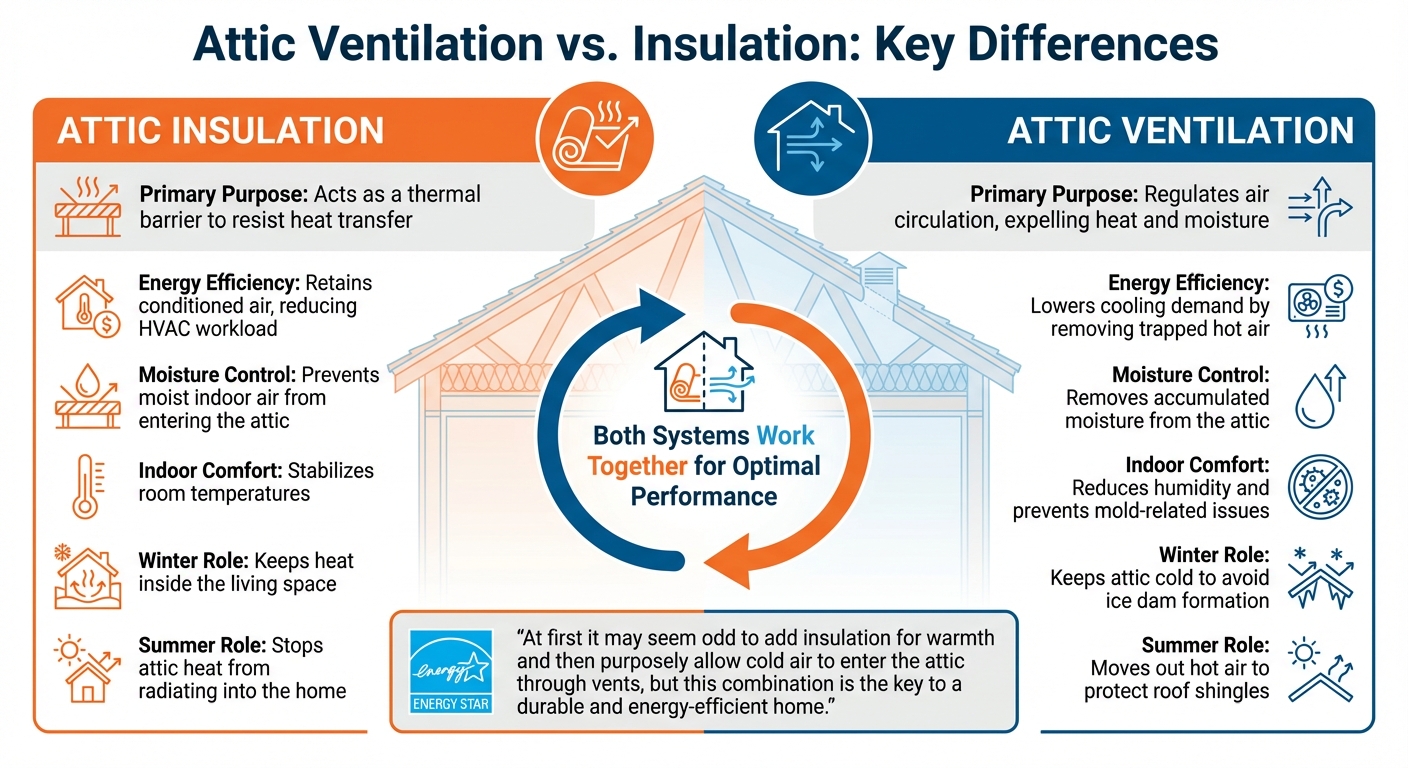
Attic Ventilation vs Insulation Comparison Chart
Insulation and ventilation each play a distinct role in maintaining your attic’s functionality. Insulation acts as a thermal barrier, slowing down heat transfer between your home’s living areas and the attic. Ventilation, on the other hand, ensures fresh outdoor air circulates through the attic, helping to remove excess heat and moisture.
"At first it may seem odd to add insulation for warmth and then purposely allow cold air to enter the attic through vents, but this combination is the key to a durable and energy-efficient home." – ENERGY STAR
These systems don’t compete – they work together. Ventilation prevents moisture buildup, which could otherwise lead to mold, wood rot, or mildew. When paired with air sealing, insulation and ventilation create a system that not only keeps moist air from entering your attic but also eliminates any moisture that does make its way in.
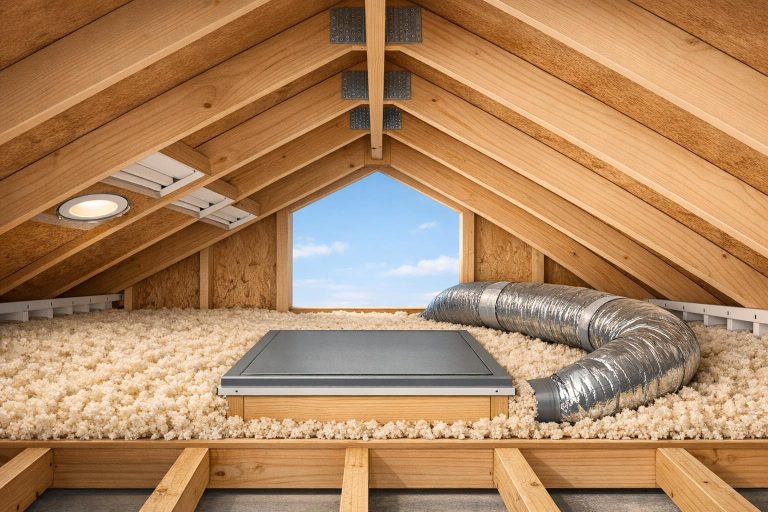
One critical area where these two systems intersect is the attic eave. Proper ventilation requires that soffit vents remain unobstructed by insulation. This is where rafter vents, or baffles, come into play. They maintain a clear 1-2 inch air channel from the soffits to the ridge or gable vents, ensuring air can flow freely while allowing insulation to extend to the edges of the attic floor.
Comparison Table: Ventilation vs. Insulation
| Feature | Attic Insulation | Attic Ventilation |
|---|---|---|
| Primary Purpose | Acts as a thermal barrier to resist heat transfer | Regulates air circulation, expelling heat and moisture |
| Energy Efficiency | Retains conditioned air, reducing HVAC workload | Lowers cooling demand by removing trapped hot air |
| Moisture Control | Prevents moist indoor air from entering the attic | Removes accumulated moisture from the attic |
| Indoor Comfort | Stabilizes room temperatures | Reduces humidity and prevents mold-related issues |
| Winter Role | Keeps heat inside the living space | Keeps attic cold to avoid ice dam formation |
| Summer Role | Stops attic heat from radiating into the home | Moves out hot air to protect roof shingles |
Why You Need Both Ventilation and Insulation
Insulation and ventilation are like two sides of the same coin – they need to work together to keep your home comfortable and efficient. Insulation acts as a thermal barrier, slowing heat transfer between your living space and the attic. Ventilation, on the other hand, allows your attic to "breathe", helping to expel stale, moist air while keeping temperatures in check. When these two systems are out of sync, you could face moisture buildup, structural issues, and higher energy bills.
Experts in the field agree on this partnership:
"The ideal home has both sufficient insulation to prevent unwanted heat transfer and a smart ventilation strategy to regulate air quality and moisture levels." – Koala Insulation
Here’s how the duo works in different seasons:
- In winter, insulation keeps warm air from escaping into the attic, while ventilation helps maintain a cold attic to prevent ice dams.
- In summer, ventilation removes super-heated air from the attic, protecting your roof shingles, and insulation keeps that heat from seeping into your living areas.
Without proper ventilation, everyday activities like cooking and showering can trap moisture in your home. This leads to condensation, mold growth, and even wood rot. On the flip side, too much ventilation without enough insulation creates drafts, forcing your HVAC system to work overtime and driving up energy costs.
| Scenario | Impact on Home |
|---|---|
| Too much insulation, insufficient ventilation | Traps moisture and pollutants, leading to mold, mildew, and wood rot |
| Too much ventilation, insufficient insulation | Creates drafts, overworks HVAC systems, and raises utility bills |
| Balanced insulation and ventilation | Controls moisture, protects your home’s structure, and boosts energy efficiency |
The table highlights the importance of balance. A well-coordinated system not only protects your attic but also ensures energy savings and long-term durability for your home.
Common Myths About Attic Ventilation and Insulation
When it comes to attic performance, there are plenty of misconceptions that can lead to costly mistakes or even damage to your home. Understanding these myths is crucial for maintaining a well-functioning attic.
One of the most common myths is that more insulation upgrades are always better. While insulation is essential, adding too much – especially if it blocks soffit vents – can create serious problems. These vents are vital for allowing air to flow from the eaves to the ridge of the roof. If they’re covered, moisture and heat can get trapped, leading to mold growth and structural damage.
Another misconception is that attic fans can replace proper sealing and insulation. However, if your attic isn’t sealed off from your living space, these fans can actually make things worse. ENERGY STAR explains it best:
"If your attic has blocked soffit vents and is not well-sealed from the rest of the house, attic fans will suck cool conditioned air up out of the house and into the attic".
This results in higher energy bills and forces your AC system to work overtime.
Some people also believe that sealing the attic completely – without any roof ventilation – will maximize energy efficiency. But attics need ventilation to manage moisture. The proper airtight seal should be at the attic floor, separating your living space from the attic. Without ventilation above that seal, moisture from activities like cooking or showering can accumulate. In the winter, this moisture condenses on cold surfaces, causing mold and wood rot. In the summer, trapped heat can send attic temperatures soaring past 100°F, which can damage shingles and increase cooling costs.
Lastly, there’s the idea that ventilation and insulation can replace each other. This is simply not true. Ventilation ensures proper airflow and manages moisture, while insulation helps resist heat transfer. As ENERGY STAR puts it:
"At first it may seem odd to add insulation for warmth and then purposely allow cold air to enter the attic through vents, but this combination is the key to a durable and energy-efficient home".
How to Balance Ventilation and Insulation
Balancing ventilation and insulation in your attic is crucial for maintaining efficiency and preventing issues like moisture buildup. To get it right, start with air sealing before installing insulation and ventilation systems. This step ensures your attic performs at its best.
Begin by sealing gaps around plumbing, electrical boxes, light fixtures, and attic hatches with caulk or foam. This keeps moist, conditioned air from seeping into the attic through these openings. Once the attic floor is sealed, you can focus on proper ventilation and insulation.
Ventilation Guidelines
Your attic needs the right amount of ventilation, placed strategically. The general rule is 1 square foot of net free ventilation area for every 150 square feet of attic floor space (a 1:150 ratio). For instance, a 1,500-square-foot attic would require 10 square feet of ventilation.
To maintain balance, ensure intake ventilation at the eaves equals or exceeds exhaust ventilation at the ridge. This prevents negative pressure, which can pull conditioned air from your home through ceiling gaps. Ideally, aim for a 50/50 split between intake and exhaust. If your system is balanced and includes a vapor barrier on the warm side of the insulation, you can follow the 1:300 ratio instead – 1 square foot of ventilation for every 300 square feet of attic floor.
Install baffles between rafters to maintain at least a 1-inch airflow channel from soffit vents. Without baffles, insulation can block vents and stop airflow entirely. Avoid mixing different types of exhaust vents, such as ridge vents with gable vents or powered fans, as this can disrupt airflow and leave parts of the attic unventilated.
Insulation Guidelines
While ventilation ensures proper air circulation, insulation keeps your home thermally efficient. Both are key to a balanced attic. The recommended insulation levels vary by region. In the Pacific Northwest (Climate Zone 4), aim for R-38 to R-49. Northern areas need R-49 to R-60, while southern regions can use R-30 to R-38.
When installing insulation, make sure it doesn’t block soffit vents, as this would disrupt airflow. Add a second layer perpendicular to the first, using unfaced insulation (without a vapor retarder) to prevent moisture from getting trapped between layers.
Leave a 3-inch clearance around recessed can lights unless they’re rated IC (insulation contact). Additionally, ensure all bathroom, kitchen, and dryer exhaust fans vent directly to the outside – never into the attic. For colder climates (Zones 5 and up), install a 6-mil polyethylene vapor barrier on the warm side (bottom) of the insulation to stop moisture from migrating into the attic.
Warning Signs of Ventilation or Insulation Problems
If your attic’s insulation or ventilation isn’t doing its job, the signs are often easy to spot – if you know what to look for. Catching these issues early can save you from hefty repair bills and help keep your energy costs in check. For instance, during winter, the appearance of ice dams on your roof is a red flag that insulation or air sealing isn’t up to par.
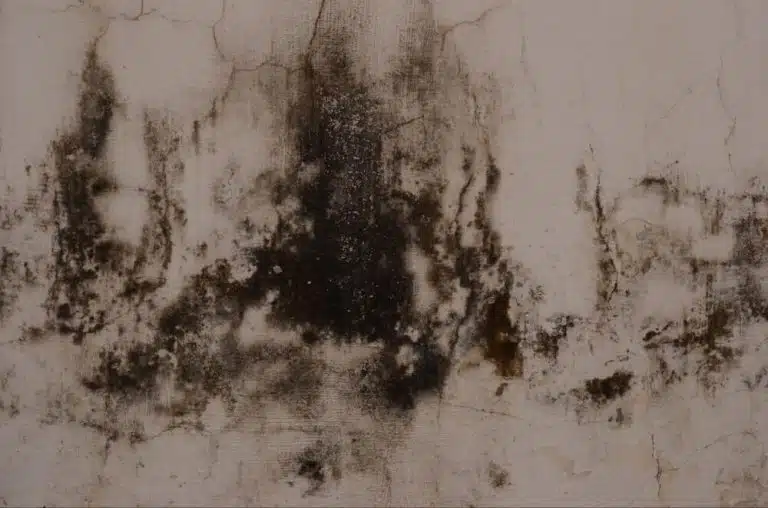
Beyond ice dams, there are other physical clues that something’s off. During cold weather, check for frost on roof trusses or the underside of the roof sheathing. This frost forms when warm, humid air from your home leaks into an attic that isn’t ventilated properly. Also, keep an eye out for water stains, peeling paint, or wood damage – like rot, swelling, or delamination of plywood or OSB. These are telltale signs that moisture is trapped and not escaping as it should.
Another sign? Skyrocketing energy bills. In the summer, poor ventilation can trap hot air in the attic, making your air conditioner work overtime. If soffit vents are blocked by insulation, attic fans might end up pulling cool air from your living spaces, which drives up cooling costs even more. In winter, inadequate insulation and air leaks let warm air escape, though some homeowners may qualify for free attic insulation upgrades, forcing your heating system to work harder.
Do you notice uneven temperatures between rooms or floors? That could be a sign of insulation gaps or blocked airflow. Leaky return ducts might even pull unconditioned attic air into your HVAC system, reducing efficiency and comfort. Combine this with visible moisture damage, and it’s clear your attic’s ventilation and insulation need attention.
Humidity levels are another factor to monitor. If attic humidity goes above 60%, mold can start to grow. Ideally, indoor humidity during the heating season should stay between 30% and 50%. Mold, mildew, or musty smells in your attic are serious warning signs that your ventilation and insulation need immediate work. Ignoring these issues could lead to bigger problems down the road.
Envirosmart Solution‘s Attic Services

Keeping your attic well-ventilated and properly insulated is key to maintaining a durable, energy-efficient home. If you’re in the Pacific Northwest and facing attic-related challenges, professional services can save you time, money, and help you avoid long-term damage. Envirosmart Solution focuses on creating attics that strike the right balance between moisture control and energy efficiency. From inspections to full system upgrades, their team provides comprehensive care to ensure your attic performs at its best.
Available Services
Envirosmart Solution offers a wide range of services tailored to address ventilation and insulation concerns. Their attic cleaning service removes debris and outdated insulation that can block airflow or trap moisture. For insulation needs, they manage both installation and removal, ensuring your attic meets the recommended R-value for your region while keeping ventilation pathways clear.
If moisture issues have already caused damage, their mold remediation service tackles the problem at its root. They also provide rodent proofing to protect your attic from pests that could damage insulation or clog vents. Beyond the attic, their expertise extends to air duct cleaning, dryer vent cleaning, and HVAC installation and repair, all of which contribute to better ventilation and energy savings. To top it off, Envirosmart Solution helps you maximize savings by offering rebate guidance tailored to your specific upgrades.
Help with Rebates and Incentives
Upgrading your home’s energy efficiency can be pricey, but it doesn’t have to break the bank. Envirosmart Solution helps homeowners navigate various rebate and incentive programs offered by government agencies, local organizations, and vendors. They’ll walk you through the application process, ensuring you take advantage of every opportunity to save. These rebates can significantly reduce the cost of insulation upgrades, ventilation improvements, and HVAC replacements, potentially saving you hundreds – or even thousands – of dollars.
CRAWL SPACE & ATTIC CARE™ Package
For ongoing maintenance, Envirosmart Solution offers their CRAWL SPACE & ATTIC CARE™ package for $199 per year. This program includes regular inspections of your attic and crawl space to check insulation levels, identify air gaps, and detect early signs of rodent activity. As an added bonus, members receive a 15% discount on recommended services, making it easier to address minor issues before they become costly problems.
Conclusion
Striking the right balance between insulation and ventilation is key to keeping your attic free from moisture issues and managing energy costs effectively. Too much insulation without proper ventilation can trap moisture, leading to mold and other problems. On the flip side, excessive ventilation without sufficient insulation can drive up your energy bills by letting conditioned air escape.
This balance is especially critical in the Pacific Northwest, where the wet climate poses unique challenges. During winter, a cold attic helps prevent ice dams, while in summer, proper ventilation clears out hot air that could damage shingles or overheat your home. Everyday activities like cooking, showering, and even breathing introduce moisture into your home, and ventilation ensures it has a way out. Meanwhile, insulation keeps your heated or cooled air where it belongs.
Achieving this balance means following proper installation practices. Skipping steps can lead to issues like condensation on rafters, rotting wood, or an overworked HVAC system – all costly problems that are avoidable with the right approach.
For homeowners in the Pacific Northwest, Envirosmart Solution simplifies the process. From air sealing to ventilation system installation, their team handles every aspect of attic care. They also help you take advantage of rebate programs to save on costs. With their CRAWL SPACE & ATTIC CARE™ package, you’ll receive annual inspections to catch minor issues before they turn into major repairs.
Don’t let moisture damage or rising utility bills catch you off guard. A well-balanced attic protects your home, your health, and your budget. Investing in professional help now ensures your home stays safe and efficient for years to come.
FAQs
How do I know if my attic has enough ventilation?
To make sure your attic is properly ventilated, follow these steps:
- Measure Ventilation Area: Ideally, you should have at least 1 square foot of ventilation for every 300 square feet of attic space. This should be evenly divided between intake (like soffit vents) and exhaust (such as ridge or gable vents).
- Inspect for Blockages: Check that vents, especially soffit vents, are clear of debris or insulation that might block airflow.
- Test Airflow: Hold a stick of incense or a smoke source near the vents. If the smoke moves freely, your ventilation is likely functioning well.
Adequate ventilation is key to avoiding moisture problems, preventing mold, and protecting your roof from damage. It also helps keep your home more energy-efficient.
Should I air-seal my attic before adding more insulation?
Air-sealing your attic is a crucial step to tackle before installing insulation. It boosts your home’s energy efficiency, keeps moisture problems at bay, and ensures the insulation performs as it should.
Key areas to focus on include sealing gaps around recessed lighting, attic hatches, plumbing stacks, and chimneys. By addressing these spots, you can cut down on drafts, reduce the workload on your HVAC system, and lower the risk of mold or wood rot. The result? A healthier, more comfortable, and efficient home.
When are powered attic fans a bad idea?
Powered attic fans can create issues if not used correctly or under the right conditions. For instance, if attic vents are blocked or the attic isn’t properly sealed, these fans can lead to air leaks and lower energy efficiency. They can also create negative pressure, which might draw in unconditioned air and moisture, ultimately driving up energy bills. Additionally, in well-ventilated attics or during winter months – when natural airflow is typically enough to prevent problems like ice damming – these fans offer little to no benefit.