
When choosing between single-zone and multi-zone mini-splits for your home, the decision depends on how many rooms you need to heat or cool and your budget:
- Single-Zone Mini-Splits: Best for one room or a specific area like a garage, home office, or addition. They are simple to install, energy-efficient for individual spaces, and cost $3,000–$5,500 per system.
- Multi-Zone Mini-Splits: Ideal for multiple rooms or whole-home setups. A single outdoor unit supports 2–8 indoor units, allowing independent temperature control for each space. Costs range from $5,000–$12,000 depending on the number of zones.
Key Differences:
- Single-zone systems are straightforward and isolated – if one fails, other rooms are unaffected.
- Multi-zone systems save outdoor space and are better for whole-home comfort but are more complex to install. All zones must operate in the same mode (heat or cool) simultaneously.
Quick Comparison:
| Feature | Single-Zone | Multi-Zone |
|---|---|---|
| Indoor Units | 1 | 2–8 |
| Outdoor Units | 1 per indoor unit | 1 for all indoor units |
| Upfront Cost | $3,000–$5,500 | $5,000–$12,000 |
| Installation | Simple and quick | Complex, requires planning |
| Best For | Single rooms or additions | Whole-home or multi-room setups |
Both options avoid energy losses from ductwork and qualify for rebates and energy savings, which can reduce costs significantly. To decide, evaluate your home’s layout, temperature needs, and budget.
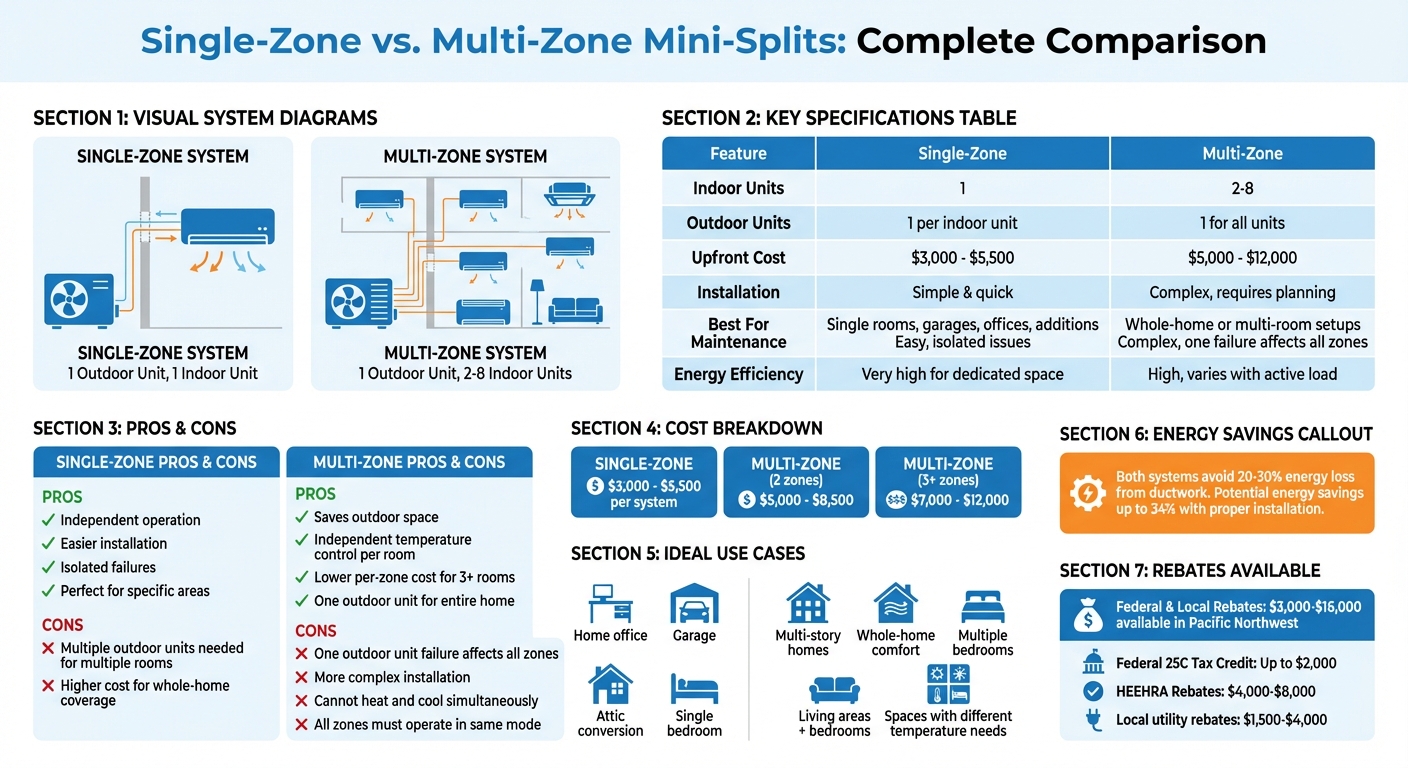
Single-Zone vs Multi-Zone Mini-Split Systems Comparison Chart
Design and Functional Differences
Single-Zone Mini-Split Systems
A single-zone system connects one outdoor compressor to a single indoor air handler through a refrigerant line-set. This simple design makes installation relatively straightforward – ideally, the outdoor unit should be placed within 25 feet of the indoor unit to minimize refrigerant loss. These systems are perfect for specific areas like a converted garage, a home office, or a room that needs additional comfort. However, single-zone outdoor compressors are built to support only one indoor unit, meaning they can’t accommodate additional zones. If you need to cover a larger space, a multi-zone system might be a better fit.
Multi-Zone Mini-Split Systems
Multi-zone systems, on the other hand, are designed to serve multiple rooms, offering independent controls for each space. They feature one outdoor compressor connected to multiple indoor units – usually between 2 and 8 in residential settings. Each indoor unit connects to the outdoor unit via its own refrigerant line-set, creating a more intricate piping system that requires careful planning.
"In a multi-zone setup, you still have one outdoor compressor unit, but it connects to two or more indoor units. Each indoor unit serves a different zone (room or space)."
- Samantha Reyes, Smart Comfort Expert
One of the key benefits of a multi-zone system is the ability to control each zone independently. For example, you could set the master bedroom to 68°F while keeping the living room at 72°F. This flexibility does come with a limitation: all zones must operate in the same mode, whether heating or cooling, at the same time. This makes it important to plan how you’ll manage temperatures across your home. Additionally, proper installation is crucial to avoid issues like short-cycling or inadequate dehumidification, so following the manufacturer’s guidelines is essential.
sbb-itb-8db64ac
Single-Zone vs Multi-Zone Ductless HVAC Systems
Single-Zone vs. Multi-Zone: Side-by-Side Comparison
Choosing between single-zone and multi-zone systems comes down to understanding how their features align with your home’s layout and comfort needs. Here’s a breakdown of the key differences and how they impact functionality and cost.
Feature Comparison Table
| Feature | Single-Zone Mini-Split | Multi-Zone Mini-Split |
|---|---|---|
| Indoor Units | 1 unit | 2–5 units (typically) |
| Outdoor Units | 1 per indoor unit | 1 for all indoor units |
| Upfront Cost | $3,000–$5,500 per system | $5,000–$8,500 (2 zones); $7,000–$12,000 (3+ zones) |
| Installation Complexity | Simple and quick | Complex; requires careful sizing and piping |
| Energy Efficiency | Very high for a single dedicated space | High, though efficiency can vary based on the active load |
| Maintenance | Easy; issues are isolated to one room | More complex; failure of the outdoor unit affects all zones |
| Best Applications | Garages, attics, home offices, additions | Whole-home comfort, multi-story houses |
This table outlines the main features, but let’s dig deeper into how these systems work in practice. Multi-zone systems, for instance, are often more cost-effective when cooling or heating several rooms. However, a failure in the outdoor unit of a multi-zone system can disrupt climate control for all connected zones. In contrast, single-zone systems are independent, so a breakdown only impacts one room.
Pros and Cons of Each System
To better understand the trade-offs, here’s a look at the advantages and drawbacks of each system type:
| System Type | Pros | Cons |
|---|---|---|
| Single-Zone | Great for single spaces; independent operation (no shared failures); easier to install | Requires multiple outdoor units for multiple rooms; higher overall cost for whole-home coverage |
| Multi-Zone | Saves space with one outdoor unit; independent temperature control for each room; lower per-zone cost for 3+ rooms | One outdoor unit failure affects all zones; installation is more complex; cannot heat and cool rooms simultaneously |
"If you only need one room covered, go single-zone. If you want to cover multiple spaces or a whole floor, go multi-zone."
- Mike Sanders, The Furnace Outlet
Both systems avoid energy losses from ducts, which can waste 20% to 30% of energy in traditional HVAC setups. That said, multi-zone systems may lose efficiency when only one indoor unit is active, as the outdoor compressor still operates at full capacity. For those focused on reliability and energy savings in specific areas, single-zone systems are often the better choice. On the other hand, multi-zone systems shine when outdoor space is limited or when multiple rooms need climate control.
When to Choose Single-Zone or Multi-Zone
Deciding between a single-zone or multi-zone system comes down to the specific needs of your home and how you use your space. Factors like the number of rooms, your home’s layout, and your temperature preferences play a big role. Installation complexity and maintenance requirements also weigh into the decision. Let’s break down which option might work best for your living situation.
Best Uses for Single-Zone Systems
Single-zone systems are ideal for targeting specific areas that your central HVAC system doesn’t handle well. Think of spaces like sunny home offices, converted attics, detached garages, or new room additions. These systems give you independent climate control without the hassle or cost of extending ductwork or upgrading your entire HVAC setup.
"Single-zone ductless systems are a smart choice for home additions or rooms underserved by existing HVAC." – ENERGY STAR
If you’re only looking to control the temperature in one room, this option keeps things simple. Installation is straightforward, and if there’s a problem, it only affects that one space. Plus, if you’re considering expanding to more zones in the future, you can prepare in advance by pre-wiring or installing conduit paths during the initial setup.
Best Uses for Multi-Zone Systems
Multi-zone systems shine in homes with multiple floors or spaces where people need different temperature settings. A single outdoor condenser can support 3 to 5 indoor units, reducing outdoor clutter and saving yard space compared to installing multiple single-zone systems.
Take the example of Mike Sanders, a homeowner who installed a 3-zone DIY mini-split system in 2025. His system covered his bedroom, living room, and basement using a single 36,000 BTU outdoor condenser paired with three indoor units, all for around $4,500. If he had opted for three separate single-zone systems, the cost would have ranged from $4,500 to $7,000 and required three outdoor condensers.
Multi-zone systems are especially useful for managing temperature based on how spaces are used throughout the day – like heating bedrooms at night and focusing on living areas during the day.
Energy Efficiency and Cost Considerations
Mini-split systems can help reduce energy bills when compared to traditional central HVAC systems. However, their efficiency and costs can vary depending on the type of system you choose.
Energy Efficiency Metrics
Single-zone systems are designed for individual spaces, offering higher efficiency by matching the outdoor condenser’s capacity precisely to the indoor unit’s needs. This eliminates wasted capacity – what you install is exactly what you use. On the other hand, multi-zone systems are better suited for whole-home setups, as they allow you to heat or cool only the rooms in use. However, their efficiency may drop when operating a single small zone, as oversized compressors can cycle inefficiently.
Both system types avoid energy losses associated with ducts, which can waste up to 30% of energy, according to ENERGY STAR.
In the Pacific Northwest, proper unit sizing is critical for efficiency. For example:
- A 9,000 BTU unit is ideal for spaces of 300–500 square feet.
- A 12,000 BTU unit covers 500–750 square feet.
- An 18,000 BTU unit works for areas of 750–1,000 square feet.
Additionally, inverter-driven compressors can reduce energy use by 30% or more compared to older fixed-speed models. High-efficiency units can even achieve ratings of up to 33 SEER. Studies show that installing mini-splits in existing homes can lead to energy savings as high as 34%. These efficiency gains directly translate into lower energy costs.
Cost Savings and Rebates
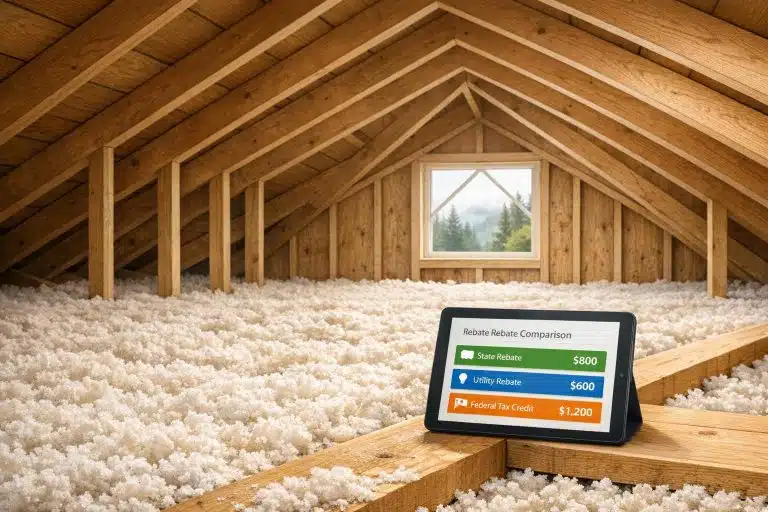
Mini-split installation costs in the Pacific Northwest can be significantly reduced thanks to federal, state, and local rebates, which range from $3,000 to $16,000. For example:
- The federal 25C Tax Credit offers up to $2,000 for qualifying ENERGY STAR equipment.
- The Home Energy Efficiency and Electrification Rebate Act (HEEHRA) provides point-of-sale rebates of up to $8,000 for low-income households and $4,000 for moderate-income households.
Local utility rebates vary based on the system type. Seattle City Light offers $3,000 for single-zone systems and up to $4,000 for multi-zone setups. Puget Sound Energy provides rebates of $1,500–$2,000 per indoor unit (up to three units), making multi-zone installations potentially more rewarding in total rebate amounts. Meanwhile, Energy Trust of Oregon applies instant rebates directly at installation through approved Trade Ally contractors.
Envirosmart Solution helps homeowners in the Pacific Northwest navigate these rebate opportunities. Their team manages paperwork, ensures contractors meet approval requirements, and can bundle weatherization services when necessary, simplifying what might otherwise be a complicated process. With payback periods of 5 to 10 years through energy savings and incentives, and heating cost reductions of 40–60% for Washington homeowners switching from electric resistance heat, mini-splits present a compelling financial option.
To claim the federal tax credit, you’ll need to file IRS Form 5695 with your tax return and retain the Manufacturer’s Certification Statement. Keep in mind that many rebate programs require pre-approval or specific contractors, so confirm these details before starting your installation to ensure your project qualifies.
Sizing and Installation Considerations
When it comes to mini-split systems, getting the size right and ensuring proper installation are key to achieving optimal performance and efficiency. Let’s break this down:
The size of your system matters. For example, a 144-square-foot bedroom typically needs about 9,000 BTUs, while a 300-square-foot living room might require around 12,000 BTUs. In single-zone systems, one outdoor unit is paired with one indoor unit, designed to meet the specific capacity of that space. On the other hand, multi-zone systems involve an outdoor unit that must handle the total capacity of all connected indoor units. For instance, if you have three indoor units rated at 9,000, 12,000, and 18,000 BTUs, the outdoor unit must provide 36,000 BTUs, which equates to a 3-ton system.
"Oversizing indoor heads (especially in multi-zone setups) leads to short-cycling, poor dehumidification, and discomfort."
- Samantha Reyes, Smart Comfort by Samantha
Installation Complexity
Single-zone systems are relatively simple to install. They require just one indoor unit, one outdoor condenser, and a single set of refrigerant lines and cables. Multi-zone systems, however, are more labor-intensive. Installers must run multiple line sets – often through various walls or even different levels of the home – and mount several indoor units.
For the best results, keep refrigerant line-set runs under 50 feet whenever possible. Longer runs, especially those exceeding 100 feet, can hurt performance and may even necessitate system upgrades. In multi-zone setups, it’s essential to ensure that every indoor unit stays within the manufacturer’s recommended distance from the outdoor unit to avoid efficiency issues. If you’re considering future expansion, plan wiring and conduit paths early.
Electrical Considerations
Don’t overlook the electrical requirements. Each indoor unit typically draws between 5 and 15 amps, so older 100-amp electrical panels might need upgrading. Budget for an additional $200–$500 for electrical work and $50–$150 per line-set cover. Companies like Envirosmart Solution can handle these details, including coordinating any necessary electrical upgrades.
Conclusion and Next Steps
When deciding between single-zone and multi-zone mini-splits, it all boils down to your home’s layout and how you use each area. A single-zone system is perfect for focusing on one specific room – like a home office, garage, or a new addition. On the other hand, multi-zone systems are better suited for cooling or heating multiple rooms or even an entire floor, with one outdoor condenser supporting up to five indoor units.
Start by evaluating your home to identify rooms that are consistently too hot or too cold. Create a simple floor plan and highlight areas that need immediate attention versus those that could be addressed later. If you’re planning future projects, like finishing a basement or adding a new room, mention these plans early so your system can be designed to accommodate future needs. This kind of planning ensures your system is properly sized and ready to perform efficiently.
Proper sizing is a must. As discussed earlier, correct sizing prevents problems like short-cycling. A professional can calculate the exact BTU requirements for your space, recommend the best placement for indoor units, and ensure refrigerant line-sets meet the ideal length of under 50 feet for optimal performance.
Don’t forget to explore available financial incentives. Federal tax credits and local rebates can significantly reduce installation costs. Envirosmart Solution specializes in helping Pacific Northwest homeowners take full advantage of these programs. They offer expert HVAC installation services, precise sizing guidance, and maintenance packages to keep your system running smoothly.
FAQs
How do I decide how many zones my home needs?
The number of zones your home needs depends heavily on its size and layout. For smaller homes, typically ranging from 700 to 900 square feet, 1–3 zones might be enough, especially if the space is open and connected. Larger homes, over 1,100 square feet, usually require 3–4 zones to ensure even temperature control.
If your home features an open floor plan, fewer zones are often sufficient. However, houses with several closed-off spaces, like bedrooms or home offices, often benefit from having separate indoor units for better comfort and efficiency. For the best results, it’s always a good idea to consult an HVAC professional who can assess your specific needs.
Can a multi-zone mini-split heat one room while cooling another?
Yes, a multi-zone mini-split system can heat one room while cooling another. This is possible because it uses a single outdoor compressor connected to multiple indoor units. Each indoor unit operates independently, giving you precise temperature control in every zone. This setup is perfect for homes where different rooms have varying heating and cooling requirements.
Will my electrical panel need an upgrade for a mini-split?
If your home is equipped with a 100-amp electrical panel, you might need to consider upgrading to a 200-amp panel. Mini-split systems typically require dedicated circuits and correctly sized wiring to operate safely and efficiently. It’s best to consult a professional electrician to evaluate your panel’s capacity and determine if it’s compatible with the demands of a mini-split system.