
If you’re dealing with mold at home, harsh chemicals like bleach aren’t your only option. Natural alternatives can eliminate mold effectively without harming your health or the environment. Here are five safe and simple methods to try:
- Vinegar: Kills 82% of mold species, penetrates porous surfaces, and costs just $5–$10. Avoid mixing with bleach or hydrogen peroxide.
- Baking Soda: Absorbs moisture, scrubs away spores, and neutralizes odors. Best for small stains but may not reach deep mold.
- Hydrogen Peroxide: Breaks down mold proteins and DNA. Works well on non-porous surfaces but can mildly bleach materials.
- Tea Tree Oil: Prevents regrowth and reduces airborne spores. Highly effective but has a strong scent and must be diluted.
- Lemon Juice: Natural antiseptic and deodorizer with bleaching properties. Ideal for small, non-porous areas.
Key Tip: Mold removal is only part of the solution. Fix moisture issues – like leaks or high humidity – to stop mold from returning. For larger infestations, consult a professional for attic and crawl space mold remediation.
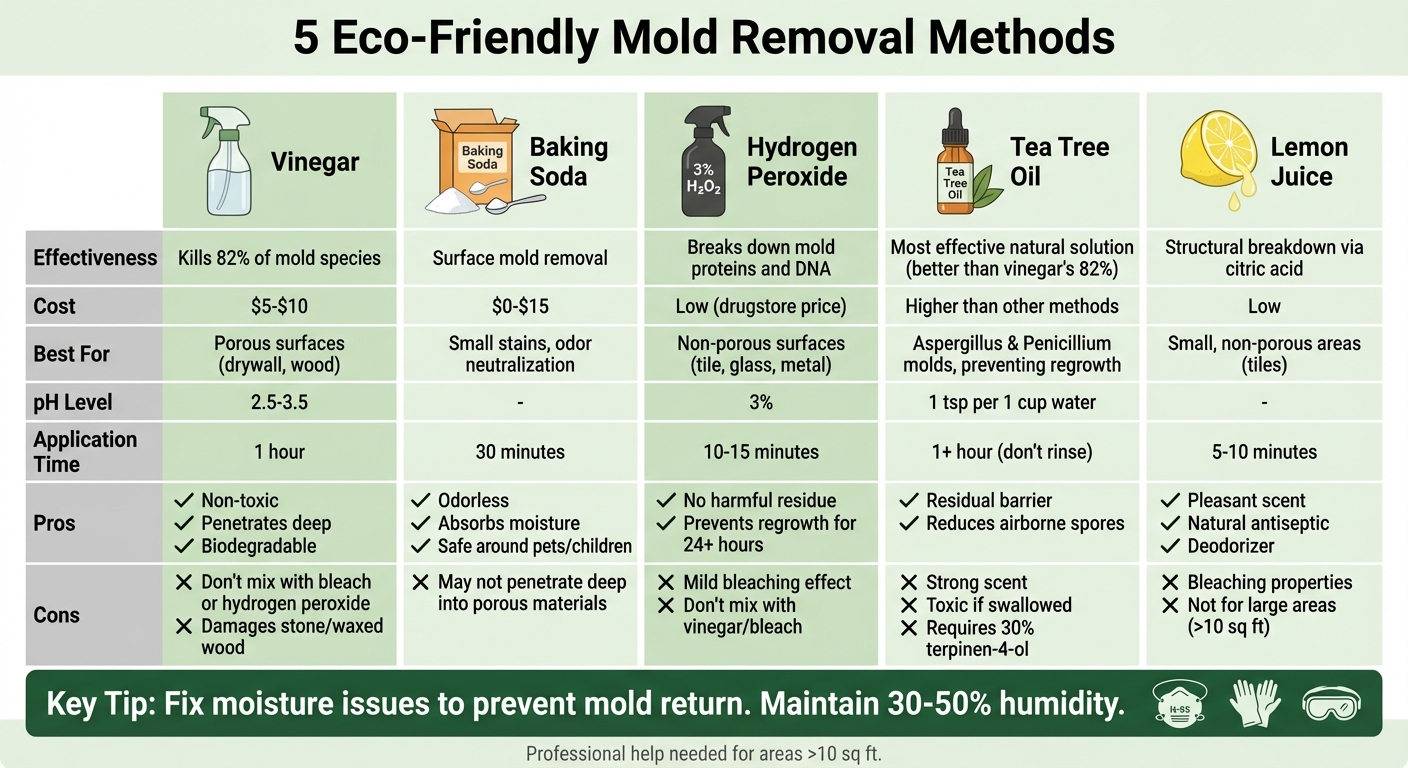
5 Eco-Friendly Mold Removal Methods Comparison Chart
Mold and Mildew Killer and Preventer- Homemade Natural Cleaning Products #6
sbb-itb-8db64ac
1. Vinegar Solution
White distilled vinegar is a simple and eco-friendly option for tackling mold. Thanks to its acetic acid content, it effectively stops mold growth. Unlike bleach, which only removes mold on the surface, vinegar goes deeper, penetrating porous materials like drywall and wood to address the mold at its source. Research indicates that vinegar can eliminate about 82% of mold species, including the dangerous black mold.
A 5% vinegar solution (with a pH of 2.5–3.5) creates an environment where most mold spores cannot survive.
How to use it:
Fill a spray bottle with undiluted white vinegar (5%–6% acidity), thoroughly saturate the moldy area, and let it sit for an hour. Afterward, scrub the area gently, rinse with warm water, and finish by spraying a light mist of vinegar before letting it air dry.
Vinegar is not only non-toxic and biodegradable but also safe for use around children and pets. It doesn’t emit harmful fumes or volatile organic compounds (VOCs), and a mold remediation project using vinegar typically costs between $5 and $10.
Safety tips to keep in mind:
When dealing with mold, always wear protective gear like an N-95 mask, gloves, and goggles to protect yourself from mold spores. Never mix vinegar with bleach, as this can release toxic chlorine gas. Likewise, avoid combining vinegar with hydrogen peroxide, which can produce corrosive peracetic acid. Be cautious when using vinegar on surfaces like natural stone (marble or granite), waxed wood, or aluminum, as its acidity can cause damage.
2. Baking Soda Paste
Baking soda is another gentle yet effective way to tackle mold. It works by absorbing moisture and scrubbing away mold spores, making it a safer alternative to harsher chemicals like bleach. Plus, it doesn’t release harmful fumes during use.
How to prepare and use it:
For small stains, mix baking soda with water until it forms a thick paste. If you’re dealing with tougher mold, try combining 2 parts baking soda with 1 part hydrogen peroxide (3%–10% concentration) to create a toothpaste-like consistency. Apply the mixture to the moldy area, let it sit for about 30 minutes, then scrub, rinse thoroughly, and dry the surface.
Baking soda is an affordable option, with costs ranging from $0 to $15 for smaller projects (less than 10 square feet). It’s also eco-friendly, offering a way to clean mold without relying on harsh chemicals. As a bonus, baking soda is odorless and helps neutralize musty smells, unlike vinegar, which has a strong scent.
"Baking soda can help remove mold by absorbing moisture and scrubbing away spores."
While baking soda is great for cleaning surfaces, it might not penetrate deep enough into porous materials to fully remove mold spores. For larger infestations, professional help is still the best route.
3. Hydrogen Peroxide Spray
Hydrogen peroxide works by oxidizing mold proteins, DNA, and cells, breaking them down effectively. It decomposes into water and oxygen, leaving behind no harmful residues.
A standard 3% hydrogen peroxide solution, which you can easily find at most drugstores, is usually strong enough to handle household mold. Studies show that it can significantly reduce mold growth and prevent spore germination within 12 hours. Even after rinsing, no regrowth is typically seen after 24 hours. The bubbling action you see when it’s applied indicates that it’s actively breaking down mold and allows it to penetrate more deeply.
How to apply it:
Start by pouring undiluted 3% hydrogen peroxide into a dark spray bottle (light exposure weakens the solution). Spray it generously on the moldy area until it’s fully saturated. Let it sit for 10–15 minutes, waiting for the bubbling to stop. Afterward, scrub gently with a soft-bristled brush, wipe away the debris using a damp cloth, and make sure the surface is completely dry.
"Hydrogen peroxide is commonly used to disinfect open wounds… it also effectively kills bacteria, fungi, and mold spores by breaking down proteins and destroying microorganisms on contact."
When dealing with mold, always wear gloves, goggles, and a mask for protection. To ensure the best results, use a fresh bottle of hydrogen peroxide, as its potency decreases within six months of opening. Before applying it widely, test it on a small, hidden area – it has a mild bleaching effect and may lighten fabrics or wood. Most importantly, never mix hydrogen peroxide with vinegar or bleach, as the combination can release toxic gases. While it works best on non-porous surfaces like tile, glass, and metal, it can also penetrate porous materials more effectively than bleach. If the infestation is too large for DIY methods, professional mold remediation services may be necessary. Ready to learn about the next natural mold-fighting option? Let’s keep going.
4. Tea Tree Oil Mixture
Tea tree oil, sourced from the Australian Melaleuca alternifolia plant, is packed with terpinen-4-ol, a compound that disrupts mold cell membranes. A 2015 study published in the International Journal of Environmental Research and Public Health showed that tea tree oil outperformed vinegar, 70% ethanol, and even commercial disinfectants like Virkon and Cavicide in inhibiting mold growth and spore reproduction. While vinegar is estimated to eliminate about 82% of mold species, tea tree oil is often regarded as the most effective natural solution available.
One of tea tree oil’s standout features is the residual barrier it leaves behind. Unlike cleaners that simply remove surface mold, tea tree oil keeps working to prevent regrowth. It’s especially effective against common indoor molds like Aspergillus and Penicillium, and it may even help reduce airborne spores in damp areas such as bathrooms.
How to mix and apply it:
Combine 1 teaspoon of tea tree oil with 1 cup of distilled water (adjust proportions as needed). Shake the mixture well before each use, as the oil naturally separates from water. Spray the solution directly onto the moldy area, letting it sit for at least an hour. Do not rinse it off – leaving it in place allows the tea tree oil to continue fighting mold spores. Follow these steps along with the safety precautions below for the best results.
"Of all the natural mould killing solutions tea tree oil is the most effective."
- Mould in Homes
When treating mold, always wear gloves, goggles, and an N95 mask for protection. Keep in mind that tea tree oil is toxic if swallowed and can irritate skin when undiluted, so store it safely away from children and pets. The oil has a strong herbal scent that typically dissipates within a few days. If the smell is too strong, you can add 1 teaspoon of peppermint extract to tone it down. Before using the solution on larger areas, especially painted walls or fabrics, test it on a small, inconspicuous spot to check for any residue or discoloration. For optimal results, select a pure essential oil from Melaleuca alternifolia with at least 30% terpinen-4-ol and no more than 10–15% cineole.
Let’s move on to the next eco-friendly method.
5. Lemon Juice Application
Lemon juice is a natural way to tackle mold, thanks to its high citric acid content. The acid breaks down mold at a structural level, while the juice also acts as an antiseptic, stain remover, and deodorizer – all without the use of harsh synthetic chemicals. Plus, unlike vinegar’s strong smell, lemon juice leaves behind a refreshing citrus aroma.
"The high acidic concentration of lemon depletes the mold, making its removal from surfaces easy."
- Mia Barnes, Editor-in-Chief, Body+Mind magazine
Start by cleaning the affected area. Apply pure lemon juice directly or rub a halved lemon onto the mold, letting it sit for 5–10 minutes to weaken the mold. For tougher stains, sprinkle a little salt on the area for gentle scrubbing. Once the mold loosens, use a sponge or brush to scrub it away. Finish by rinsing with warm water or wiping the area with a damp cloth. This approach provides a natural and pleasant-smelling alternative to chemical-based cleaners.
Lemon juice is especially effective on non-porous surfaces like kitchen and bathroom tiles. It can also help with black mold on these materials. However, its bleaching properties might fade colors, so avoid using it on dyed fabrics. If you’re dealing with a larger area, juice three to five lemons to ensure you have enough solution.
Safety is key when handling mold. While lemon juice is safe for homes with children and pets, it works best for small mold patches. For areas larger than 10 square feet, it’s wise to call in professional help. For expert mold remediation and tips on maintaining a healthy home, visit Envirosmart Solution.
Conclusion
Getting rid of mold naturally not only keeps your family safe but also helps protect the environment. Unlike harsh chemicals like bleach or ammonia, natural options such as vinegar, baking soda, and tea tree oil are biodegradable. They avoid polluting groundwater and reduce the risk of exposing your home to harmful fumes.
"The key to mold control is moisture control."
No cleaning method will last if you don’t address the root cause: moisture. Whether it’s fixing a leaky pipe, improving ventilation, or managing high humidity, solving these issues is critical to keeping mold from coming back. Aim to maintain indoor humidity levels between 30% and 50%, use exhaust fans that vent outdoors, and dry any water-damaged areas as soon as possible. These steps make natural cleaning methods even more effective.
For small mold patches (under 10 square feet), natural remedies are safe and work well when paired with proper protective gear. But if you’re dealing with larger infestations, mold hidden behind walls, or ongoing moisture problems, calling in professionals is the safest way to ensure your home is thoroughly cleaned and mold-free.
FAQs
What’s the best eco-friendly way to remove mold from my home?
Choosing an eco-friendly way to remove mold largely depends on the size and type of the problem. For smaller mold patches – those under 10 square feet – natural remedies such as vinegar, baking soda, or tea tree oil can be excellent choices. These options are not only safer for your health but also kinder to the environment. They work particularly well on hard surfaces like tile or wood.
However, when mold has spread over a larger area or has seeped into porous materials like drywall or insulation, it’s often best to call in the pros. Companies like Envirosmart Solution specialize in eco-conscious methods to handle extensive mold issues while also enhancing your home’s energy efficiency.
In the end, the best approach depends on the extent of the mold, the type of surface affected, and whether you’re ready to handle it yourself or would rather leave it to experts.
Are natural methods effective for removing large mold infestations?
Natural remedies like vinegar, hydrogen peroxide, baking soda, and plant-based cleaners can be effective for tackling smaller mold issues. These options are affordable, easily accessible, and can handle mild to moderate growth.
However, when mold spreads extensively, it’s often best to call in professionals. Larger infestations typically stem from underlying problems like excess moisture or poor ventilation. Professional mold remediation services not only remove the mold but also address these root causes to help prevent it from coming back. This approach ensures your home stays safe and healthy.
What safety steps should I follow when using natural mold removal methods?
When tackling mold with natural solutions, safety should always come first. Here’s how to protect yourself and ensure the process is effective:
- Protective gear is a must: Wear gloves, an N95 mask, goggles, and long-sleeved clothing to shield yourself from mold spores and potential irritants.
- Ventilate the area: Open windows or doors to let fresh air in, which helps limit your exposure to airborne spores during cleaning.
- Avoid mixing cleaners: Combining certain substances can result in harmful fumes or reduce their effectiveness, so stick to one cleaning agent at a time.
- Dry thoroughly: After cleaning, ensure the area is completely dry. Mold thrives in moisture, so drying prevents it from coming back.
- Discard damp porous materials: If items like fabrics or drywall stay damp for more than 24–48 hours, it’s safer to dispose of them to avoid further contamination.
By following these precautions, you can handle mold removal safely and efficiently.