
Rodents can cause serious problems in your home, from health risks like spreading diseases to damaging property and increasing costs. Acting quickly is essential to prevent infestations from growing. Here’s what you need to know to protect your home:
- Health Risks: Rodents spread diseases like Hantavirus and Salmonellosis through droppings, urine, and saliva. Mice can leave 50–60 droppings daily, contaminating air and surfaces.
- Property Damage: Rodents chew through wood, walls, and electrical wiring, creating fire hazards and increasing utility costs.
- Rapid Reproduction: A single female rat can produce 20+ offspring annually, leading to exponential growth if not addressed.
- Financial Impact: Professional remediation costs $3–$5 per square foot, and infestations can lower your home’s value.
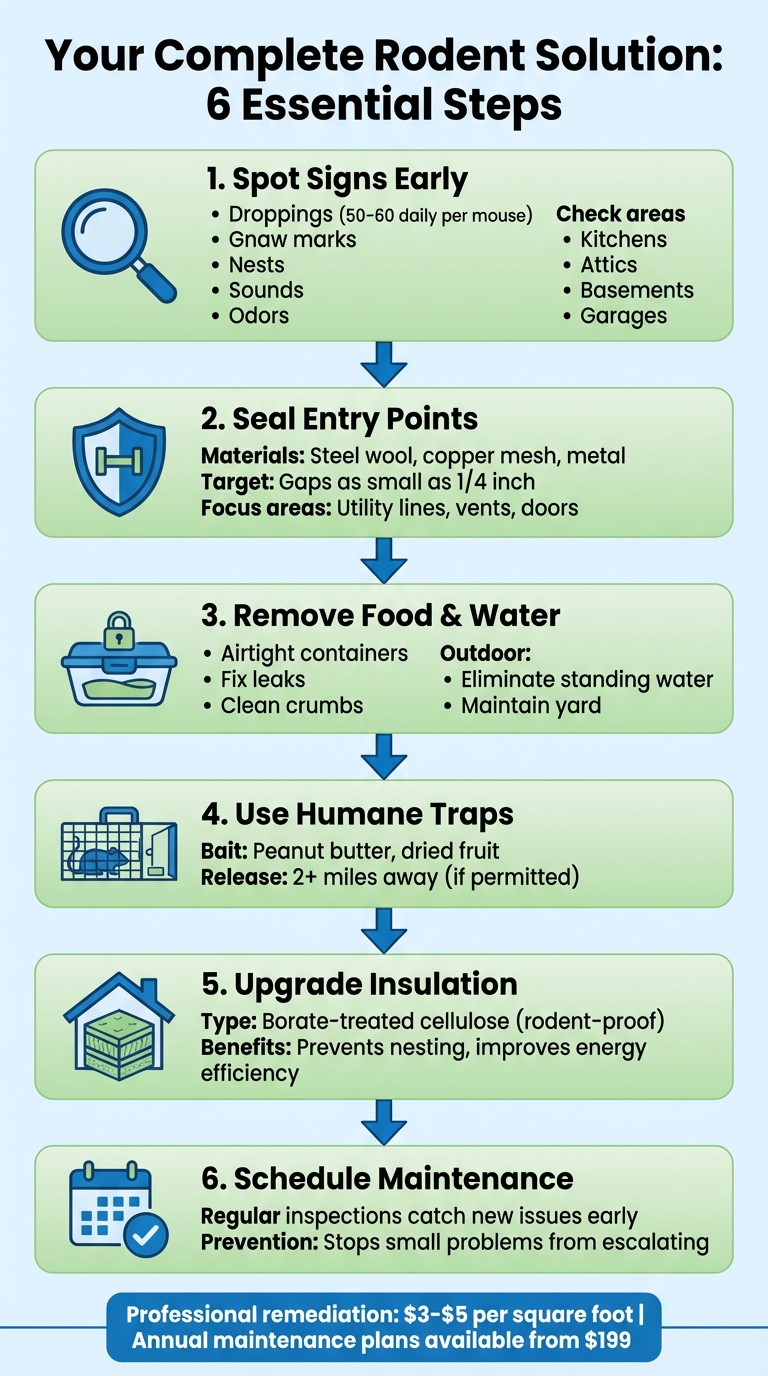
Key Steps to Solve Rodent Issues:
- Spot Signs Early: Look for droppings, gnaw marks, nests, unusual sounds, and odors in kitchens, attics, basements, and garages.
- Seal Entry Points: Use steel wool, copper mesh, or metal to block gaps as small as 1/4 inch. Check around utility lines, vents, and doors.
- Remove Food & Water Sources: Store food in airtight containers, fix leaks, and clean up crumbs. Outdoors, eliminate standing water and maintain your yard.
- Use Humane Traps: Set traps with bait like peanut butter or dried fruit. Release rodents at least two miles away if allowed.
- Upgrade Insulation: Install rodent-proof insulation like borate-treated cellulose to prevent nesting and improve energy efficiency.
- Schedule Maintenance: Regular inspections help catch new issues before they escalate.
Taking these steps not only resolves current infestations but also prevents future problems. For professional help, services like Envirosmart Solutions offer comprehensive remediation and annual maintenance plans to keep your home rodent-free.
6-Step Guide to Eliminate Rodent Infestations
Do THIS to Your Home – And Rats Will NEVER Come Back!
How to Spot a Rodent Infestation
Catching a rodent problem early can save you time, money, and a lot of hassle. Rodents are experts at staying out of sight, so by the time you notice them, their numbers might already be significant. Spotting the signs early is key to stopping a small issue from spiraling into a major headache.
Physical Signs of Rodent Activity
One of the clearest indicators of rodent activity is droppings. Rat droppings are spindle-shaped, while mouse droppings are more pointed. If you see fresh droppings frequently, it’s a sign that the infestation is active and ongoing.
Another telltale sign is gnaw marks. Rodents have to keep their teeth in check, so they’ll chew through wood, plastic, pipes, and even electrical wiring. You might also notice oily smudges along walls and baseboards, left behind by the oils in their fur as they travel along their usual routes.
Pay attention to unusual sounds. Scratching, scurrying, or squeaking noises coming from walls, ceilings, or the attic – especially at night – are a strong sign of rodent activity. Look for nests made from shredded materials like paper, fabric, or insulation in hidden, warm spaces. A strong, musty smell or an ammonia-like odor is another red flag. And if you see live or dead rodents during the day, it often points to a well-established infestation.
Once you notice these signs, it’s time to inspect key areas in and around your home.
Where to Check for Rodents
Knowing where to look can help pinpoint the problem. Start your search in the kitchen. Check under and behind appliances like the stove, refrigerator, and dishwasher. Don’t forget to look inside pantries, under sinks, and in the narrow "toe kick" space beneath cabinets – rodents love these tight, hidden areas.
Next, move to the attic or loft. Look for hollowed-out sections in the insulation or tunnels that could serve as nests. Then, inspect basements and crawl spaces, focusing on areas near foundations, floor drains, or behind clutter.
In the garage or shed, check behind stored items and around garbage cans. Outdoors, examine spaces under decking, within woodpiles, near utility line entry points, and along fence tops. Since rodents are most active at night, consider doing some of your inspection after dark to catch them in motion. For an extra trick, sprinkle a light layer of flour or talcum powder in dusty corners, and check for fresh footprints the next morning.
How to Seal Entry Points
Once you’ve identified signs of rodent activity, the next step is to block their access for good. Robert A. Pierce II, Fisheries and Wildlife State Specialist at the University of Missouri Extension, emphasizes:
"The most successful and permanent form of rat control is to build them out by making their access to structures as difficult as possible."
Rodents are incredibly resourceful. Mice can squeeze through gaps as small as 1/4 inch, while rats only need about 1/2 inch to slip inside. With an estimated 21 million homes in the U.S. experiencing rodent invasions every winter, sealing entry points is crucial.
Best Materials for Sealing Gaps
Not all materials can stand up to determined rodents. For smaller gaps and cracks, coarse steel wool or copper mesh works best. Pack the material tightly into the opening and secure it with all-weather caulk or spray foam to keep rodents from pulling it out. Copper mesh is particularly useful in damp areas since it resists rust.
For larger openings, you’ll need sturdier materials. Opt for 19-gauge hardware cloth with 1/4-inch mesh for vents, 26-gauge galvanized sheet metal for door edges and pipe surrounds, or a 1:3 cement mortar mix to patch foundation cracks. Here’s a simple rule: if a pencil can fit through a gap, a mouse can likely get in.
Common Entry Points to Secure
Rodents often exploit gaps around utility and service lines. Check areas around gas pipes, electrical meters, and air conditioning compressor lines. Seal these openings with heavy-duty caulk or metal mesh.
Roof and attic access points are another favorite for rodents. Protect roof vents, soffit gaps, and gable vents with 1/4-inch wire mesh screens, and install a professional-grade chimney cap to stop them from entering through the top. At ground level, inspect foundation cracks, crawlspace vents, and window wells. Make sure window well drains have covers at least 4 inches wide to prevent rodents from accessing the drain tile. Pay close attention to areas where different building materials meet, such as where siding meets a stone foundation or at corners, as these spots are often overlooked entryways for mice.
Doors and windows also need attention. Install metal door sweeps to close gaps at floor level, and use vinyl or rubber seals under garage doors. Keep the gap between the door bottom and threshold under 1/4 inch. For tight crevices, apply insulating foam with a bittering agent to discourage chewing.
Removing Food, Water, and Nesting Materials
Even if you’ve sealed up entry points, rodents will stick around if they have easy access to food and water. As Tomcat explains, "Rats and mice are opportunistic feeders that will eat any food discarded by humans. Eliminating their sources of food and water is critical to controlling them." With nearly one-third of Americans having dealt with rodent infestations, cutting off their access to sustenance is a key step in getting rid of them. Start by removing food sources that might be keeping them around.
Food Storage and Trash Management
To keep rodents out, store dry goods, pet food, and birdseed in sturdy, airtight containers made of metal, glass, or heavy plastic. Avoid using cardboard – it’s no match for rodent teeth and can even double as nesting material. Place these containers on shelves to make them harder for rodents to reach.
Make it a habit to clean under appliances like your stove, refrigerator, and dishwasher, where crumbs often collect. Secure trash cans with tight-fitting lids, and check them for signs of gnawing. If you feed pets outdoors, only do so during the day and remove any leftover food immediately. Outside, clear away fallen fruit and spilled birdseed, both of which can attract unwanted visitors.
Fixing Leaks and Controlling Moisture
Rats only need about an ounce of water a day to survive, meaning even a minor leak can sustain them. Inspect and fix leaks under sinks, behind refrigerators, and near dishwashers. Wipe up spills right away. As Victor Pest points out, "any places in your basement that attract moisture, may also attract rats". To keep your home less inviting, use dehumidifiers or improve ventilation in damp areas like basements and crawl spaces.
Outside, take steps to prevent water from pooling. Fill in low spots in your yard, clear out gutters, and make sure downspouts direct water away from your house. Cover buckets, empty plant saucers, and consider removing birdbaths temporarily if you’re dealing with an infestation. Once food and water are under control, turn your attention to reducing clutter that rodents might use for nesting.
Decluttering and Yard Maintenance
Rodents love to build nests out of household items . Get rid of piles of materials in basements, attics, and storage areas, and keep stored items off the ground by using shelves or pallets. Outdoors, maintain at least a 2-foot gap between vegetation – like shrubs and tree limbs – and your home’s exterior. Keep your lawn trimmed to no more than 2 inches to eliminate hiding spots for rodents. Additionally, remove firewood, brush piles, leaf piles, and deep mulch from around your home, and trim back any tree branches that hang over your roof.
sbb-itb-8db64ac
Humane Rodent Removal Methods
Once you’ve secured all entry points, the next step is to remove any lingering rodents in a humane way. With food sources eliminated and access points sealed, it’s time to focus on the safe removal of the remaining pests. Live-catch traps offer a way to capture and release rodents unharmed, while electronic traps provide a swift and humane solution. As Victor Pest explains:
"Electronic mouse traps are a quick, effective, and humane way to catch mice".
Setting Up Humane Traps
After sealing your home and removing food temptations, humane traps can help you safely catch any rodents still inside. For live-catch solutions, the Victor TIN CAT trap is designed to capture multiple mice at once. Position these traps parallel to walls and use high-protein baits like peanut butter or hazelnut spread for mice. For rats, try dried fruits or bacon . Since rats are naturally cautious of new objects, pre-bait traps for about a week to help them overcome this hesitation. Always wear gloves when handling traps and check them daily. If local regulations permit, release captured rodents at least two miles away from your home to prevent their return.
Natural Repellents
Natural repellents can be a helpful addition to your rodent control efforts. Peppermint oil, for example, irritates rodents’ nasal passages. Apply a few drops to cotton balls and place them near entry points like garages, attics, or crawl spaces. Replace the cotton balls every 5–7 days. You can also spray essential oils on doors, windows, and vents every 30 days for ongoing protection.
Ultrasonic devices are another option. These emit high-frequency sounds (32–62 kHz) that are distressing to rodents but inaudible to humans and most pets. Victor Pest describes the effect:
"repels rodents by subjecting them to intense auditory stress… equivalent to us hearing a jackhammer non-stop".
To maximize their effectiveness, place ultrasonic devices in open areas like basements, attics, or crawl spaces, avoiding spots where furniture or curtains might block sound waves . Together, these humane methods round out an effective and ethical approach to rodent control.
Installing Rodent-Proof Insulation and Barriers
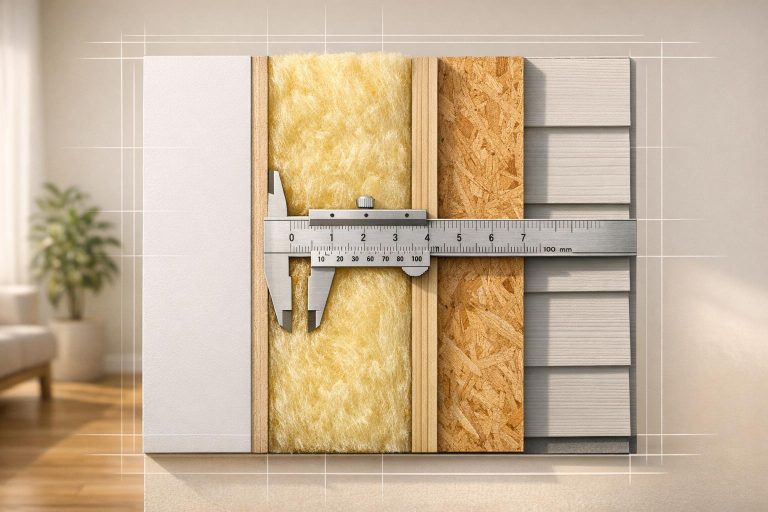
Once entry points are sealed and hazards are addressed, the next step is to strengthen your home’s defenses with rodent-proof insulation. Traditional fiberglass insulation can be a magnet for rodents, as they often tear through it to create nests. Within just a few years, this damage can compromise your home’s thermal efficiency, potentially driving up heating and cooling costs. Upgrading to rodent-resistant insulation eliminates this issue while also improving energy efficiency.
Why Rodent-Proof Insulation Makes a Difference
Rodent-proof insulation is specifically designed to resist pests and withstand damage. A popular choice is borate-treated cellulose, which is treated with a natural mineral that deters rodents from nesting or chewing it. Dumitru Nicolaescu of Green Attic Insulation highlights its effectiveness:
"The borate treatment makes the cellulose insulation unattractive to rodents, significantly reducing the likelihood of future infestations".
Another option is reflective closed-cell insulation, such as Prodex Total. This material features a reinforced foil exterior and a polyethylene foam core, which not only prevents nesting but also reflects up to 97% of radiant heat.
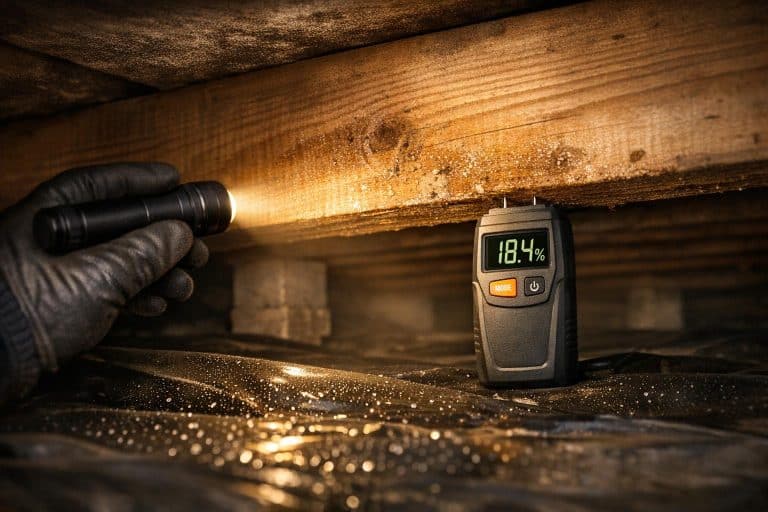
For added protection, pair rodent-proof insulation with a heavy-duty vapor barrier (6-mil to 12-mil thick) across your crawl space floor. This barrier prevents rodents from tunneling under your home while also controlling moisture, a key attractant for pests. It further reduces the risk of droppings and urine accumulation, which can spread diseases like hantavirus and salmonellosis. Together, these measures can prevent up to 90% of pest-related damage, ensuring your home remains well-protected for years to come.
Professional Installation Services
Hiring professionals to install rodent-proof insulation ensures thorough protection. The process begins with removing any remaining pests and contaminated insulation using high-powered vacuums. Afterward, technicians disinfect surfaces to eliminate odors, pheromones, and bacteria. These services typically cost between $1.00 and $2.00 per square foot.
Next, air sealing is performed around vent stacks, HVAC components, plumbing, and electrical lines using durable materials like steel wool or copper mesh. Once the sealing is complete, new rodent-resistant insulation is installed alongside vapor barriers to control moisture and enhance durability. This comprehensive approach not only secures your home’s insulation but also reinforces earlier prevention efforts.
For ongoing maintenance, Envirosmart Solution’s CRAWL SPACE & ATTIC CARE™ package offers annual inspections for $199. These inspections include checks on insulation, air gaps, and rodent activity, along with a 15% discount on recommended services. For more extensive protection, full remediation packages – which include air sealing, ventilation upgrades, and insulation installed to R60 levels – generally cost between $3.00 and $5.00 per square foot.
Annual Maintenance for Long-Term Protection
Why Regular Inspections Matter
Even with rodent-proof insulation and sealed entry points, your home still requires consistent attention. Rodents are resourceful and can find new ways in, especially as buildings shift over time or after severe weather damages foundations or rooflines. In fact, a gap as tiny as 1/4 inch – about the size of a dime – is enough for a mouse to squeeze through.
Routine inspections are key to catching problems early. As the American SPCC explains:
"Early detection helps stop infestations before they become overwhelming".
During inspections, professionals check critical areas like attic vents, utility line entries, and kitchen toe kicks to ensure seals are still intact and to identify any new weak points.
These regular checkups do more than just prevent structural damage to wiring and insulation. They also protect your family from potential health risks caused by exposure to harmful pathogens and reduce fire hazards from chewed electrical wires. This kind of ongoing monitoring lays the groundwork for effective annual maintenance solutions.
Maintenance Package Options
To build on your rodent-proofing efforts, Envirosmart Solution offers tailored maintenance packages designed to keep your home protected year after year. These services extend your initial preventive measures, ensuring lasting security.
The SMART GOLD™ package provides comprehensive annual coverage for $699. It includes four essential services: dryer vent cleaning (DRYER SMART™), air duct cleaning (SMART DUCTS™), attic and crawl space inspections (CRAWL SPACE & ATTIC CARE™), and furnace maintenance (FURNACE CARE™). Plus, you’ll get a 20% discount on any additional services recommended during inspections.
For more focused protection, the CRAWL SPACE & ATTIC CARE™ package is available for $199 per year. This plan centers specifically on rodent prevention, with technicians inspecting insulation, checking for air leaks, and looking for signs of rodent activity. It also includes a 15% discount on any necessary follow-up services. Compared to emergency extermination and repairs – which can cost $3.00 to $5.00 per square foot – this proactive approach offers significant savings.
Conclusion
Tackling rodent problems effectively requires a thoughtful, step-by-step plan. As the CDC advises, "It’s easier to control rodents before they can establish themselves in your home or building". With rodents capable of spreading over 35 diseases, acting quickly is not just wise – it’s necessary.
The key to success lies in combining immediate actions with a long-term strategy. Start by sealing entry points, removing food sources, and using humane trapping methods to address the problem at hand. For lasting protection, consider measures like installing rodent-proof insulation and conducting regular maintenance. This kind of integrated approach doesn’t just solve the current issue – it helps prevent future infestations from taking root.
For those seeking a professional solution, Envirosmart Solutions offers a full range of attic remediation services, including removal, disinfection, air sealing, and the installation of rodent-proof insulation. With costs typically ranging from $3.00 to $5.00 per square foot, investing in these services now can save you from more expensive repairs down the road.
Don’t wait for telltale signs like scratching in the walls. Acting quickly protects your home, maintains its value, and ensures a healthier, rodent-free environment.
FAQs
What are the early signs of a rodent infestation in my home?
Rodents often leave behind hints of their presence long before you actually see them. Look out for small, dark droppings tucked away in places like pantry shelves, under sinks, or in attic corners. You might also spot greasy smudge marks along walls and baseboards where they frequently travel. Other signs include gnaw marks on wood, wiring, or food packaging, and shredded materials like paper or fabric that they use for nesting. A musty smell in confined areas or faint scratching sounds coming from walls or ceilings at night can also signal that rodents are nearby.
Be sure to check areas like attics, crawl spaces, behind appliances, and around pipes or vents for holes, nests, or smooth dirt paths along walls. If you notice any of these signs, take action immediately – seal off entry points, eliminate food and water sources, and set traps to keep the situation from getting worse.
What are the best materials to seal off rodent entry points?
To keep rodents from sneaking into your home, it’s crucial to use materials they can’t chew through. Some of the most effective options include steel wool, 1/4-inch metal mesh (made of copper or steel), sheet metal, and expanding foam with a bittering agent. These create a tough barrier that not only blocks entry but also discourages rodents from trying again.
Take time to carefully inspect your home for any gaps or holes, especially around areas like pipes, vents, and the foundation. Sealing these entry points properly is key to keeping rodents out for good.
Why is regular home maintenance essential for keeping rodents out?
Regular home maintenance plays a crucial role in keeping rodents at bay by removing the essentials they rely on: food, water, and shelter. Simple tasks like wiping down kitchen surfaces, storing trash in tightly sealed containers, and repairing leaks can go a long way in eliminating common attractants. Additionally, sealing gaps and cracks using materials such as steel wool or expanding foam creates a barrier that prevents rodents from sneaking into walls, attics, or crawl spaces.
Staying consistent with upkeep also helps you spot early warning signs, such as droppings, gnaw marks, or nests, so you can tackle problems before they spiral out of control. This proactive approach not only protects your home from structural damage and health hazards but also saves you the cost and hassle of emergency pest control. Regular maintenance is a straightforward and effective way to keep your home rodent-free.