
Air leaks waste up to 50% of heating and cooling energy, driving up utility costs and causing discomfort, drafts, and potential health risks from pollutants. Acoustic detection offers a precise way to locate leaks using sound waves, making it easier to seal gaps and improve energy efficiency.
Here’s how it works:
- A sound generator emits ultrasonic waves (40 kHz) on one side of a surface.
- A receiver detects escaping sound through gaps, pinpointing leaks as small as 0.06 mm.
Key Benefits:
- Works in any weather.
- Detects leaks during construction or renovation.
- Pinpoints issues without disrupting structures.
Tools Used:
- Ultrasonic Detectors: Compact devices for small gaps (cost: $4,000–$12,000).
- Acoustic Cameras: Use microphone arrays to map leaks visually.
- Validation Tools: Smoke sticks and thermal imaging confirm findings.
To get accurate results, calibrate tools, manage background noise, and scan systematically. Pairing this method with energy upgrades can lower bills, qualify for energy upgrade rebates, and maintain long-term efficiency.
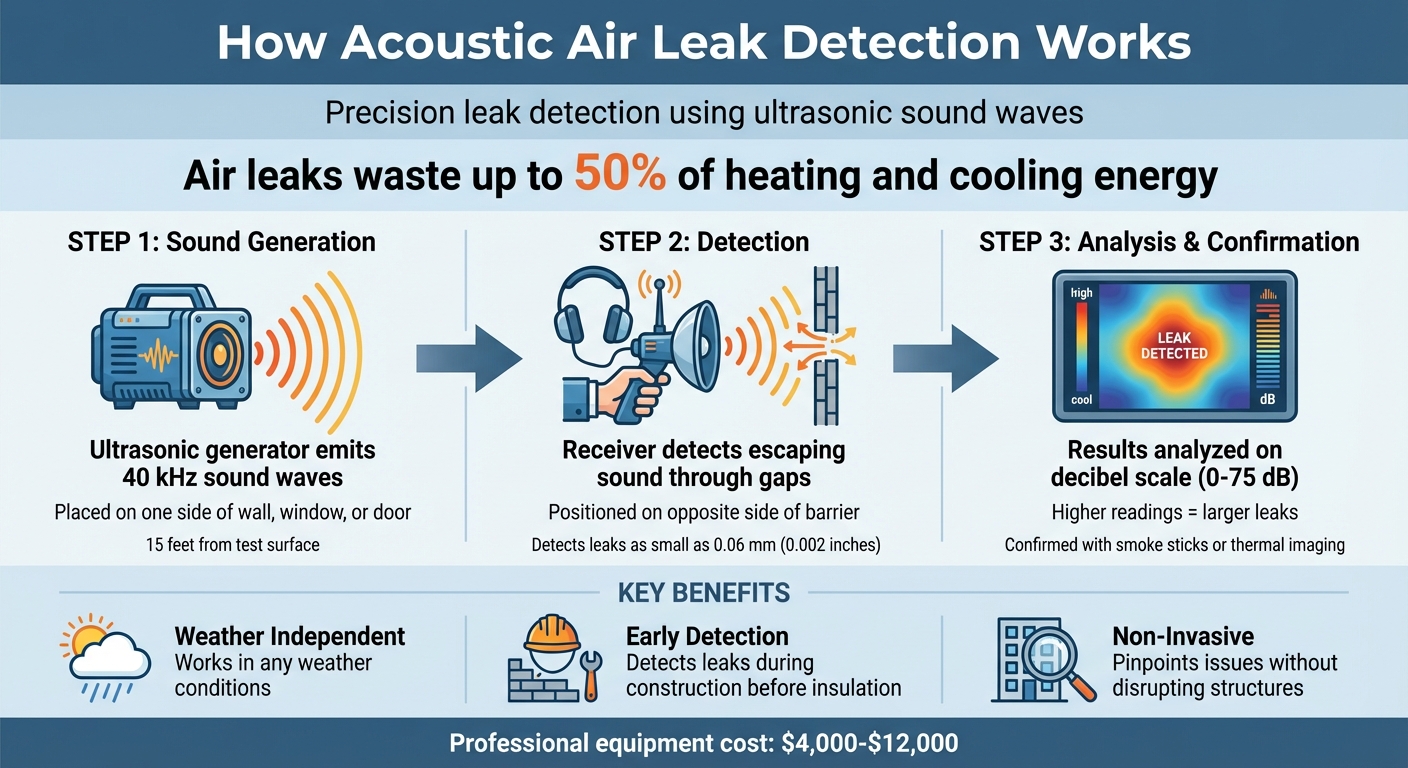
How Acoustic Air Leak Detection Works: 3-Step Process
Tools and Equipment for Acoustic Air Leak Detection
Ultrasonic Leak Detectors
Ultrasonic leak detectors consist of two main components: a sound generator and a receiver. The generator is placed on one side of a barrier – such as a wall, window, or door – and emits high-frequency sound waves, typically around 40 kHz, which is far beyond the range of human hearing. On the opposite side, the receiver detects these sound waves as they escape through gaps, converting them into audible signals through headphones or displaying the intensity on a digital scale. These devices are highly sensitive, capable of identifying openings as small as 0.06 mm (0.002 inches).
As home energy auditor Randy Williams puts it:
The tool has two main parts, a sound generator and a sound receiver. The generator produces a cone of sound at 40,000 Hz, well above human hearing. The receiver is tuned to ‘hear’ the noise produced at that frequency.
Basic ultrasonic detectors, such as the Coltraco Portascanner, are priced between $4,000 and $4,083, while more advanced models like the Portascanner Airtight – which can estimate air leakage rates – cost around $12,000. While these detectors are excellent for pinpointing specific leaks, larger-scale inspections often require tools with broader capabilities.
Microphone Arrays and Beamforming Tools
For examining larger areas, microphone arrays are a great complement to ultrasonic detectors. These setups use multiple microphones – typically between 48 and 64 – arranged in specific patterns to capture sound data across wide spans. Acoustic cameras, which incorporate these microphone arrays, also feature a visible-light camera at their center. This allows inspectors to create real-time images of the building facade while advanced beamforming technology processes sound data. By analyzing the slight differences in sound arrival times at each microphone, the system generates a "sound map" that overlays onto the visual image, pinpointing the exact location of leaks. This method allows entire walls or facades to be scanned in just minutes.
In April 2024, researchers from the German Aerospace Center (DLR) used an Acoustic Camera Array Ring48 AC Pro – a 48-microphone ring array – in a field study. They tested over 30 rooms in three multi-story office buildings in Villingen-Schwenningen, Germany. A dodecahedron speaker was used to generate white noise (spanning 0.05 kHz to 16 kHz) inside the rooms, while the camera was positioned outside. The study successfully identified numerous facade leaks, which were later confirmed with smoke sticks.
Additional Tools for Better Accuracy
To improve accuracy and validate results from ultrasonic detectors and microphone arrays, professionals rely on additional tools and accessories. For instance, headphones provide audible feedback on leak intensity, reducing the need to constantly monitor digital displays. In larger spaces, omnidirectional or dodecahedron speakers are used to fill the area with white noise or specific frequencies, ensuring even minor structural gaps are tested.
Signal processing software, such as NoiseImage, plays a critical role by analyzing acoustic data and filtering out background noise or structural vibrations. These programs focus on specific frequency bands (typically between 800 Hz and 25 kHz) to identify genuine leaks. Some software even categorizes leaks by type – such as hoses, open-end orifices, or threaded couplings – making it easier to estimate flow rates.
To confirm acoustic findings, professionals often turn to tools like smoke sticks or thermal imaging cameras. Thermal imaging is particularly effective when there’s a noticeable temperature difference between the interior and exterior, helping to locate leaks that might otherwise go unnoticed. Together, these tools ensure a thorough and precise inspection of a building’s envelope.
sbb-itb-8db64ac
Preparing for an Acoustic Inspection
Site Assessment and Safety
Accurate inspection starts with a solid safety and site evaluation. Begin by checking all doors, windows, and dampers, and document their status to create a baseline. Look out for hazards like gas leaks or carbon monoxide, especially near combustion appliances such as furnaces, water heaters, or boilers. If the site contains mold, asbestos, or lead-based paint, address these issues beforehand to avoid disturbing them during testing.
For fireplaces, either remove ashes or cover them with wet newspaper, then seal the opening temporarily using tape and cardboard to prevent ash from spreading throughout the space. Secure any loose papers, notify occupants and pets to remain in designated areas, and ensure you have dependable power access for your equipment. If the inspection involves exterior work, evaluate whether you’ll need stable ground for tripod-mounted cameras or clear paths for drones equipped with sensors.
Calibrating Your Equipment
Calibration is critical because environmental factors – like temperature, humidity, and air pressure – affect how sound travels. These variables influence gas density and viscosity, which in turn alter sound propagation through leaks. Before starting, run three quick calibration tests on your receiver and wand to ensure the equipment is functioning properly and external interference isn’t affecting your readings.
Set a baseline scale on your receiver – commonly 0 to 75 dB or a linear scale ranging from 0 to 31,775 – to differentiate between airtight assemblies (0 dB) and actual leaks. Remember, sound intensity drops by about 5 dB each time the distance between the leak and your measurement point doubles. If you’re using acoustic cameras, analyze sound pressure levels across frequency bands (typically 800 Hz to 25 kHz) to pinpoint where the leak signal stands out most clearly from background noise. Lastly, account for environmental sounds to ensure your calibrated settings provide accurate results.
Managing Background Noise
Background noise can mimic leak signals, leading to false positives. Using ultrasonic frequencies around 40 kHz helps reduce interference since most environmental sounds – like traffic, wind, or rustling leaves – occur at much lower frequencies within the range of human hearing (20 Hz to 20 kHz). However, even high-frequency equipment can pick up disturbances. Research shows that environmental noise, such as rustling leaves, can produce high sound pressure levels, requiring careful filtering to avoid errors.
Keep your acoustic camera and sound source stationary during each measurement to maintain consistency. Use beamforming technology to focus on specific areas of the building envelope while filtering out noise from other directions. Record a reference signal near the sound source to help isolate true leak signals. Effective coordination between your internal team (handling the sound source) and external team (operating the camera) is essential – use mobile phones or hand signals to streamline communication.
How to Detect Air Leaks Using Acoustic Methods
Setting Up the Sound Source
Start by positioning your frequency generator about 15 feet away from the surface you’re testing. Place the sound source on one side of the building envelope – either inside or outside – while keeping the receiver or acoustic camera on the opposite side. For standard testing, set the generator to emit a 40 kHz ultrasonic pulse or a broadband white noise signal at approximately 85 dB. For larger facades or multi-story buildings, you might need a mix of high-frequency speakers (15 kHz–120 kHz) and low-frequency dodecahedron speakers (0.05 kHz–16 kHz) to cover a broader range.
The angle of the generator relative to the suspected leak is crucial for accuracy, so learning the proper orientation is key. Keep both the sound source and receiver stationary. For complex leaks, such as those that start at a ceiling fixture and exit at a wall junction, reversing the positions of the devices can help identify both the entry and exit points. Once you’re confident in the setup, proceed to scan the building envelope systematically.
Scanning the Building Envelope
With the sound source in place, begin scanning the test surface to detect leak signals. Slowly move your sensor wand or acoustic camera along the surface, keeping it within a range of a few inches to one foot from the envelope. Pay extra attention to common problem areas like window cladding seals, cable penetrations (e.g., shutter cables), and wall-roof junctions. Remember, sound intensity drops by about 5 dB for every doubling of the distance from the leak.
If you’re using an acoustic camera equipped with a microphone array, it will produce visual sound maps. These maps overlay colored heat zones on optical images, clearly marking areas where sound pressure levels are higher. Stay coordinated with your team – whether through mobile phones or hand signals – to ensure the sound source and camera operators remain synchronized.
Analyzing and Confirming Results
Examine the readings on a decibel scale (0–75 dB) or a linear scale (0–31,775), where higher values typically indicate larger leaks. To pinpoint frequency-specific signals, analyze data across multiple third-octave bands (800 Hz to 25 kHz).
Björn Schiricke from the German Aerospace Center emphasizes the importance of this approach:
"A sequence of images across different frequency bands is required to illustrate all potential leakages found in the building envelope."
Make sure the detected hotspots align with logical leak locations. For instance, if a sound peak is detected in the center of a solid window pane rather than near a seal, it’s likely caused by vibration or reflection, not an actual leak. To verify suspected leaks, use secondary methods such as visual inspections, smoke sticks, or thermal imaging. Document your findings with photos and intensity readings to prioritize repairs. Advanced tools may also provide a Leak Rate Quantification (LRQ) index (ranging from 0 to 10) to help identify and address the most critical leaks.
Benefits, Limitations, and Best Practices
Benefits of Acoustic Methods
Acoustic methods stand out because they are non-invasive and don’t rely on artificial pressure differences. They are especially useful under natural low or no-flow conditions. As Björn Schiricke from the German Aerospace Center puts it:
Acoustic testing, which is particularly appealing due to its non-invasive nature, does not require significant air movement through the envelope, allowing for assessments under naturally occurring low or no-flow conditions.
Unlike blower door tests, which depend on a nearly complete air barrier, acoustic tools can be used much earlier in the construction process. For instance, they can test taped seams and window seals before insulation is installed. Field studies highlight their ability to precisely identify leaks. This precision is critical since uncontrolled air infiltration can account for 30% to 50% of heating and cooling energy consumption.
While these advantages make acoustic methods appealing, they do come with some challenges.
Limitations to Keep in Mind
One significant drawback is that background noise can interfere with results. Sounds like rustling leaves or nearby machinery can obscure leak signals or even cause false positives. Distance also plays a key role in accuracy – doubling the distance between the leak and the detector can reduce sound intensity by about 5 dB. Additionally, leaks emit sounds at varying frequencies, meaning some might go undetected in certain frequency ranges but become evident in others, typically between 800 Hz and 25 kHz.
Another issue is structure-borne noise, such as vibrations in window panes, which can mimic the sound of leaks. Material characteristics, such as gas density and the shape of the leak’s opening, also influence the sound signature, complicating detection.
To navigate these challenges, following specific best practices is essential.
Best Practices for Accurate Detection
For effective acoustic leak detection, scanning across multiple frequency bands is crucial. Use third-octave intervals within the 800 Hz to 25 kHz range, as leaks may only appear in specific bands. Adjust frequency limits iteratively until the peak moves by less than 5 pixels. Always confirm suspected leaks with secondary methods like smoke sticks or visual inspections to rule out false positives caused by reflections. Keep the detection equipment stationary to maintain consistent readings.
Document findings thoroughly, including photos and intensity measurements, and critically assess whether the results are logical. For example, if a sound peak is detected in the middle of a solid window pane, it’s likely caused by vibration rather than an actual air leak.
These steps help ensure accurate and reliable results when using acoustic methods for leak detection.
Combining Acoustic Detection with Energy Efficiency Services
Improving Insulation and Air Sealing
Pairing acoustic leak detection with energy efficiency services can significantly enhance comfort while cutting costs. Acoustic detection pinpoints leaks with precision, allowing for focused repairs like caulking and weatherstripping. This approach not only reduces labor but also trims expenses.
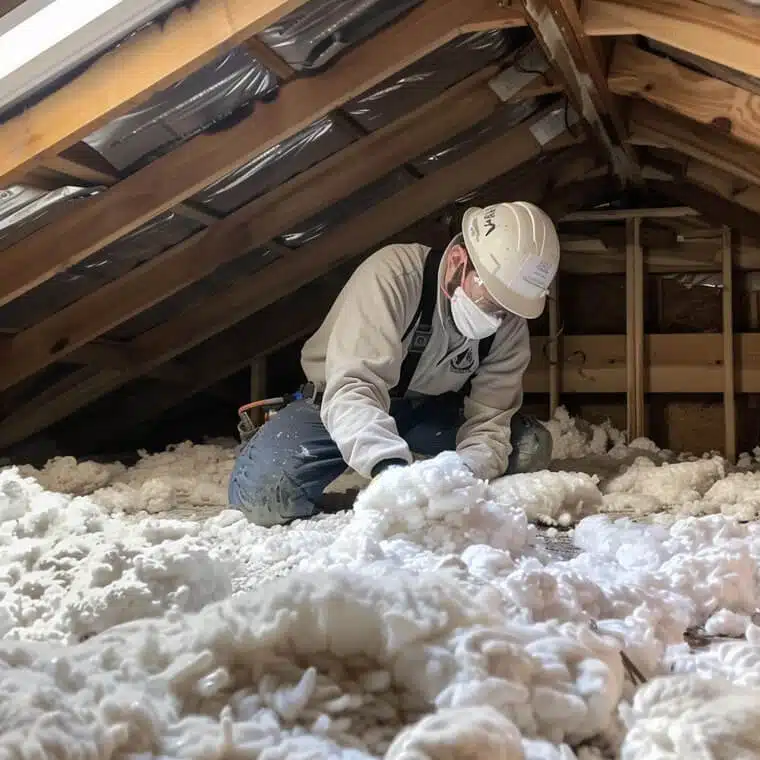
By using acoustic tools before installing insulation, potential issues are addressed early on. Energy auditor Randy Williams highlights this benefit:
ultrasonic testing "can be used to test taped seams, window and door seals, and any/all penetrations that have been sealed before insulation is installed".
Identifying and fixing these problems upfront avoids the need for expensive corrections later. Once leaks are located, targeted insulation and air sealing address the root causes of energy loss. These precise repairs also strengthen applications for energy rebates, making the process more efficient and rewarding.
Getting Rebates and Incentives
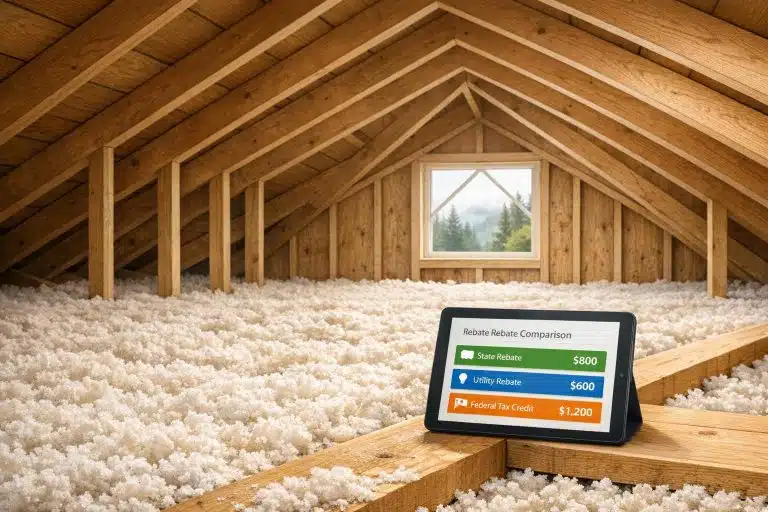
Detecting air leaks isn’t just about saving energy – it can also help you save money through rebates. Many government and utility programs require assessments by certified professionals, like RESNET Home Energy Raters or BPI Building Analysts, to qualify for incentives. Acoustic detection provides detailed documentation of needed repairs, which is often a requirement for these programs.
Acoustic beamforming sound maps offer clear, visual evidence that meets verification standards for rebate applications. Additionally, many programs require follow-up testing to confirm improvements. Combining acoustic methods with blower door tests provides both precise leak locations and measurable data, including air changes per hour at 50 Pascals, which high-tier rebate programs often demand.
Envirosmart Solution specializes in helping property owners navigate rebate options. They handle the paperwork and verification process, ensuring you receive the maximum financial benefits from your energy efficiency upgrades.
Annual Maintenance Packages
Over time, air seals can degrade due to seasonal temperature changes or natural settling, leading to new gaps. Regular acoustic inspections can detect even the tiniest defects – some as small as 0.002 inches – before they cause significant energy loss or structural issues like mold.
Acoustic tools are effective year-round, as they don’t rely on specific temperature differences or pressurization to operate. This makes them ideal for routine maintenance checks, no matter the season.
Envirosmart Solution offers the SMART GOLD™ package for $699 annually, which combines energy efficiency monitoring with comprehensive home care. The package includes furnace inspection, air duct cleaning with camera inspection, dryer vent cleaning, as well as attic and crawl space inspections with rodent checks. This ensures your home’s air barrier remains intact year-round, protecting your comfort and energy savings in the long run.
Conclusion
Summary of Benefits
Acoustic methods are transforming how we locate air leaks in building envelopes. Unlike traditional blower door tests, which only measure the overall leakage rate, advanced tools like ultrasonic detectors and acoustic beamforming cameras pinpoint the exact location of leaks. Whether it’s a damaged window gasket, a gap at a wall-roof junction, or a cable penetration, these tools provide unmatched precision. This is crucial because unintended airflow through building envelopes contributes significantly to energy costs.
One of the standout features of acoustic detection is its versatility. Inspections can be conducted at any stage of construction – even before the air barrier is fully installed. The technology is so precise that it can detect leaks as small as 0.002 inches, which is about half the thickness of a human hair. This level of detail allows homeowners to address potential problems early, preventing small leaks from turning into major energy drains or structural issues.
By identifying specific leak locations early, homeowners can focus on targeted sealing efforts. This not only reduces heating and cooling costs but also eliminates uncomfortable drafts. Plus, it helps cut down on labor and material expenses while providing the detailed documentation often required for energy rebate programs. However, to maximize these benefits, professional expertise is key.
Working with Professionals
The precision and effectiveness of acoustic detection make professional involvement essential. While the technology offers exceptional accuracy, using it properly requires specialized knowledge. Professional-grade detectors are a significant investment, and interpreting the data involves understanding how to differentiate real leaks from false positives caused by sound reflections or vibrations.
Envirosmart Solution offers a comprehensive approach to acoustic detection and energy efficiency across the Pacific Northwest. Their services include everything from initial inspections to air sealing, insulation removal and installation, and assistance with rebate applications. For $699 annually, their SMART GOLD™ package provides year-round monitoring to maintain an effective air barrier and ensure consistent energy savings. This integrated service ensures that leaks are not only identified but also repaired, with ongoing maintenance to prevent future issues.
Finding Air Leaks With An Acoustic Imaging Camera
FAQs
Can acoustic testing find leaks without a blower door test?
Acoustic testing offers a way to detect air leaks without relying on a blower door test. By using ultrasonic sound waves, it can accurately locate areas where air is escaping. Ultrasonic air tightness testing methods have shown how effective this technique can be for identifying leaks in building envelopes. It works well as a standalone method or alongside other diagnostic tools to enhance energy efficiency and indoor comfort.
What conditions make acoustic leak results inaccurate?
Acoustic leak detection can struggle in specific situations, such as when pressure or flow rates are low, leaks are small or oddly shaped, or building layouts are complex, which can block sound waves from traveling. Additionally, ambient noise and other background sounds in the environment can disrupt the process, making it more difficult to identify and locate air leaks with precision.
Is acoustic air leak detection worth the cost for a home?
Acoustic air leak detection can be a worthwhile investment. It pinpoints air leaks with precision, helping to curb energy loss and boost your home’s overall efficiency. This approach is particularly helpful when conventional methods fall short or aren’t practical. By targeting leaks accurately, homeowners can improve indoor comfort and may even see a reduction in energy costs.