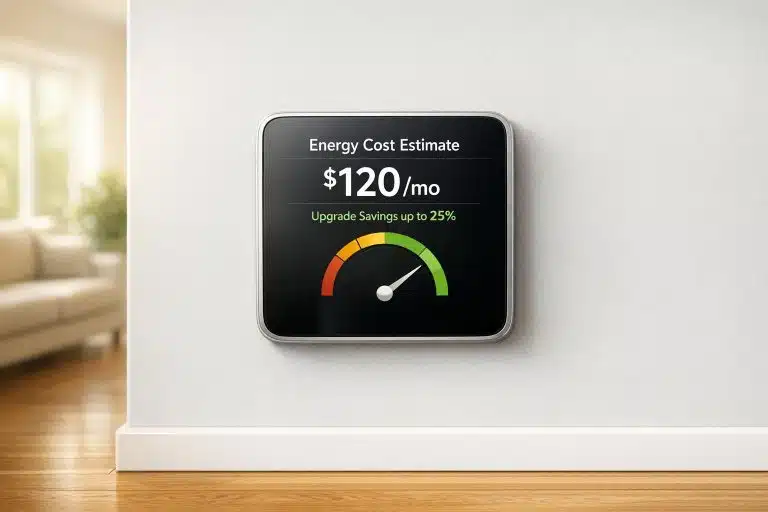

Energy-efficient appliance rebates can help you save money when upgrading to energy-saving appliances like heat pumps, electric water heaters, or induction stoves. These programs offer discounts or cashback for eligible purchases, especially for households earning less than 150% of the Area Median Income (AMI). Here’s what you need to know:
- Rebate Amounts: Federal programs like HEAR offer up to $14,000 per household, with 100% cost coverage for incomes below 80% AMI and 50% coverage for 80-150% AMI.
- Eligible Appliances: Includes heat pumps (up to $8,000), heat pump water heaters ($1,750), electric stoves ($840), and more.
- Steps to Claim:
- Check eligibility based on income and location.
- Complete a home energy assessment, if required.
- Get pre-approval before purchasing.
- Use ENERGY STAR-certified appliances and approved contractors.
- Submit all documentation for rebates.
In the Pacific Northwest, utility companies like Puget Sound Energy and Pacific Power offer additional rebates, which can be combined with federal incentives for maximum savings. Take action now to reduce upfront costs and lower energy bills over time.
Check Your Eligibility for Rebates
Federal and Local Program Requirements
Before buying new appliances, make sure you qualify for federal and state rebate programs. In the Pacific Northwest, many initiatives, such as the Home Electrification and Appliance Rebates (HEAR) program, are designed for low-to-moderate income (LMI) households. This typically includes households earning 150% or less of the Area Median Income (AMI). Since AMI percentages vary based on household size and county, what qualifies as "low income" in King County might not apply in Yakima County.
Rebate amounts are tied to income levels. Households earning below 80% of the AMI can receive rebates covering 100% of purchase and installation costs, while those earning between 80% and 150% of the AMI may get rebates for up to 50% of costs. The maximum rebate total for a household under the federal HEAR program is capped at $14,000.
It’s important to note that federal IRA rebates aren’t retroactive. You must apply before making any purchases. For example, buying a heat pump today and applying tomorrow would disqualify you. Additionally, rebates require professional installation by approved contractors. In Washington, heat pumps must also meet cold-climate performance standards to qualify. To maximize your benefits, check local utility programs for additional offers. Residents in Bellevue and Kirkland should also explore Eastside rebates for specific regional savings.
Utility Company and Vendor Rebate Offers
Local utilities often provide extra incentives alongside federal programs. For instance, Puget Sound Energy (PSE) offers the Efficiency Boost program, which provides higher rebates for income-qualified customers. Nearly 50% of PSE customers are eligible for these enhanced rebates. To confirm eligibility, PSE customers can call 1-800-562-1482.
Pacific Power has the Wattsmart® Homes program, which updated its incentives on January 1, 2026. This includes rebates like $750 for heat pump clothes dryers and $62 for qualifying clothes washers. In Oregon, Pacific Power collaborates with the Energy Trust of Oregon to provide additional cash-back offers. Be sure to contact your utility provider to learn about rebates available in your area.
Common Eligibility Requirements
Rebates often share similar requirements, regardless of the program. Appliances typically need ENERGY STAR® or AHRI certification, and you’ll need to keep purchase receipts and proof of professional installation. To determine your household’s AMI percentage, use the U.S. Department of Housing and Urban Development‘s (HUD) Income Limits Dataset for your county.
In Washington, the HEAR program is managed by various third-party administrators, such as community action agencies or local governments, so requirements may vary slightly depending on your location. To confirm specific details, reach out to your local program administrator. You can email HomeRebates@commerce.wa.gov to find the administrator for your area. Renters can also qualify for many programs, including HEAR, as long as they meet the income criteria.
sbb-itb-8db64ac
Navigating the Home Electrification and Appliance Rebate Program (HEEHR)
Find Qualifying Appliances and Upgrades
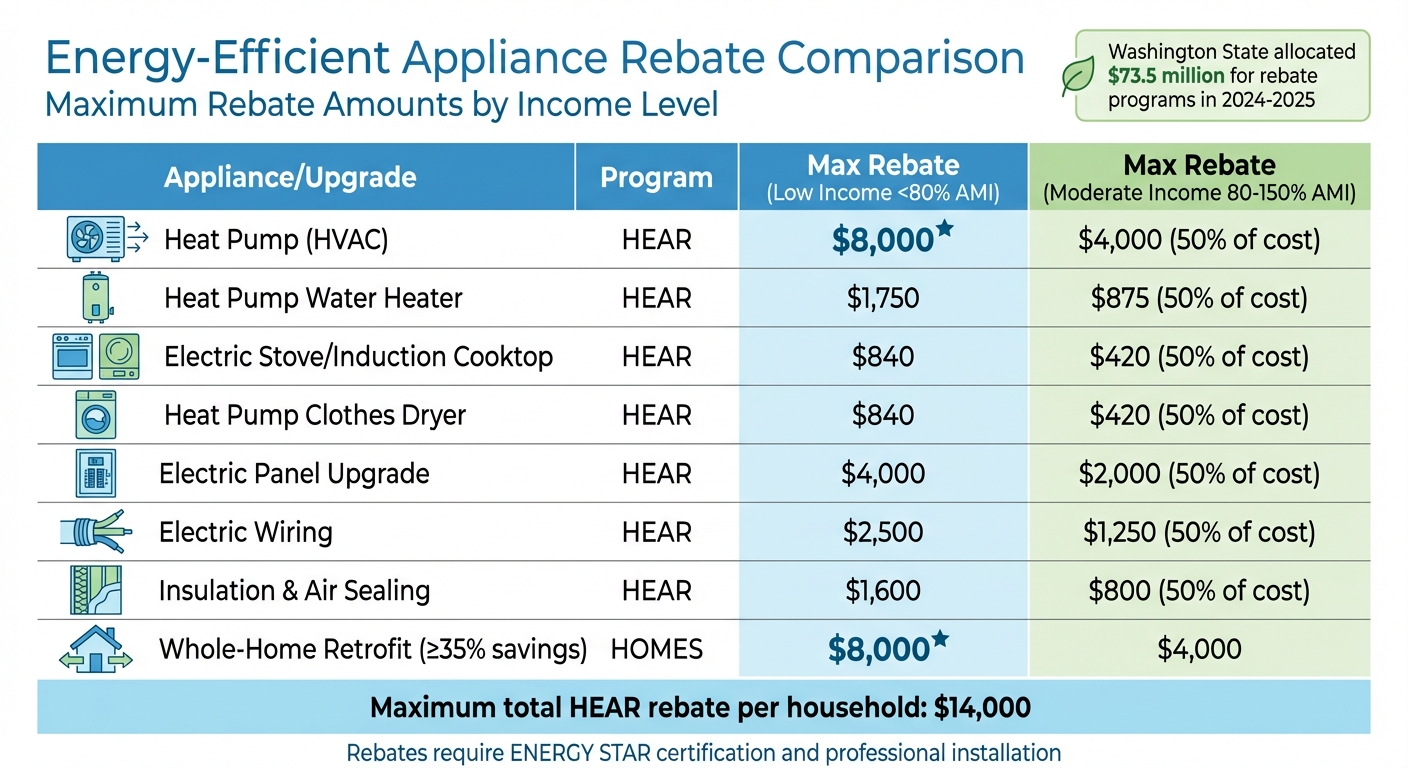
Energy-Efficient Appliance Rebate Amounts by Income Level
Appliances Eligible for Rebates
If you’re looking to replace older or gas-powered appliances, Pacific Northwest rebates offer financial incentives for a variety of electric options. For instance, heat pumps used for both heating and cooling can qualify for rebates of up to $8,000. These systems are highly efficient, using about 65% less electricity compared to traditional electric resistance heating systems.
Water heating accounts for nearly 20% of a home’s energy use, and switching to a heat pump water heater can make a significant difference. These qualify for rebates of up to $1,750. Other eligible appliances include electric stoves, cooktops, ranges, ovens, and heat pump clothes dryers, each with a rebate value of $840.
Rebates are also available for infrastructure upgrades. For example, you can receive up to $4,000 for electric panel upgrades and $2,500 for wiring improvements. Projects focused on insulation, air sealing, and ventilation can earn up to $1,600. To qualify, appliances must meet ENERGY STAR certification standards. In Washington, heat pumps must also have AHRI CEE North Region certification to ensure they perform well in colder climates.
HOMES and HEAR Program Coverage
Once you’ve identified eligible appliances, it’s important to understand how the two main rebate programs – HEAR and HOMES – work, so you can maximize your savings.
The HEAR (Home Electrification and Appliance Rebates) program provides upfront discounts for individual appliance upgrades, particularly for income-qualified households. In contrast, the HOMES (Home Efficiency Rebates) program is designed for whole-home energy retrofits, offering rebates based on the percentage of energy savings achieved.
HEAR rebates are fixed amounts per appliance, while HOMES calculates savings as a percentage of your energy reduction. For households earning less than 80% of the area median income (AMI), HEAR offers full cost coverage. For those earning between 80% and 150% of AMI, partial rebates are available. The total HEAR rebate limit per household is $14,000. Meanwhile, HOMES offers rebates up to $8,000 for low-income households achieving at least 35% energy savings.
You can combine these programs for different upgrades. For example, you might use HEAR for a specific appliance and HOMES for weatherization projects. However, you can’t claim both programs for the same item.
Rebate Comparison by Appliance Type
Here’s a quick overview of rebate amounts for various appliances and upgrades under the HEAR and HOMES programs:
| Appliance/Upgrade | Program | Max Rebate (Low Income <80% AMI) | Max Rebate (Moderate Income 80-150% AMI) |
|---|---|---|---|
| Heat Pump (HVAC) | HEAR | $8,000 | $4,000 (50% of cost) |
| Heat Pump Water Heater | HEAR | $1,750 | $875 (50% of cost) |
| Electric Stove/Induction Cooktop | HEAR | $840 | $420 (50% of cost) |
| Heat Pump Clothes Dryer | HEAR | $840 | $420 (50% of cost) |
| Electric Panel Upgrade | HEAR | $4,000 | $2,000 (50% of cost) |
| Electric Wiring | HEAR | $2,500 | $1,250 (50% of cost) |
| Insulation & Air Sealing | HEAR | $1,600 | $800 (50% of cost) |
| Whole-Home Retrofit (≥35% savings) | HOMES | $8,000 | $4,000 |
Washington State has allocated $73.5 million from the Climate Commitment Act toward 55 rebate and incentive programs for 2024–2025, with an additional $30.1 million expected for 2025–2027. To ensure eligibility, check the ENERGY STAR Product Finder before purchasing your appliance.
Steps to Claim Your Rebate
Complete Required Home Energy Assessment
Before buying any appliances, take a moment to evaluate your home’s energy usage to save money on energy bills. This step helps pinpoint qualifying upgrades and gives you an idea of the savings you can expect. You have three ways to complete this:
- A free online assessment for quick, personalized recommendations.
- A phone consultation with a Home Energy Advisor by calling 1.866.311.1822.
- A professional in-home assessment, which is more detailed and takes about 3–4 hours to complete. This option provides a thorough report on your energy consumption, potential savings, and available cash incentives.
If you go with the professional assessment, you might even qualify for a federal tax credit to offset the cost. Be sure to check your state’s Rebates Portal to see if this type of assessment is mandatory for your program. For example, HOMES rebates, which cover comprehensive home retrofits, often require it, while HEAR programs might be more flexible. Once your assessment confirms savings opportunities, you’re ready to move on to purchasing ENERGY STAR-certified appliances.
Purchase and Install Eligible Appliances
Hold off on buying or installing anything until your program gives you the green light. Rebates won’t cover work done before approval, so patience here is key.
When you’re approved, double-check that your chosen appliance is ENERGY STAR-certified by verifying its model number in the certification database. Keep all your records – like detailed receipts and contractor invoices – since you’ll need these for your final application.
Many programs also require you to use contractors from a Qualified Contractor Network (QCN) for installation. In some cases, such as with HEAR programs, rebates might be applied immediately as a discount at the point of sale. After installation, gather all your documentation for the next step: submitting your rebate application.
Submit Rebate Application and Documentation
Submitting your rebate application has never been easier, thanks to digital tools. For instance, in Oregon, you can use online portals to input project details, property information, contractor data, and product model numbers. The documentation you collected during your assessment and installation will be critical for a smooth application process.
Typically, the process involves a few key steps: selecting your project type, entering application details (like location and property info), confirming the eligible project, providing project details such as model numbers and costs, adding contact information, and submitting everything for review.
Make sure you use the correct form for your specific project. If you live in Washington, contact HomeRebates@commerce.wa.gov to find the right administrator for your area, as requirements may vary depending on your location.
Lastly, confirm that your household income meets the program’s thresholds – usually 80% or 150% of the Area Median Income (AMI). Households earning between 80% and 150% of AMI typically qualify for rebates covering up to 50% of the cost. If your income is below 80% of AMI, you might be eligible for up to 100% coverage, subject to program limits.
How Envirosmart Solution Helps You Get More Rebates
Envirosmart Solution’s Rebate Expertise
Envirosmart Solution, a recognized Trade Ally in Pacific Power’s Wattsmart Homes network, is trained to spot every available incentive, from HEAR rebates to local cash-back programs. Their team ensures your household income qualifies for these programs, helping you access up to 100% coverage if you’re under 80% of the Area Median Income (AMI) or 50% if you’re between 80% and 150% AMI.
For households with low-to-moderate income, they simplify the process by offering point-of-sale rebate discounts, cutting down upfront costs. With their expertise, you won’t leave any benefits on the table, making it easier to take advantage of energy-saving solutions for your home.
Complete Home Services for Energy Efficiency
Envirosmart Solution provides a wide range of energy-efficient upgrades that qualify for rebates. These services include:
- Heat pump installations: Rebates up to $8,000.
- Heat pump water heaters: Rebates up to $1,750.
- Weatherization projects: Attic and wall insulation rebates up to $1,600.
They also offer ductwork inspection and sealing, which may be provided at no cost to qualifying electrically heated homes. Every installation meets ENERGY STAR or AHRI standards, ensuring high-quality results. Their technicians carefully document every part of the process, from initial assessments to final invoicing, to meet all program requirements.
SMART GOLD™ Plan for Year-Round Savings
Beyond installations, Envirosmart Solution offers the SMART GOLD™ plan to keep your systems running efficiently. For $699 annually, this plan includes:
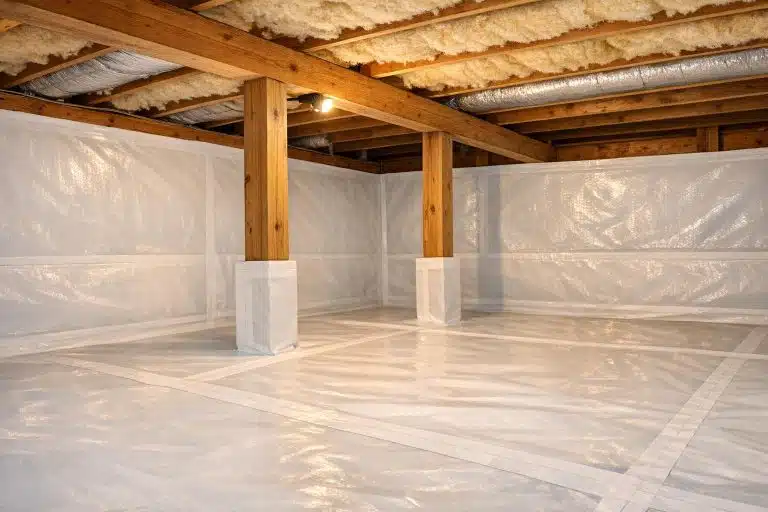
- Attic and crawl space inspections
- Air duct cleaning
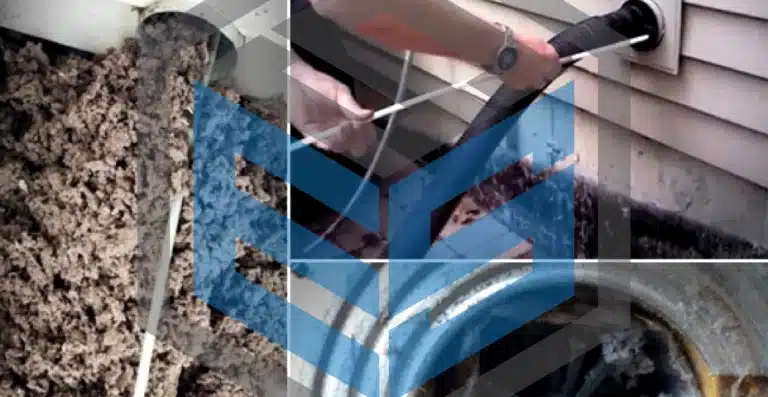
- Dryer vent service
- Furnace maintenance
Subscribers also get a 20% discount on additional services, which can help reduce the cost of future rebate-eligible upgrades.
This regular maintenance safeguards your investment in energy-efficient systems while uncovering new rebate opportunities as programs change. Considering heating and cooling systems account for nearly 50% of home energy use, keeping them in top shape not only boosts your rebate savings but also lowers ongoing utility bills.
Conclusion
The Benefits of Energy-Efficient Upgrades
Making energy-efficient upgrades can transform your home’s performance while saving you money. Heating and cooling systems alone account for about 30% of your utility bill, making them the largest energy expense in most households. Upgrading to high-efficiency systems can significantly cut costs – reducing heating electricity use by up to 65% and cooling expenses by 50%.
These savings don’t just stop at your monthly bills. Over time, the financial benefits grow, and your home becomes more comfortable and valuable. Improvements like heat pump water heaters, better insulation, and sealed ductwork not only lower operating costs but also enhance indoor comfort and boost property value.
There’s more to gain than just financial perks. Energy-efficient upgrades contribute to better indoor air quality and a healthier living environment. For example, electric and induction appliances produce fewer pollutants compared to gas alternatives, while proper weatherization improves air quality and strengthens your home’s durability. Additionally, with Washington state allocating $73.5 million from the Climate Commitment Act for rebate programs in 2024 and 2025, these upgrades also help reduce climate pollution across the Pacific Northwest. The time to act is now.
Start Your Rebate Journey Today
Envirosmart Solution makes the rebate process simple and hassle-free. From initial assessments to final paperwork, their team ensures you claim every rebate dollar available. They guide you through federal programs like HEAR, state incentives, and utility rebates to maximize your savings.
Ready to take the next step? Schedule a home energy assessment with Envirosmart Solution to unlock all available rebates and avoid unnecessary costs. Visit Envirosmart Solution to see how much you can save through these programs.
FAQs
How do I know if my income qualifies me for the highest rebate amount?
To determine if your income qualifies for the highest rebate amount, you’ll need to compare your household income against the eligibility thresholds set by federal, state, or local programs. Many of these programs use measures like the Area Median Income (AMI) or the Federal Poverty Level (FPL) to decide who qualifies. For example, households earning less than 80% of the AMI often qualify for bigger rebates, while some programs extend benefits to those earning as much as 150% of the AMI.
You can find income limits specific to your area on resources like HUD or state agency websites. These thresholds typically vary based on your county and the size of your household. Some programs might also evaluate your net monthly income instead of your gross income. If you’re unsure, local energy assistance agencies or official program portals can help you confirm your eligibility.
Take the time to match your income details with the rebate program’s guidelines in your area to see if you can secure the maximum benefit.
How can I make sure my appliance purchase qualifies for a rebate?
To make sure your appliance qualifies for a rebate, start by checking that it meets the specific program’s eligibility requirements. This might include certifications like ENERGY STAR or conditions set by your local utility or state programs.
When you’re ready to buy, choose an authorized retailer or vendor that participates in the rebate program. Keep all the necessary paperwork, including receipts, product details, and any forms required for the rebate process. Depending on the program, you might need to apply for the rebate either at the time of purchase or afterward, providing proof of purchase.
Take the time to carefully go over the rebate program’s rules, such as deadlines and specific conditions. Paying attention to these details can help ensure you successfully claim your rebate.
Can I use both federal and local rebates for upgrading to an energy-efficient appliance?
Yes, in many cases, you can combine federal and local rebates when upgrading to an energy-efficient appliance. Federal tax credits, such as those offered under the Inflation Reduction Act, are often designed to complement local or utility rebates. The key is to follow the specific rules for each program. For instance, local rebates might be applied as an instant discount at checkout, while federal credits are usually claimed when you file your taxes.
It’s important to note that the total value of rebates and credits cannot exceed the cost of the appliance. Some programs, like state-specific rebates or the Home Electrification and Appliances Rebate Program, are specifically designed to work alongside federal incentives. To make the process easier and ensure you’re getting the most out of these benefits, consulting with an experienced service provider like Envirosmart Solution can help you navigate the requirements and maximize your savings.