
Heating your home doesn’t have to mean wasting energy. Zoning divides your house into separate areas, each with its own thermostat, so you only heat the spaces you use. Pairing zoning with radiant floor heating can reduce your energy bills by 20% to 50%, saving $600 to $1,200 annually. Radiant systems already use 20%-40% less energy than forced-air systems, and zoning takes efficiency even further.
Here’s what zoning does:
- Lets you control temperatures in different areas independently.
- Reduces energy waste by targeting heating where it’s needed.
- Balances temperatures in multi-story homes, solving uneven heating issues.
With thermostats and sensors tailored to each zone, you’ll enjoy consistent comfort while cutting energy use by up to 30%. Plus, zoning extends the life of your heating system by reducing strain. Whether you choose hydronic or electric radiant systems, zoning ensures better performance and lower costs.
Thinking of upgrading? Rebates and incentives available through 2026 make this a smart time to invest. Most homeowners recover costs within 4-7 years. Read on to learn how zoning works and how to set it up effectively.
What Is Zoning and Why It Matters
Zoning Basics for Radiant Systems
Zoning is a way to divide your home into separate areas, each controlled by its own thermostat and heating schedule. This setup allows each zone to work independently, ensuring efficient and targeted heating or cooling.
"A zoning system is a method of dividing a home into individual areas that are heated or cooled separately… applying heating or cooling only to the areas that need it." – Tim Alagushov, IRBIS HVAC
At the heart of a zoning system is a central control panel. This panel communicates with thermostats and sensors to send heat where it’s needed. For example, if one zone calls for heat, the system directs hydronic or electric heat specifically to that area, while other zones remain idle. This approach avoids unnecessary energy use.
Zoning is particularly beneficial for multi-story homes. Hot air tends to rise while cold air sinks, leading to temperature differences between floors. By treating each level as its own zone, zoning systems help balance temperatures throughout the home.
This precise control not only enhances comfort but also contributes to noticeable energy and cost savings.
Main Advantages of Zoning
Zoning offers a double benefit: better comfort and reduced energy use. It can lower energy consumption by as much as 30%, resulting in typical utility bill savings of 20% to 30%.
Another perk? Zoning can extend the life of your heating system. Instead of running the entire system constantly, it focuses on active zones, potentially adding 2 to 5 years to your equipment’s lifespan. Plus, many homeowners report a 90% drop in comfort-related complaints after installing a zoning system. No more “thermostat wars” between family members who like different temperatures.
For best results, aim to create 3–4 zones based on how your household uses different areas throughout the day. Install thermostats in central locations within each zone, and don’t forget to schedule an HVAC tune-up and efficiency upgrades to keep everything running smoothly.
Up next, we’ll look at how zoning pairs with radiant heating systems to maximize your home’s efficiency.
sbb-itb-8db64ac
How Zoning Functions in Radiant Heating
Creating Temperature Zones in Your Home
To optimize radiant heating, divide your home into distinct zones based on each area’s function and heating requirements. For example, group rooms that get plenty of sunlight separately from those in constant shade to address their unique heating needs effectively.
Each zone is controlled by its own thermostat, which communicates with a central control panel. This panel activates specific zone hardware – like valves or relays – ensuring heat is delivered only where it’s needed. This system not only boosts comfort but also helps reduce energy consumption.
Thermostats and Sensors in Zone Control
Proper thermostat placement is key to effective zone control. Install thermostats on interior walls at shoulder height, avoiding areas near windows, vents, or exterior walls to prevent inaccurate temperature readings.
"If your thermostat is in the hallway but your living room is always five degrees off, zoning instantly solves the problem." – Savvy Mavi, Content Manager, The Furnace Outlet
For larger spaces, remote sensors can help maintain consistent temperatures by averaging readings across the room. Many advanced systems even adjust heating output dynamically based on demand. To ensure continued accuracy, recalibrate sensors every six months to counteract electronic drift.
Zoning with Hydronic and Electric Systems
Hydronic and electric radiant systems manage zoning differently, and choosing the right approach can enhance both comfort and efficiency.
- Hydronic Systems: These systems use zoning valves or pumps to direct heated water through specific tubing loops. A central boiler supplies water to a manifold, which distributes it to the zones as needed. Hydronic systems are ideal for whole-house heating in colder climates but may respond more slowly, especially if the tubing is embedded in thick concrete slabs.
- Electric Systems: Electric radiant systems rely on heating cables, mats, or wall-mounted panels, with each zone controlled by its own thermostat. These systems heat up quickly, making them perfect for spaces where fast temperature adjustments are needed. If your utility company offers time-of-use rates, you can program electric systems to heat thermal mass during off-peak hours (typically 9 p.m. to 6 a.m.) and rely on stored heat throughout the day. For homes with mixed flooring types, like carpet and tile, consider creating separate zones. This is because water under carpeted floors needs to be heated to a higher temperature to account for the insulation provided by the carpet.
Up next, we’ll dive into how to install these zoning systems for the best results.
A Survey of Hydronic Zoning Methods
Installing Zoning in Your Radiant System
Setting up zoning in your radiant heating system can optimize comfort and efficiency. Here’s how to implement it step by step.
Evaluate Your Home’s Heating Requirements
Start by assessing how your home uses heat. Which rooms see the most activity? Which ones are used less often? This basic evaluation is the cornerstone of an effective zoning plan.
"Setting up a zoning system begins with identifying how you use the spaces in your home, the orientation of those spaces, and the heating and cooling requirements of each." – Carla Morris, Enertech
Take note of architectural details that could affect heating, like large windows, skylights, or sunrooms. These areas often present unique challenges due to insulation issues or materials that don’t retain heat well. Similarly, multi-story layouts, vaulted ceilings, and spaces like basements or attics usually require their own zones because of their distinct thermal needs. Don’t forget to consider rooms with electronics that generate extra heat.
Before moving forward, check your current infrastructure. Make sure your wiring can handle multiple thermostats and a central control panel. Also, confirm there’s enough space for zone valves, manifolds, and control equipment. Double-check local building codes to ensure your setup complies with safety and legal standards. This initial evaluation is crucial – zoning systems can cut energy use by up to 30%, making the effort worthwhile.
Once you’ve mapped out your heating needs, it’s time to choose and install the right equipment.
Choose and Install Zone Equipment
A zoning system typically includes four key components:
- A manifold to connect PEX tubing loops
- Thermostats for each zone
- Zone valves to regulate water flow
- A control panel to manage the system
Zone valves, which often use 24V low-voltage motors, respond to thermostat signals to open or close as needed. A zone valve control panel simplifies installation by consolidating connections. These panels often support 2 to 6 zones and come with diagnostic lights to make troubleshooting easier. Brands like Honeywell and Taco are reliable options for these components.
If you’re using a hydronic system, consider adding a three-way mixing valve. This device blends return water with supply water, ensuring the right temperature for each zone. It’s a great way to boost system efficiency by tailoring water temperatures to actual heating needs. When laying out hydronic circuits, aim for tubing lengths of about 350 feet to keep heat distribution balanced.
After installation, the next step is to fine-tune the system.
Test and Adjust System Settings
With the components installed, balance the flow in each circuit using the manifold. This ensures precise temperature control in every room, even if multiple rooms share a thermostat. Begin by opening all zone valves and confirming they respond correctly to thermostat commands.
For added efficiency, install outdoor temperature sensors. These allow your system to adjust boiler temperatures based on outdoor conditions, preventing overheating during mild weather. Make sure all air vents and separators are working to remove trapped air from the hydronic loops – air pockets can disrupt heat transfer and reduce performance.
Run the system through several heating cycles to monitor consistency across zones. Adjust flow rates at the manifold as needed until each zone maintains its desired temperature. Once everything is running smoothly, document the final settings for easy reference during seasonal adjustments.
Getting the Most from Your Zoned System
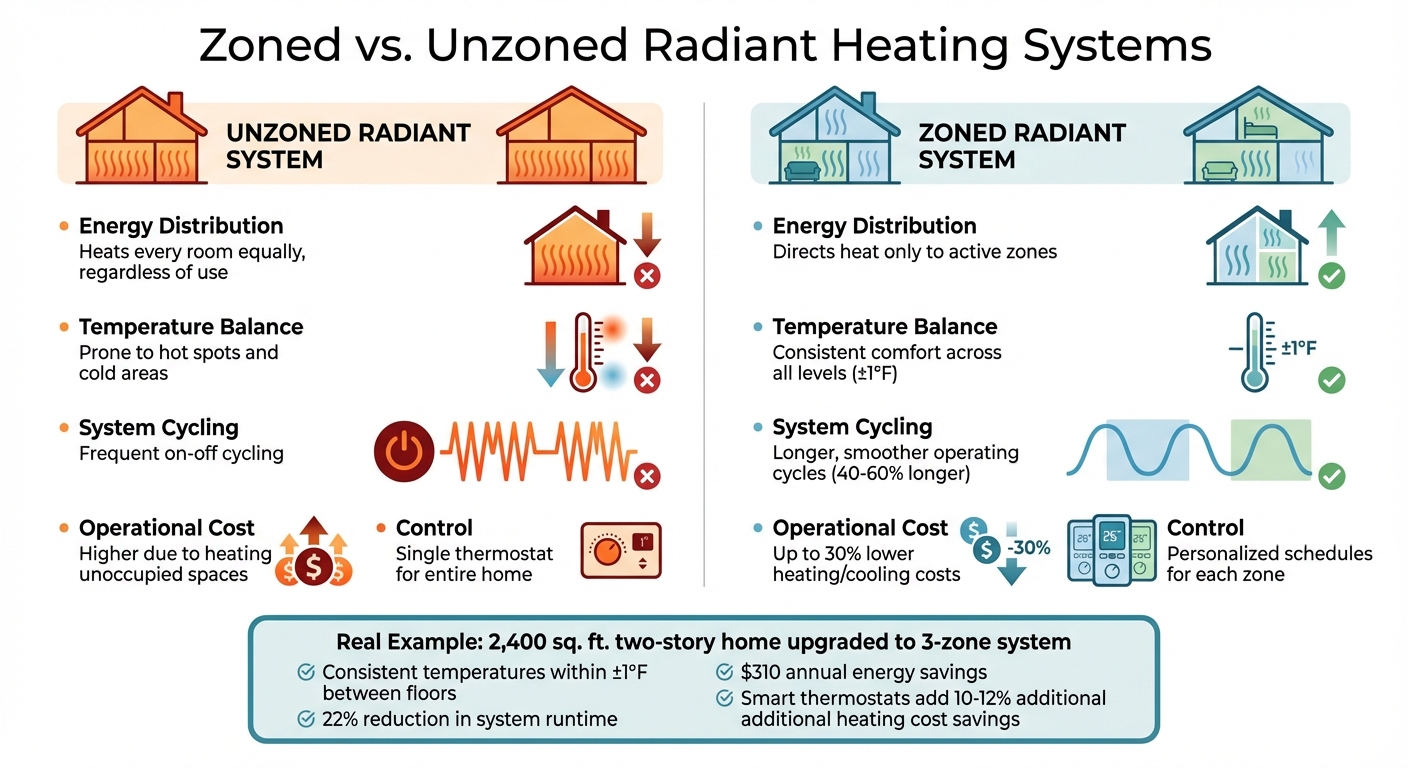
Zoned vs Unzoned Radiant Heating Systems: Energy Efficiency Comparison
Once your zoning system is up and running, a few practical habits can help you maximize both energy savings and comfort. The key? Align your heating schedule with your daily routine.
Setting Up Heating Schedules
Instead of heating your entire home uniformly, program each zone to follow its own schedule. For example, you can set your bedroom to warm up 30 minutes before you wake up and cool down once you leave. Meanwhile, your home office can stay cozy during work hours, ensuring you’re comfortable where you need it most.
Smart thermostats take this a step further by learning your routines automatically. These devices track your habits – like when you wake up or leave the house – and adjust each zone’s heating or cooling accordingly. They also help reduce energy spikes by dynamically managing output across different zones. Many models even include app-based "away" modes that lower temperatures in unoccupied zones. Pair this with regular system maintenance, and you’ll enjoy peak performance year-round.
"Smart thermostats and zoning let your system fine-tune performance moment to moment. It’s the difference between brute force and smart design." – Savvy Mavi, The Furnace Outlet
This personalized approach to scheduling stands in stark contrast to the inefficiency of unzoned systems, as shown in the comparison below.
Zoned vs. Unzoned System Comparison
When optimized, zoned systems significantly outperform unzoned systems. Traditional unzoned systems heat every room equally, regardless of whether those spaces are occupied. This often leads to excessive on-off cycling and higher energy bills. Zoned systems, on the other hand, direct heat only where it’s needed, potentially cutting heating and cooling costs by up to 30% – especially in larger or multi-story homes.
| Feature | Unzoned Radiant System | Zoned Radiant System |
|---|---|---|
| Energy Distribution | Heats every room equally, regardless of use | Directs heat only to active zones |
| Temperature Balance | Prone to hot spots and cold areas | Consistent comfort across all levels (±1°F) |
| System Cycling | Frequent on-off cycling | Longer, smoother operating cycles (40-60% longer) |
| Operational Cost | Higher due to heating unoccupied spaces | Up to 30% lower heating/cooling costs |
| Control | Single thermostat for the entire home | Personalized schedules for each zone |
(Data based on)
For example, in February 2026, a homeowner with a 2,400-sq. ft., two-story house replaced their single-zone 3.5-ton unit with a 3-zone smart-controlled system. The upgrade resulted in consistent temperatures within ±1°F between floors, a 22% reduction in system runtime, and annual energy savings of $310. Smart thermostats alone can save 10-12% on heating costs annually, with additional savings on cooling. Plus, zoned systems reduce wear and tear on equipment by minimizing constant cycling. Just remember to periodically check the zone control panel, thermostats, and motorized valves to keep everything running smoothly.
Envirosmart Solution‘s Energy Efficiency Services
Getting the most out of your zoned radiant system means ensuring it’s installed correctly and maintained regularly. Envirosmart Solution helps homeowners in the Pacific Northwest keep their systems running efficiently with expert installation, routine maintenance, and advice on financial incentives. Below, we’ll dive into their maintenance programs and how they can help you access rebates to maximize your system’s performance.
Annual Maintenance Programs
Keeping your radiant system in top shape requires regular maintenance to avoid inefficiencies and unnecessary energy use. Envirosmart Solution offers several maintenance plans tailored to different needs:
- SMART GOLD™: For $699 per year, this plan provides comprehensive system care. It includes furnace inspections, air duct and dryer vent cleaning, attic and crawl space checks, heat exchanger cleaning, burner and sensor cleaning, and emergency response service. Plus, you get a 20% discount on additional services.
- FURNACE CARE™: At $199 annually, this package focuses on essential tasks like cleaning burners and sensors, along with priority emergency service. Since hydronic radiant systems rely on valves and pumps, regular inspections ensure these components are working properly to maintain even water flow across zones.
- CRAWL SPACE & ATTIC CARE™: Also priced at $199 per year, this package includes insulation and rodent inspections. These services are especially crucial in the Pacific Northwest, where damp conditions can lead to heat loss if not addressed.
While routine maintenance keeps your system running efficiently, financial incentives can further reduce costs.
Accessing Rebates and Incentives
Upgrading your radiant heating system can make you eligible for various financial incentives, and Envirosmart Solution is there to guide you through the process. As a certified Trade Ally, they help homeowners navigate utility rebate programs and identify energy-efficient equipment that qualifies for discounts from providers like PGE, Pacific Power, NW Natural, Cascade Natural Gas, and Avista.
For instance, switching from an older electric resistance radiant system to a high-efficiency ductless heat pump installation with a zoned heating strategy could earn you a rebate of up to $1,800. To qualify, the equipment needs to meet specific performance standards, such as an HSPF2 rating of 8.10 or higher. Additionally, Envirosmart Solution assists with rebates for insulating crawl spaces, attics, and walls – upgrades that not only reduce heat loss but also improve overall system efficiency.
Conclusion
Zoning transforms radiant heating into a tailored system that minimizes energy waste and cuts down on utility bills. By dividing your home into distinct temperature zones, you can direct heat where it’s needed most, keeping unoccupied areas from consuming unnecessary energy. This approach not only boosts efficiency but also results in noticeable savings on your monthly bills.
But zoning isn’t just about saving money – it’s also about improving comfort. It helps tackle those frustrating hot and cold spots often found in homes with high ceilings, expansive windows, or multiple stories. Since each zone functions independently, you can say goodbye to constant thermostat adjustments. Experts highlight that zoning provides personalized comfort while also helping your HVAC system last longer.
The benefits extend to your heating equipment, too. By focusing heat only on occupied areas, zoning reduces system strain and frequent cycling. This can increase the lifespan of your HVAC system by an estimated 15% to 25%. Plus, fewer breakdowns and lower maintenance costs mean your system stays dependable for years longer than traditional setups.
If upgrading to a zoning system is on your radar, now is a great time to act. With utility rebates and incentives available through 2026, the upfront costs become much more manageable. Most homeowners see their investment pay off within 4 to 7 years, making zoning a smart choice for both comfort and long-term efficiency. Take the leap now to start enjoying these advantages right away.
FAQs
How many heating zones should my home have?
The number of heating zones you need depends on factors like the size of your home, its layout, and your personal comfort preferences. Splitting your home into several zones – such as by floors, main living areas, or spaces with different heating needs – can improve temperature regulation and make your heating system more efficient. Plus, it can help lower energy bills by heating only the areas that need it.
What’s the best place to install a thermostat for each zone?
The thermostat for each zone should be installed in a central, open area that accurately represents the zone’s actual temperature. Make sure to avoid placing it near windows, doors, vents, direct sunlight, drafts, or heat sources, as these can distort temperature readings. Choosing the right spot ensures precise temperature control, improved energy efficiency, and consistent comfort throughout the zone.
Can my existing radiant system be retrofitted for zoning?
Your current radiant heating system might be adaptable for zoning, depending on its setup and how well it aligns with zoning technology. To determine this, an experienced HVAC or radiant heating specialist can evaluate your system and suggest ways to enhance both efficiency and comfort. Adding zoning controls has become a popular choice for upgrading systems without requiring extensive renovations.