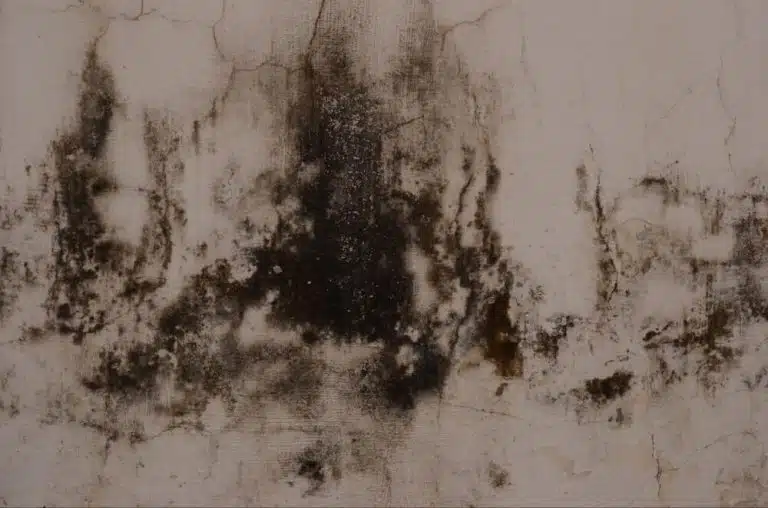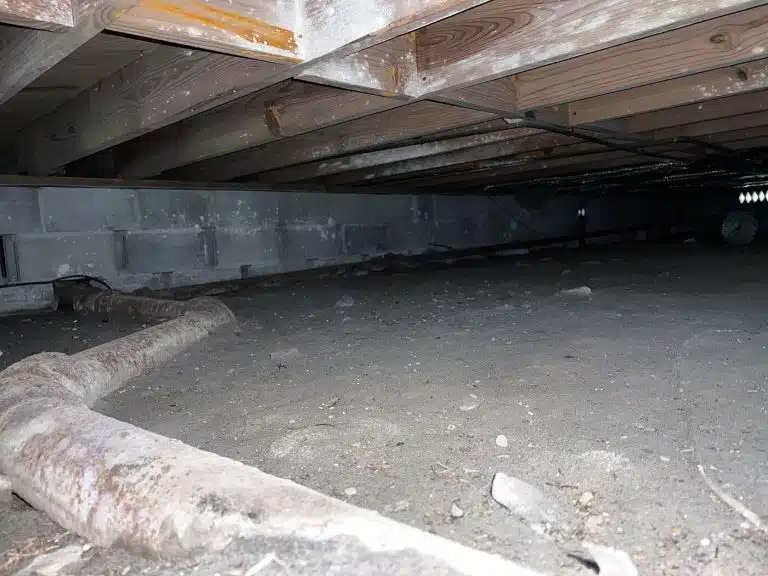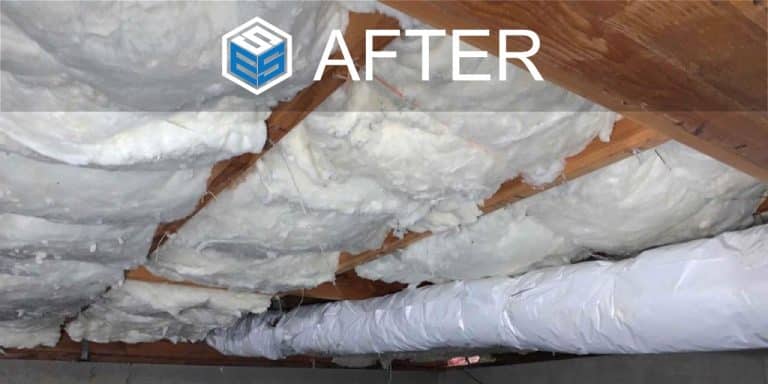

The Pacific Northwest’s wet climate creates persistent crawl space moisture problems, which can harm your home’s structure, air quality, and energy efficiency. Moisture enters through rainwater, porous materials, and condensation. Vented crawl spaces, common in older homes, often worsen the issue by allowing humid air to condense inside. Over time, these conditions lead to mold, wood rot, pest infestations, and higher energy bills.
Key points to manage crawl space moisture effectively:
- Encapsulation: Seals the space with a vapor barrier, insulation, and dehumidifiers to block moisture.
- Drainage Systems: Redirect water using French drains, sump pumps, and proper exterior grading.
- Air Sealing: Prevents humid outdoor air from entering through vents and gaps.
- Regular Maintenance: Includes inspections, HVAC upkeep, and monitoring humidity levels below 60%.
Encapsulation is a proven solution for the region’s moisture challenges, protecting your home and improving indoor air quality. Professional services ensure proper installation and long-term effectiveness.
Moisture Problems in Pacific Northwest Crawl Spaces
Surface Water and Groundwater Issues
The Pacific Northwest’s heavy rainfall and inadequate drainage are a recipe for crawl space moisture issues. When the ground around your home doesn’t slope away properly, rainwater collects near the foundation and seeps through cracks and pores in the concrete. This process is driven by hydrostatic pressure – the force created when groundwater builds up – pushing water through foundation walls and floor seams. This is especially common during the region’s long, wet seasons, when water tables rise significantly.
Overflowing gutters and downspouts that release water too close to your home make the situation worse. To prevent this, the ground should slope away from the foundation for at least 5 feet at a minimum 5% grade (a 3-inch drop over 5 feet). Even the best-built foundation can’t keep moisture out if the soil around it becomes oversaturated.
Another factor is capillary action, where porous materials like concrete blocks, masonry, and wood absorb groundwater through tiny cracks. This process, often called "wicking", pulls moisture upward, keeping your crawl space damp even if there’s no visible flooding or standing water.
On top of these foundation-related issues, vented crawl spaces face their own unique set of challenges.
Problems with Vented Crawl Spaces
Older crawl spaces with vents were designed with the idea that outside air would help dry things out. Unfortunately, in the Pacific Northwest, this approach often backfires. The outdoor air is usually more humid than the air inside the crawl space. When this warm, moisture-heavy air enters through the vents and meets cooler surfaces – like floor joists, plumbing pipes, or HVAC ducts – it cools to its dew point and condenses into liquid water.
"Air movement is responsible for more than 98% of all water vapor movement in building cavities." – Energy.gov
During the warmer months, vented crawl spaces often have relative humidity levels above 70%, creating the perfect environment for mold growth and wood rot. If HVAC ducts run through the crawl space, any leaks in the ductwork can lead to a 20% to 30% increase in cooling costs. On top of that, fiberglass insulation in these spaces can absorb moisture when humidity levels climb above 55%. Once waterlogged, the insulation tends to sag away from the floor joists, reducing its effectiveness.
Other Sources of Moisture
External water isn’t the only problem – internal factors can also worsen crawl space moisture.
Exposed dirt floors are a common culprit, continuously releasing water vapor into the air. Without a proper vapor barrier covering the entire floor, this moisture rises into your home. To address this, at least 6-mil polyethylene sheeting should be used, with seams overlapping by 12 inches and securely taped.
Plumbing leaks can also add moisture directly to the crawl space, often going unnoticed until they cause significant damage. Additionally, gas-fired water heaters or furnaces located in crawl spaces may leak combustion gases, which not only increase moisture levels but also pose safety risks. Even everyday activities like cooking and showering can introduce extra moisture into an improperly sealed crawl space, compounding the humidity from external sources.
sbb-itb-8db64ac
How Crawl Space Moisture Damages Your Home
Health and Air Quality Problems
The air in your crawl space doesn’t stay there – it gets pulled into your living areas through something called the stack effect. Unfortunately, this process can bring mold spores and musty odors right into your home.
"It is important to remember that polluted air in the crawlspace will make its way into the rest of the home, contributing to poor indoor air quality, and causing uncomfortably high humidity levels."
– Nikki Krueger, Expert Exchange
When the relative humidity in a crawl space exceeds 60%, it creates the perfect breeding ground for mold, mildew, bacteria, and other allergens. These damp conditions also attract pests like termites, spiders, slugs, and rodents, which can bring more allergens and even harmful pathogens into your home. On top of that, if you have gas-powered appliances like a furnace or water heater in an unsealed crawl space, the moisture can lead to backdrafting of dangerous gases, such as carbon monoxide, into your living spaces.
Structural Damage
Moisture doesn’t just affect air quality – it can wreak havoc on your home’s structure. When humidity levels rise above 55%, it encourages wood rot in joists, beams, and columns, which can lead to sagging floors.
Water vapor moving through porous materials can also cause cracks in your foundation. A humid crawl space creates a corrosive environment that can rust steel supports, erode pipes, and damage fiberglass insulation by making it heavy and waterlogged.
Higher Energy Bills
A damp crawl space can make your HVAC system work overtime. Moist, heavy air increases the demand for dehumidification, which forces your system to consume more energy.
"The humid crawlspace air… eventually finds its way into your living space creating an unhealthy environment and causing your air conditioning to work overtime to dehumidify the air."
– Your Crawlspace Inc.
Excess moisture also reduces the efficiency of insulation, making it harder to maintain comfortable temperatures in your home. Keeping relative humidity between 45% and 55% is essential to avoid these issues. Encapsulation is a proven solution to address these health, structural, and energy concerns effectively.
Seal It or Vent It? The TRUTH About Crawl Space Encapsulation vs Ventilation
How Encapsulation Fixes Crawl Space Moisture
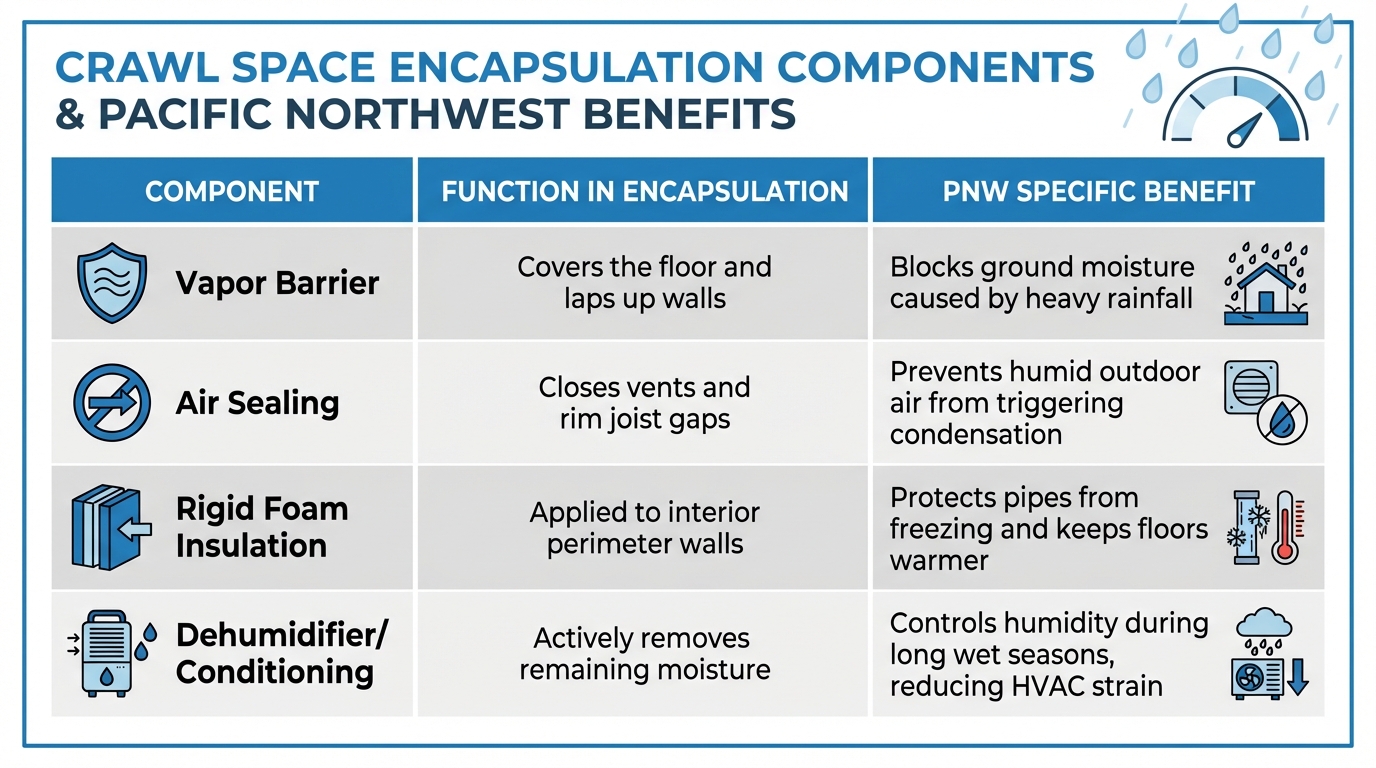
Crawl Space Encapsulation Components and Benefits for Pacific Northwest Homes
What Crawl Space Encapsulation Includes
Crawl space encapsulation turns a damp, moisture-prone area into a dry, controlled environment. The process involves sealing all exterior vents with foam panels, installing a durable vapor barrier (usually 6-mil or thicker polyethylene) over the floor and walls, and insulating the perimeter walls and rim joists. Before starting, contractors address any existing water issues by adding interior drainage systems, sump pumps, or perimeter drainage as needed. The vapor barrier is extended at least 6 inches up the foundation walls and concrete footings, with seams overlapped by 6–12 inches and taped securely to ensure a tight, continuous seal. This thorough sealing and insulation process is particularly important in the Pacific Northwest, where moisture issues are common.
Why Encapsulation Works in This Region
The Pacific Northwest’s humid climate makes traditional vented crawl spaces a liability rather than a solution. According to the Building America Solution Center:
"In humid climates, rather than helping to dry out a crawlspace, the vents can actually encourage condensation in the crawlspace by allowing warm, humid air to enter and condense on the floor joists."
Encapsulation addresses this issue by sealing the crawl space from outdoor air, which is one of the most effective ways to control moisture levels. This approach eliminates the condensation cycle and stabilizes the internal environment. Insulating the perimeter walls further helps by maintaining consistent temperatures, protecting pipes from freezing, and keeping floors warmer.
Problems Solved by Encapsulation
Encapsulation tackles a range of moisture-related issues. It also disrupts the stack effect, which can draw mold spores, odors, and humid air from the crawl space into your home. By preventing condensation, it shields HVAC ductwork and reduces strain on your heating and cooling systems. As Your Crawlspace Inc. explains:
"In the summer, your crawlspace is naturally cooler than the ambient outside temperature. So when the warm, humid outside air reaches the cooler crawlspace surface areas, the moisture condenses on framing, plumbing, wiring, insulation and especially HVAC ductwork and ‘sweats’."
The table below highlights how each component of encapsulation addresses the Pacific Northwest’s specific moisture challenges:
| Component | Function in Encapsulation | PNW Specific Benefit |
|---|---|---|
| Vapor Barrier | Covers the floor and laps up walls | Blocks ground moisture caused by heavy rainfall |
| Air Sealing | Closes vents and rim joist gaps | Prevents humid outdoor air from triggering condensation |
| Rigid Foam Insulation | Applied to interior perimeter walls | Protects pipes from freezing and keeps floors warmer |
| Dehumidifier/Conditioning | Actively removes remaining moisture | Controls humidity during long wet seasons, reducing HVAC strain |
Parts of a Crawl Space Encapsulation System
Encapsulation is a reliable way to tackle the Pacific Northwest’s persistent crawl space moisture issues. By combining several key components, this system creates a long-term solution for managing moisture in homes. Here’s how these components work together to keep crawl spaces dry and protected.
Vapor Barrier Installation
The vapor barrier is the foundation of any encapsulation system. Made from a durable polyethylene sheet (at least 6-mil thick), it covers the entire crawl space floor, acting as a shield to block both liquid water and water vapor from seeping through the soil. This is particularly important in areas with heavy rainfall.
To ensure effectiveness, the barrier must extend 6 to 12 inches up the foundation walls and around support piers, where it is secured with mechanical fasteners or specialized adhesive. Seams in the barrier should overlap by 6 to 12 inches and be sealed with high-quality tape to form a continuous, impenetrable layer. Proper sealing of every edge and seam is crucial to keeping moisture out, setting the stage for the next step: managing water sources.
Drainage and Water Control
Managing water flow is critical to preventing moisture buildup. Drainage systems like French drains and perimeter pipes work alongside sump pumps to redirect water away from the crawl space. Sump pumps are installed in a 2–3 foot pit with a gasketed lid, ensuring that any collected water doesn’t evaporate back into the crawl space air.
Additionally, the exterior ground should slope away from the foundation at a rate of at least 5% (a drop of 3 inches for every 5 feet) to stop rainwater from pooling near the home. Once bulk water is under control, the focus shifts to sealing and insulating the space.
Air Sealing and Insulation
Air sealing is essential for keeping humid outdoor air from entering the crawl space, a particular concern in the Pacific Northwest’s damp climate. Foundation vents and windows are sealed using foam panels, while gaps around rim joists are filled with closed-cell spray foam or rigid foam boards sealed with caulk.
For insulation, use rigid or spray foam with an R-13 rating or higher on foundation walls and rim joists. This helps maintain warm surfaces, preventing water vapor from condensing into liquid and reducing the risk of wood rot and mold growth.
Dehumidifiers and Moisture Control
Once the crawl space is sealed, maintaining the right humidity level becomes the priority. A dehumidifier or an integrated HVAC air supply can keep humidity levels below 60%, which is critical for preventing mold and mildew. Building codes often require encapsulated crawl spaces to be conditioned, typically by supplying air from your HVAC system at a rate of 1 cubic foot per minute (CFM) for every 50 square feet of crawl space area.
As Your Crawlspace Inc. explains:
"A relative humidity target of 60% or lower is a good place to start. Mold and mildew will not grow below 60% relative humidity."
This active moisture control is especially vital during the region’s long, wet seasons, ensuring a dry and healthy crawl space environment year-round.
Keeping Your Crawl Space Dry Long-Term
Encapsulation is a great way to protect your home, but it’s not a "set it and forget it" solution. Without consistent maintenance, you risk mold growth, structural problems, and even higher energy bills. To keep your encapsulation system working effectively, regular upkeep is essential. Here’s how to stay on top of it.
Regular Inspections and Monitoring
Routine checks of your crawl space can save you from expensive repairs down the road. Look for signs like tears or gaps in the vapor barrier, standing water, musty odors, and ensure your sump pump is functioning properly. As Armin Rudd from the Building Science Corporation explains:
"A period of post-retrofit monitoring should be conducted, preferably for one year, to track the crawlspace temperature and relative humidity conditions, and to test the moisture content of the rim and floor joists."
A remote humidistat can make monitoring easier by letting you track humidity levels from inside your home. If the relative humidity exceeds 60%, it might be time to adjust your dehumidifier or HVAC system. Also, keep an eye out for signs of pests and ensure that exterior drainage systems are working as they should.
HVAC and Insulation Maintenance
Your HVAC system and insulation play a big role in managing moisture throughout your home. According to the U.S. Department of Energy, you should supply 1 cubic foot per minute (CFM) of conditioned air for every 50 square feet of crawl space area. Regularly changing filters and checking airflow can help keep humidity levels below 60% and your system running efficiently.
Envirosmart Solution offers HVAC services to ensure your system is in top shape. Their technicians adjust supply vents, inspect ductwork for condensation issues, and verify that rim joists are sealed and insulated. Since up to 50% of the air on your first floor comes from the crawl space, maintaining these systems is crucial for better indoor air quality.
Annual Maintenance Packages
For long-term protection, consider annual maintenance plans like those offered by Envirosmart Solution. Their CRAWL SPACE & ATTIC CARE™ plan costs $199 annually and includes insulation checks, air gap inspections, and rodent monitoring, along with a 15% discount on additional services. If you’re looking for a more thorough option, the SMART GOLD™ package ($699 annually) combines crawl space inspections with air duct cleaning, dryer vent service, and furnace maintenance. These packages provide expert care to protect your home and investment year after year.
Conclusion
Living in the Pacific Northwest means dealing with constant moisture, which can significantly affect your crawl space and, ultimately, your home. Without proper encapsulation, a large portion of the air inside your home originates from the crawl space, bringing with it contaminants that can harm indoor air quality and reduce comfort.
Encapsulation goes beyond just keeping water out. It helps prevent wood rot in crucial structural components (which can occur when wood moisture hits 30%), lowers heating and cooling expenses by up to 20%, and removes the damp conditions that attract pests.
In a region known for its wet climate, managing moisture is non-negotiable. As American Crawlspace puts it:
"In the damp climate of the Pacific Northwest, managing moisture in your home is crucial to prevent structural and health issues".
Protecting your crawl space is key to safeguarding your home’s structural integrity and ensuring a healthier living environment. Professional encapsulation services are essential to reap these benefits. Envirosmart Solution offers full-service crawl space encapsulation throughout the Puget Sound area. Their certified team provides vapor barrier installation, drainage solutions, and dehumidifier integration. Plus, they’re currently offering $250 off professional cleaning and sanitation services with coupon code KA6BUK. Schedule a free inspection today to shield your home from moisture damage and enhance your indoor air quality.
FAQs
What are the benefits of crawl space encapsulation for homes in the Pacific Northwest?
Crawl space encapsulation is particularly effective in the Pacific Northwest, where the cool, damp weather often leads to excessive moisture and high humidity levels. This process involves sealing the crawl space with a strong vapor barrier and, in many cases, installing a dehumidifier. By doing so, it helps protect against groundwater vapor, condensation, standing water, and mold growth – issues that can lead to wood rot, poor indoor air quality, and even structural damage. Encapsulation creates a dry, protected environment that shields your home’s foundation, insulation, and ductwork from moisture-related problems.
Beyond controlling moisture, encapsulation offers added benefits like improved energy efficiency and comfort. It helps reduce airflow between the crawl space and your living areas, making it easier to maintain steady indoor temperatures and cut down on heating and cooling costs. Many homeowners also report fewer pest issues, cleaner air, and even a boost in property value. Envirosmart Solution offers customized crawl space encapsulation services tailored to the specific needs of homes in the Pacific Northwest, providing lasting protection and greater comfort.
How does crawl space moisture impact your home’s air quality and energy efficiency?
Excess moisture in an unsealed crawl space can have a big impact on both your home’s air quality and energy use. Thanks to something called the stack effect, humid air from the crawl space rises into your living spaces. This air often brings mold spores, allergens, and bacteria along for the ride. In regions like the Pacific Northwest, where humidity levels tend to run high, this can encourage mold growth, which may lead to respiratory problems, including asthma. On top of that, vented crawl spaces can let in pollutants and even radon, further degrading your indoor air quality.
Moisture doesn’t just affect air quality – it also makes your home less energy-efficient. When moisture condenses on HVAC ducts or insulation, it reduces their ability to function properly, forcing your heating and cooling systems to work harder than they should. By sealing and encapsulating your crawl space using a vapor barrier, vent seals, and a dehumidifier, you can stop moisture buildup, improve the air you breathe, and get energy efficiency back on track. Envirosmart Solution offers crawl space encapsulation services throughout the Pacific Northwest, helping homeowners create healthier indoor environments while cutting down on energy costs.
What should I do to maintain my crawl space after encapsulation?
After encapsulating your crawl space, keeping up with regular maintenance ensures it stays in great shape. Make it a habit to check the vapor barrier for any rips or damage. Also, keep an eye on your dehumidifier – routine servicing will help it run smoothly. Monitoring humidity levels is crucial to avoid moisture problems, and don’t forget to inspect your drainage system, including the sump pump, to ensure everything is working as it should. For extra reassurance, you might want to schedule seasonal clean-ups and professional inspections to catch any issues early. Taking these proactive steps helps safeguard your home and promotes a healthier living space.