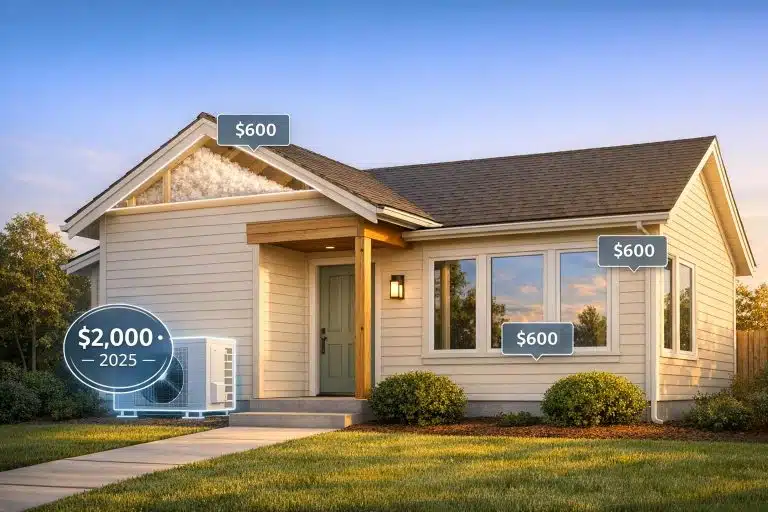

Your attic insulation directly impacts your home’s comfort, energy costs, and air quality. Over time, insulation deteriorates, leading to uneven temperatures, higher energy bills, and potential health risks. Here are seven clear signs it might be time to replace your attic insulation:
- Uneven Room Temperatures: Inconsistent heating or cooling between rooms may indicate insulation issues.
- Cold Drafts: Feeling drafts near ceilings or attic doors suggests thinning or shifted insulation.
- Rising Energy Bills: Spikes in heating or cooling costs could mean heat is escaping through poor insulation.
- Flattened Insulation: Compressed or sagging insulation loses its effectiveness.
- Water Damage: Stains or damp insulation reduce performance and may lead to mold growth.
- Pest Activity: Rodents or pests nesting in insulation cause damage and air quality concerns.
- Increased Noise: More outdoor noise inside your home points to degraded insulation.
If you notice any of these signs, a professional inspection can confirm the issue and help you restore your home’s efficiency and comfort.
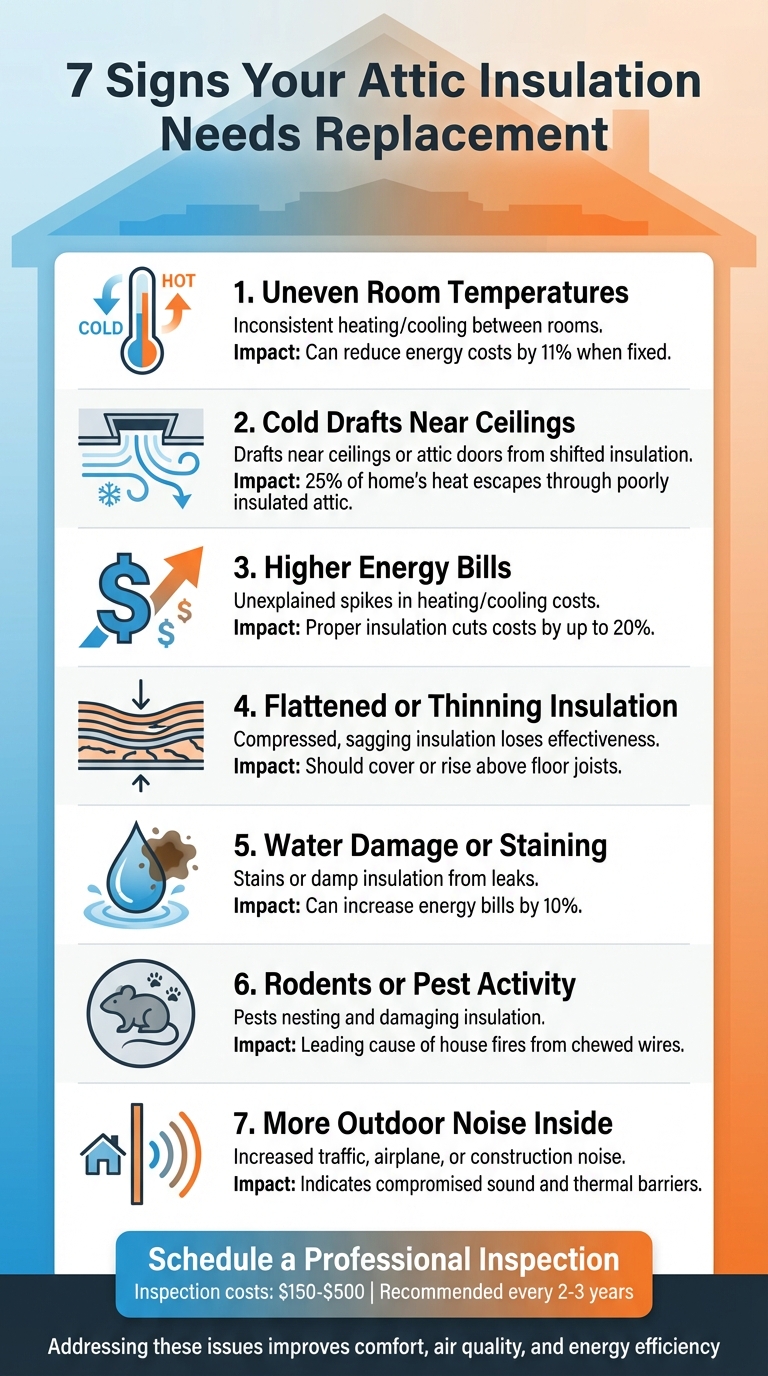
7 Signs Your Attic Insulation Needs Replacement
Top 5 Signs You Need Insulation Replacement in Your Home
1. Uneven Temperatures Between Rooms
When attic insulation stops doing its job, you’ll notice it in the form of uneven temperatures throughout your home. One room might feel like a sauna, while another feels like a refrigerator. This happens because insulation is supposed to act as a thermal barrier, keeping heat where it belongs. If it becomes thin, shifts, or wears out, it can no longer regulate heat transfer effectively.
Effect on Indoor Comfort and Air Quality
Rooms directly under the attic often bear the brunt of poor insulation. They tend to feel colder during winter and hotter in summer. According to Energy Savers, "The attic is a common area of excess heat transfer, making it perhaps the most important area of the home to insulate properly". You might also notice drafts near the tops of walls or along the ceiling.
But it’s not just about comfort. Damaged or damp insulation can lead to musty odors and allow dust and allergens from the attic to seep into your living spaces. This combination of temperature swings and poor air quality can make certain rooms downright unpleasant.
Impact on Energy Efficiency
Uneven insulation doesn’t just make your home less comfortable – it also makes your HVAC system work harder. When heat escapes or enters unevenly, your heating or cooling system has to run more often to compensate. This constant cycling adds wear and tear to your equipment and drives up energy use, often leading to frequent thermostat adjustments. Fixing insulation issues can cut energy costs by as much as 11%.
On top of higher energy bills, these problems often show up in visible insulation damage – another telltale sign that something’s wrong.
Visible or Noticeable Signs of Damage
If you’re wondering whether your insulation is the culprit, there are some simple ways to check. Run your hands along the edges of ceilings or around your attic door to feel for unexpected drafts. If you can safely access your attic, inspect the insulation – does it look flat or compressed instead of fluffy? As US Greenlink puts it, "Inconsistent room temperatures are a big red flag that your attic insulation might be past its prime".
2. Cold Drafts Near Ceilings
Feeling a chill near your ceiling or attic door? That’s often a sign that your insulation has shifted or thinned out over time. Insulation acts as a barrier between the indoor and outdoor temperatures, and when it’s not doing its job, you’ll definitely notice the difference.
Effect on Indoor Comfort and Air Quality
Cold drafts can create uncomfortable temperature variations throughout your home. This often leads to overusing your heating system, which not only drives up energy costs but also pulls in unwanted airborne particles like dust, fiberglass, and even mold spores. If the insulation gets wet, things can get worse – mold growth becomes more likely, causing musty smells and possibly triggering allergies. These issues don’t just affect comfort; they can also make your home’s air quality noticeably worse.
Impact on Energy Efficiency
Temperature inconsistencies caused by cold drafts put extra strain on your heating system, which means higher energy bills. Your HVAC system ends up working harder than it should, leading to increased wear and tear. Another telltale sign of escaping warm air? Icicles forming on your gutters. Warm air from your home melts the snow on the roof, which then refreezes at the eaves.
As Energy Savers CNY puts it:
"When insulation has deteriorated or is not installed to the right R-value, your HVAC system must work overtime to maintain a comfortable indoor climate, leading to higher energy consumption and bills."
Chris Deziel, a home improvement expert from Family Handyman, adds:
"If you’re having this problem [icicles], the reason might seem counterintuitive: You probably don’t have enough attic insulation."
3. Higher Energy Bills
If you’ve noticed your utility bills creeping up even though you haven’t touched your thermostat, your attic insulation might be to blame. According to the U.S. Department of Energy, as much as 25% of a home’s heat could escape through an attic that isn’t properly insulated. This kind of energy loss can put a strain on your wallet, especially during extreme weather, as it forces your heating and cooling systems to work harder than they should.
Impact on Energy Efficiency
When insulation isn’t doing its job, it sets off a chain reaction that affects your home’s energy use. Your HVAC system is left running almost non-stop to keep things comfortable. The Residential Team at TVA EnergyRight highlights the problem:
"Poorly performing attic insulation impacts the heat gain and heat loss of your home, which will force your HVAC system to run more often, increasing your energy bill."
This constant strain not only drives up energy costs but also wears out your HVAC system faster, leading to more frequent repairs or replacements. The good news? Adding proper insulation can cut heating and cooling costs by up to 20%.
To spot these issues, it’s smart to compare your utility bills year-over-year instead of just month-to-month. For instance, check January 2025 against January 2024. If you notice consistent increases that can’t be explained by rate hikes or unusually harsh weather, there’s a good chance your attic insulation is the culprit. Some utility programs, like TVA EnergyRight, even offer rebates – up to $500 – to help offset the cost of installing new attic insulation.
4. Flattened or Thinning Insulation
Compressed insulation can be a clear sign that your home’s energy efficiency is taking a hit. If you notice your attic insulation looking squished instead of loose and fluffy, it’s likely not doing its job. Pamela Vargas-Touchard from Attic Solutions USA explains it best:
"You want to make sure that the insulation in your home doesn’t compact down over time. It needs to be ‘fluffy’ so there are many crevices and air pockets to trap air. If it doesn’t, then it simply won’t work."
Visible Signs of Damage
A quick way to check your attic insulation is by looking at how it measures up to your floor joists. Proper insulation should cover or rise above the tops of the joists. If you can easily see the wooden joists, it’s a sign the insulation is too thin. Other warning signs include sagging, crumbling, or clumping insulation, all of which suggest it’s past its prime. Damage caused by pests can also lead to thin or patchy areas. These issues don’t just hurt your insulation’s performance – they can also negatively impact your home’s overall energy efficiency.
Impact on Energy Use
Flattened insulation loses its ability to trap air, which directly affects how efficiently your home retains heat or cool air. Without those crucial air pockets, your HVAC system has to work overtime to maintain a consistent temperature, which can send your utility bills soaring. Before replacing damaged insulation, it’s important to address any underlying moisture problems, such as roof leaks or high humidity. Otherwise, even new insulation won’t perform as expected.
Effects on Comfort and Air Quality
Thinning insulation can make your home less comfortable and even affect your indoor air quality. You might experience uneven temperatures, with some rooms feeling stiflingly hot while others stay chilly. Drafts near the ceiling, even with closed windows, are another telltale sign. Additionally, damp or compressed insulation can encourage mold and mildew growth, which can lead to respiratory issues. If pests have damaged the insulation, their droppings can become airborne, posing serious health risks.
sbb-itb-8db64ac
5. Water Damage or Staining
Water damage can wreak havoc on your attic insulation. When insulation gets wet – whether from a leaky roof, ice dams, or excess humidity – it stops doing its job properly. As Dominick from Greenlink Energy Solutions puts it:
"When insulation gets wet, whether it’s from a leaky roof, high humidity, or even backed-up ice dams, it loses its ability to insulate effectively."
This not only weakens the insulation’s performance but also creates a domino effect of problems.
Visible Signs of Damage
Water damage often leaves behind telltale signs you can spot with a quick inspection. Look for dark stains, damp patches, or insulation that appears compressed instead of its usual fluffy state. You might also see water droplets or icicles forming near the eaves, which could signal heat escaping from your home. A musty smell is another red flag, hinting at hidden moisture or mold.
Impact on Energy Efficiency
Wet insulation doesn’t just look bad – it can hit your wallet too. Once insulation gets damp, it compresses, losing its ability to retain heat. This forces your HVAC system to work harder, potentially driving up energy bills by around 10%. To fix this, you’ll need to address the root cause, whether it’s a roof leak or high humidity, before replacing the damaged insulation.
Effect on Indoor Comfort and Air Quality
Damp insulation isn’t just an energy issue – it can also harm your indoor environment. Mold thrives in wet insulation, releasing unpleasant odors and polluting the air you breathe. Carolina Restrepo Mesa from Cameron Home Insulation explains:
"Wet insulation can grow mold, causing unpleasant odors. More importantly, the mold contaminates the air you and your family breathe."
In winter, warm, moist air from spaces like bathrooms can condense on cold ceilings, worsening moisture problems. Wet insulation also fails to protect pipes adequately, increasing the risk of frozen and burst pipes, which can lead to even more water damage. If you notice any of these issues, it’s wise to call in a professional for a thorough inspection.
6. Rodents or Pest Activity
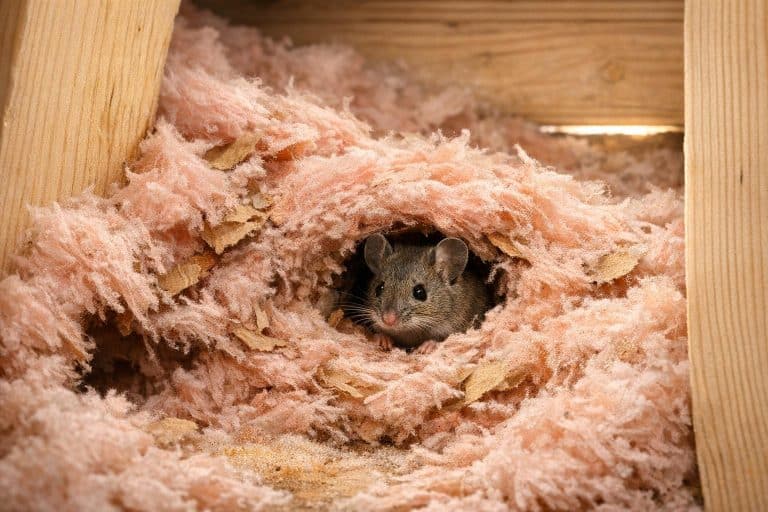
When rodents make their way into your attic, they don’t just bring inconvenience – they also wreak havoc on your insulation. Mice, rats, squirrels, and other pests tear through materials like fiberglass and loose-fill insulation to build nests. This not only weakens your insulation’s ability to retain heat but also introduces potential health hazards.
Visible or Noticeable Signs of Damage
The signs of an infestation are hard to miss. Mice droppings are tiny, about 0.1 inches, while rat and squirrel droppings are larger, measuring between 0.4 and 0.6 inches. You might also notice tunnels or holes as wide as 3 inches. Adrienne Vosseler describes it clearly:
"The tunneling will look like small holes that are as big as 3 inches in diameter."
Other indicators include gnaw marks on electrical wires or wooden beams, dark smudge marks near entry points, and scattered debris like acorn shells or shredded nesting material . If you hear scratching or scurrying sounds at night, that’s another strong clue of nocturnal pests at work. These disruptions not only cause visible damage but also reduce your home’s energy efficiency.
Impact on Energy Efficiency
Rodents rearranging insulation to create nests severely diminishes its effectiveness. According to Dumitru Nicolaescu from Green Attic:
"Insulation that has been rearranged and hollowed out by rodents loses its effectiveness in providing adequate thermal insulation and energy efficiency."
When insulation becomes compressed or hollowed out, it allows conditioned air to escape, forcing your HVAC system to work overtime. This inefficiency directly translates into higher heating and cooling costs.
Effect on Indoor Comfort and Air Quality
Pest-related damage to insulation doesn’t just affect energy efficiency – it also impacts your home’s air quality and comfort. Rodents leave behind urine, feces, and nesting materials, contaminating the insulation with bacteria and allergens . These contaminants can circulate through your home’s air, potentially causing respiratory issues or allergies. A persistent musty odor may also develop, lingering despite efforts to ventilate. Even more alarming, rats are a leading cause of house fires in the U.S. due to their habit of chewing through electrical wires.
Pest activity in your attic compromises both comfort and safety. If you notice any signs of infestation, take immediate action: seal entry points, remove contaminated insulation, disinfect the area, and replace the damaged material with fresh insulation. Addressing the issue promptly can help restore your home’s efficiency and protect your health.
7. More Outdoor Noise Inside
If you’ve started noticing that the sounds of traffic, airplanes, lawnmowers, or nearby construction seem louder inside your home, your attic insulation might not be doing its job as a sound barrier anymore. As insulation breaks down, it loses the density needed to absorb sound waves, allowing more noise to filter into your living space.
Visible or Noticeable Signs of Damage
An increase in outdoor noise can be a clear indicator that your insulation is compromised. Sounds like wind, thunder, or passing cars that were once muffled may now be more noticeable. Check your attic for signs like compressed insulation that exposes floor joists – this compression reduces the air pockets that help block sound and maintain thermal efficiency. A quick way to check for gaps is by using a flashlight at night. Shine the light over suspected areas, and if you see it coming through, you’ve likely found openings that are letting in both noise and air. These gaps not only make your home noisier but also point to reduced energy performance.
Impact on Energy Efficiency
When insulation has gaps, it doesn’t just let in sound – it also lets out heat in the winter and cool air in the summer. This means your HVAC system has to work harder, leading to higher energy bills. Tri County Air explains:
"Poor insulation can increase the noise from airplanes, wind, thunder, traffic, lawnmowers, construction work, and other outside sources. If your attic isn’t properly insulated, installing new materials can block out the noise."
Effect on Indoor Comfort and Air Quality
The impact of damaged insulation goes beyond noise. Those same gaps that let sound in can also bring in drafts and allergens. This can worsen allergy symptoms or even trigger respiratory issues for people with sensitivities. So, addressing insulation problems isn’t just about quieting your home – it’s also about creating a healthier and more comfortable indoor environment.
When to Get a Professional Inspection
If you’ve noticed any of the seven warning signs, it’s time to call in a professional. They can provide an accurate diagnosis and recommend the right repairs to address the problems. Experts rely on advanced tools like infrared cameras, moisture meters, and blower door tests to uncover hidden issues such as poor ventilation, mold growth, structural damage like cracked framing, or even pest infestations. This thorough approach helps maintain your home’s condition and comfort. As Green Attic Insulation puts it:
"Professional inspectors are trained and experienced in spotting common attic problems, allowing them to provide you with a comprehensive understanding of your attic’s condition".
After the inspection, you’ll receive a detailed report that highlights specific problems and prioritizes repairs, giving you a clear plan of action.
Professional inspections typically cost between $150 and $500, though some companies offer free assessments. Experts recommend scheduling an inspection every two to three years or after severe weather events like heavy rain, strong winds, hail, or snow. If you’re buying a home, an attic inspection can also help you identify potential issues and negotiate repairs.
To prepare for the inspection, clear out any stored items in your attic to provide the inspector with safe, easy access. If your home was built before the 1980s, let the inspector know so they can check for hazardous materials like asbestos before disturbing old insulation.
For ongoing care, Envirosmart Solution offers plans like the CRAWL SPACE & ATTIC CARE™ package at $199 annually. This includes inspections for insulation levels, air gaps, and rodent activity, plus a 15% discount on services. Their SMART GOLD™ plan, priced at $699 annually, combines attic and crawl space inspections with furnace maintenance, air duct cleaning, and dryer vent service, along with a 20% discount on additional work.
Conclusion
If you’ve noticed uneven temperatures, cold drafts, rising energy bills, compressed insulation, water stains, pest damage, or increased noise in your home, it’s time to take action. Ignoring these warning signs can lead to bigger problems, like mold growth, structural damage, or even frozen pipes – issues that can be costly to fix.
Addressing these concerns promptly not only protects your home but also improves its overall efficiency. For instance, proper insulation and repairs can save you up to 11% on energy costs, reduce the strain on your HVAC system, and enhance indoor air quality.
Before installing new insulation, it’s crucial to tackle any underlying problems like roof leaks, air gaps, or pest infestations. And if your home was built before the 1980s, make sure to test for asbestos to avoid potential health risks.
To make attic maintenance more manageable, Envirosmart Solution offers convenient maintenance packages. Their CRAWL SPACE & ATTIC CARE™ plan costs $199 annually and includes regular inspections for insulation levels, air gaps, and rodent activity, along with a 15% discount on services. For a more comprehensive approach, the SMART GOLD™ plan is available at $699 annually. It combines attic inspections with furnace maintenance, air duct cleaning, and dryer vent service, plus a 20% discount on additional work.
Don’t wait – schedule a professional inspection today to ensure your home’s comfort, efficiency, and structural integrity remain intact.
FAQs
How can I tell if my attic insulation is causing temperature imbalances in my home?
If you’ve noticed that certain rooms – especially those just below the attic – feel uncomfortably warm during summer or unusually cold in winter, it might point to an issue with your attic insulation. Other telltale signs include constantly adjusting your thermostat or experiencing noticeable hot and cold spots around your home. These irregularities often suggest that your attic insulation isn’t doing its job of maintaining a steady indoor temperature.
Upgrading or replacing your attic insulation can make a big difference. It helps even out temperatures, boosts energy efficiency, and makes your home more comfortable overall.
What health problems can damaged attic insulation cause?
Damaged attic insulation isn’t just a structural issue – it can directly impact your household’s health. When insulation becomes wet, it creates a prime environment for mold to grow. Once mold takes hold, its spores can easily spread into your living spaces. This can lower indoor air quality and lead to problems like respiratory irritation, allergies, or even asthma flare-ups.
But that’s not all. Damaged insulation often invites unwelcome guests, such as rodents and insects. These pests leave behind waste, including urine and droppings, which can contaminate both the air and surfaces in your home. This contamination can trigger allergic reactions or, worse, spread harmful diseases. The combination of mold and pest-related pollutants can make breathing more difficult and have a noticeable impact on your overall well-being.
How often should I get my attic insulation inspected by a professional?
Keeping your attic insulation in check is smart for maintaining a comfortable and energy-efficient home. Aim to have it inspected every few years or whenever you notice warning signs like inconsistent indoor temperatures, higher energy bills, or visible wear and tear. Catching issues early can save you money and prevent bigger problems down the line.
Experiencing a roof leak, pest problem, or severe weather recently? These events can compromise your insulation, so scheduling an inspection promptly is a good move to assess any potential damage.