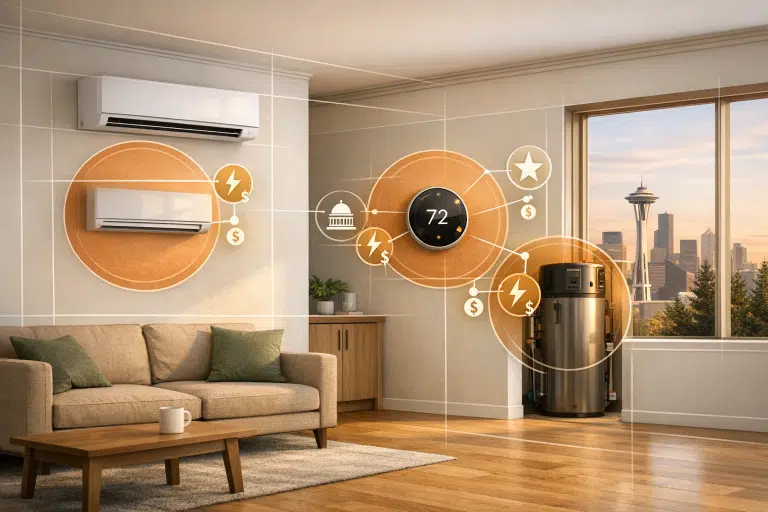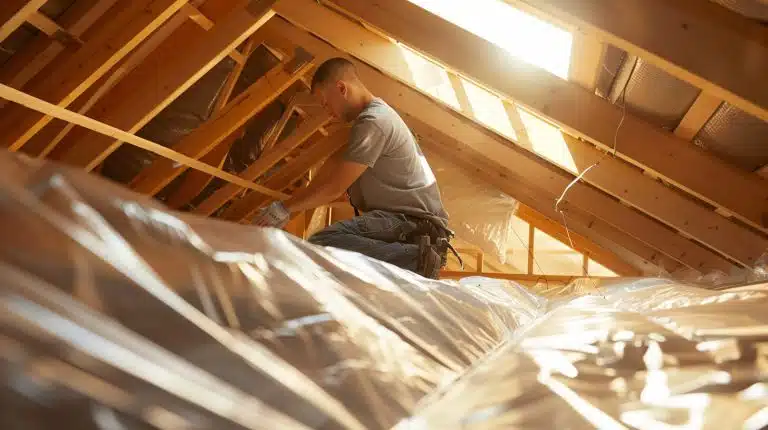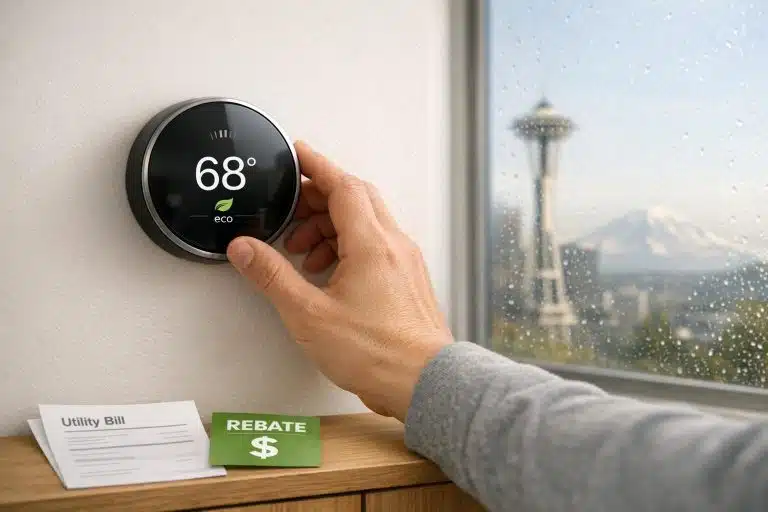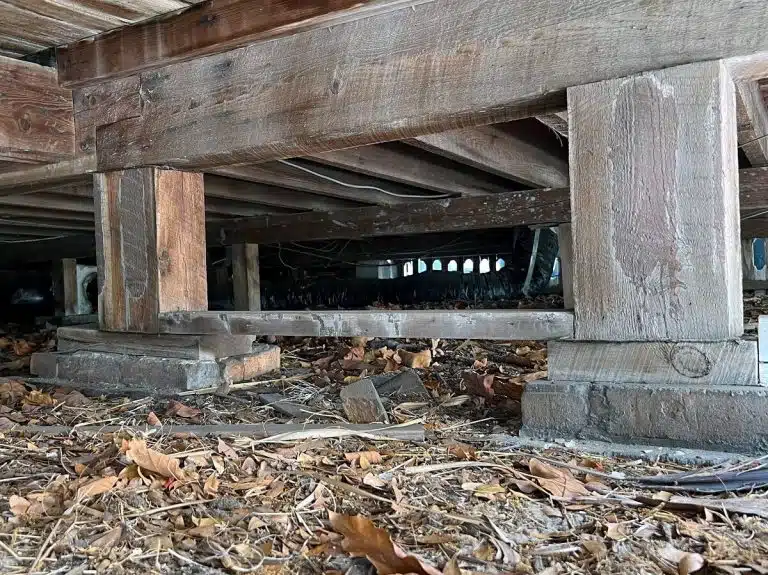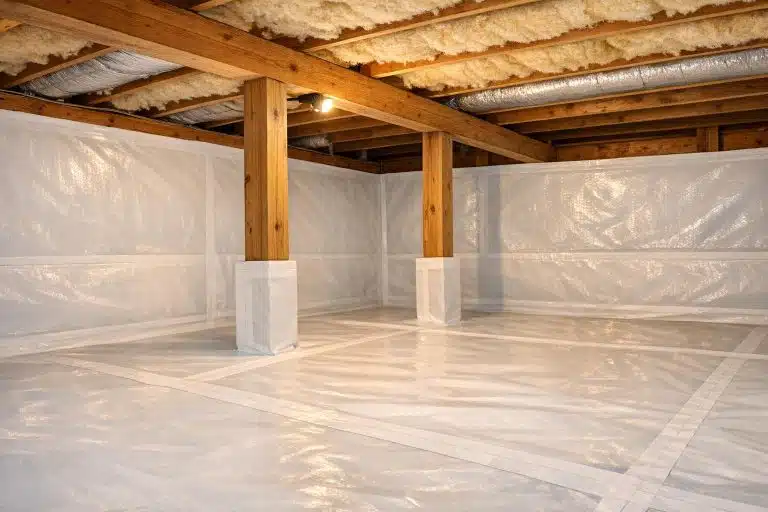

- What HVAC Does: It regulates temperature, humidity, and air cleanliness using components like air filters, ventilation systems, and moisture control.
- Why Air Quality Matters: Poor air quality can worsen allergies, asthma, and even spread illnesses. Proper HVAC maintenance reduces these risks.
- Common Problems: Issues like leaky ducts, dirty filters, and mold growth can harm air quality and increase energy bills.
- Solutions: Regular filter replacements, duct cleaning, and professional maintenance improve system efficiency and air quality.
- Upgrades: Advanced filters, UV light systems, and smart thermostats can further improve air quality and reduce energy costs.
Quick Tip:
Replace air filters every 1–3 months and schedule annual HVAC inspections to avoid common issues. For homes in humid areas, consider adding a dehumidifier or upgrading to a more efficient system.
This guide dives into practical steps to improve your indoor air and maximize your HVAC system’s performance.
The Role Of HVAC Systems In Indoor Air Quality
How HVAC Systems Affect Indoor Air Quality
Your HVAC system works a lot like your home’s respiratory system – it circulates air, filters out pollutants, brings in fresh air, and controls moisture levels. But if it’s not properly maintained, it can end up spreading contaminants throughout your home instead. Let’s take a closer look at the main indoor pollutants that even well-maintained systems have to handle.
Common Indoor Air Pollutants
HVAC systems tackle two major categories of pollutants: particulate matter and gaseous pollutants. Particulate matter includes things like dust, smoke, pollen, animal dander, and biological particles such as dust mites, mold spores, bacteria, and viruses. These can often be captured by mechanical filters. On the other hand, gaseous pollutants include harmful substances like carbon monoxide and nitrogen dioxide from fuel-burning appliances, as well as volatile organic compounds (VOCs) released by paints, cleaning products, and building materials .
Here’s the troubling part: people spend about 90% of their time indoors, where pollutant levels can actually be higher than outdoors. For instance, radon exposure is linked to around 14,000 deaths annually, and secondhand smoke causes approximately 3,000 lung cancer deaths each year among nonsmoking adults. High-efficiency filters (like those rated MERV 13 or higher) can trap smaller particles, including some viruses and bacteria. Additionally, maintaining indoor humidity between 30% and 50% is crucial to avoid mold growth and limit dust mites.
Problems Caused by Poor HVAC Maintenance
When HVAC systems aren’t properly maintained, pollutants can build up and cause serious problems. For example, dirty coils, fans, and heat exchangers can become breeding grounds for mold and bacteria, spreading them throughout your home. Clogged or poorly fitted air filters may fail to trap dust, pollen, and debris, allowing them to circulate back into the air. Moisture-related issues, like clogged drain pans or unsealed ducts, can lead to condensation and mold growth. The EPA warns:
If moisture is present, the potential for microbiological growth (e.g., mold) is increased and spores from such growth may be released into the home’s living space.
There’s also the risk of carbon monoxide leaks from poorly maintained fuel-burning furnaces. This gas is colorless, odorless, and highly dangerous. Additionally, if your HVAC system is too large for your home, it may "short cycle", meaning it shuts off before fully dehumidifying the air. This creates a damp environment where mold can thrive.
Benefits of Regular HVAC Maintenance
Regular HVAC maintenance can make a big difference in improving indoor air quality. Replacing filters on schedule ensures pollutants are effectively captured. Professional cleaning of components like cooling coils and drain pans removes standing water and debris, cutting down on places where contaminants can grow. Annual inspections of fuel-burning furnaces help protect against carbon monoxide risks.
Properly sealing ductwork also prevents pollutants from entering your system through unconditioned areas, such as attics or crawl spaces. These steps not only improve air quality but also boost system efficiency, extend the life of your equipment, and lower energy bills. For homeowners in the Pacific Northwest, where moisture levels are naturally higher, these measures are even more critical to keeping indoor air clean and healthy.
HVAC Components That Improve Air Quality
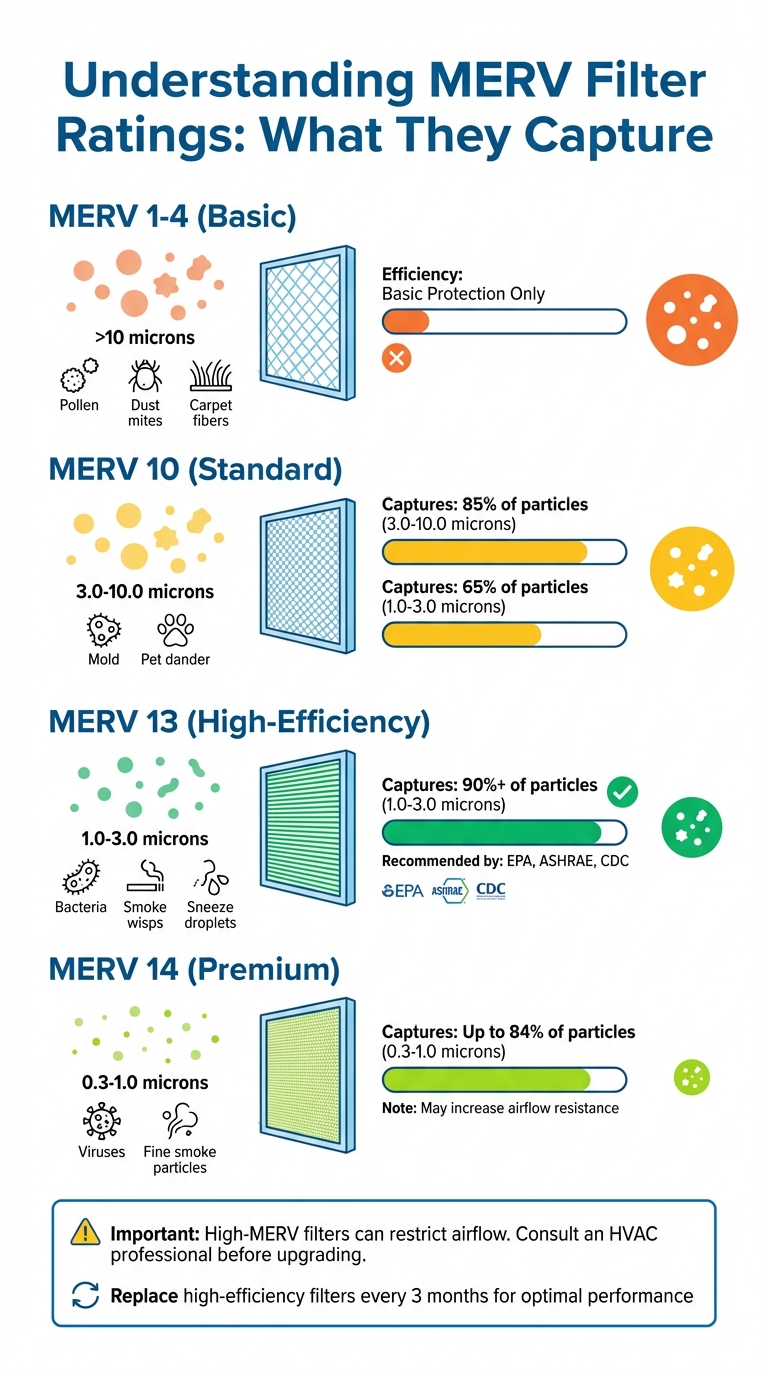
MERV Filter Ratings and Particle Capture Efficiency Comparison
A well-maintained HVAC system does more than just keep your home comfortable – it plays a crucial role in ensuring cleaner air for you and your family. By understanding how specific components work to filter and condition air, you can make informed choices that directly impact the air quality in your home.
Air Filters and Efficiency Ratings
Air filters are essential for trapping indoor pollutants, but their effectiveness varies widely. The MERV (Minimum Efficiency Reporting Value) scale rates filters based on their ability to capture particles ranging from 0.3 to 10 microns in size. Low-MERV filters (rated 1-4) handle larger particles like pollen and dust mites, while higher-rated filters (MERV 13-16) can capture tiny particles, including bacteria, smoke, and even sneeze droplets as small as 0.3 microns.
Here’s a quick breakdown of filter performance:
- MERV 10: Removes 85% of particles between 3.0–10.0 microns and 65% of particles between 1.0–3.0 microns.
- MERV 13: Captures 90% or more of particles in the 1.0–3.0 micron range.
- MERV 14: Traps up to 84% of particles as small as 0.3–1.0 microns.
If you’re concerned about viruses or bacteria, experts like the EPA, ASHRAE, and CDC recommend upgrading to the highest-efficiency filter your system supports. However, high-MERV filters can increase airflow resistance, so consult an HVAC professional before making changes. For added protection, portable HEPA air cleaners can complement your system. To maintain performance, replace high-efficiency filters every three months.
Ventilation and Airflow Systems
Ventilation is just as important as filtration for maintaining clean indoor air. Mechanical ventilation systems help reduce indoor pollutant levels by bringing in fresh outdoor air and diluting contaminants like viral particles.
The EPA highlights this point:
The most effective ways to improve your indoor air are to reduce or remove the sources of pollutants and to ventilate with clean outdoor air.
To maximize airflow, set your thermostat fan to "on" during gatherings to keep air circulating through the filter. Using exhaust fans in kitchens and bathrooms during and after activities like cooking or cleaning can also help remove localized pollutants before they spread.
For energy-efficient ventilation, Energy Recovery Ventilators (ERVs) are a great option. They exchange heat and moisture between incoming and outgoing air, reducing the energy cost of conditioning outdoor air. When installing outdoor air intakes, ensure they’re at least 25 feet away from potential contamination sources like sewer vents or loading docks and positioned 8 inches above ground or roof surfaces to avoid blockages.
Humidity Control Systems
Moisture control is key to preventing mold and other biological growth in both your HVAC system and living spaces. Air conditioners naturally dehumidify air by condensing water vapor on cooling coils. This water is collected in a drain pan and directed out of your home.
However, issues like oversized HVAC units can disrupt this process. These systems often "short-cycle", turning on and off too quickly to effectively remove moisture, which can lead to high indoor humidity. Similarly, leaving your fan set to "on" can increase humidity levels. When the compressor shuts off but the fan continues running, moisture on the coils evaporates back into the air.
To keep humidity under control, set your fan to "auto" so the system completes full cooling cycles. Regularly inspect condensate pans to ensure they’re draining properly and free of standing water, which can encourage mold growth. If your air conditioner struggles to keep humidity below 60%, consider adding a whole-house dehumidifier for extra support.
HVAC Maintenance Tips for Better Air Quality
Keeping your HVAC system running smoothly takes some regular upkeep. A well-maintained system not only performs better but also helps keep the air in your home cleaner by reducing the spread of dust, allergens, and other contaminants. Here are some essential maintenance tips to improve your HVAC’s efficiency and enhance indoor air quality.
When to Replace Air Filters
Air filters are your HVAC system’s first line of defense against airborne particles. Ideally, replace them every 1 to 3 months. If you have a single pet, aim for every two months. In homes with multiple pets or if anyone has allergies, monthly replacements are best. During heavy-use seasons like summer and winter, check filters monthly and replace them if they appear gray or clogged with dust.
Filter lifespan depends on the type you use:
- Fiberglass filters: Replace monthly.
- Pleated filters: Last 1 to 3 months.
- Electrostatic filters: Can go 3 to 6 months between replacements or cleanings.
- HEPA filters: Typically last 6 to 12 months but should be checked regularly for buildup.
For most homes, filters with MERV ratings between 8 and 13 strike the right balance, offering effective filtration without restricting airflow .
Air Duct Cleaning and Inspection
Air ducts don’t need frequent cleaning, but there are situations where it’s necessary. According to Michael Bisesi, PhD, CIH, from The Ohio State University:
"Air duct cleaning doesn’t need to be done routinely. There are some instances in which a thorough air duct cleaning might be warranted, such as after a major construction project… or if you’ve moved into an older home."
Renovation projects, in particular, can leave behind significant dust that settles in ductwork unless the system was sealed properly during the work . Other signs that cleaning may be needed include visible mold, evidence of vermin, or excessive dust buildup. Use a flashlight to inspect the ducts – if you see heavy dust deposits, it’s time to clean .
Professional duct cleaning services generally range from $450 to $1,000, depending on factors like the system’s size, accessibility, and the level of contamination.
Cleaning Coils and Drains
Evaporator and condenser coils should be inspected once a year to ensure they’re clean and functioning properly. Dirty coils can reduce efficiency by hindering heat absorption and airflow. If the aluminum fins on the coils are bent, use a fin comb (available at hardware stores) to straighten them and restore airflow.
Condensate drains also need periodic attention. Clear them with a stiff wire to avoid clogs that could lead to water damage or create conditions that encourage microbial growth. Additionally, keep the area around your outdoor condenser unit clear – remove debris and trim back plants or foliage to maintain at least two feet of clearance for optimal performance.
sbb-itb-8db64ac
Advanced HVAC Technologies for Better Air Quality
Modern HVAC systems go beyond routine maintenance to tackle pollutants that standard filters might miss, offering significant improvements in indoor air quality.
HEPA Filters and Air Purifiers
HEPA (High-Efficiency Particulate Air) filters are designed to capture 99.9% of particles as small as 0.3 microns, including PM2.5 particles, viruses, bacteria, mold, and pollen. However, incorporating HEPA filters into central HVAC systems can be tricky due to their airflow resistance, so consulting an HVAC technician is essential . For most residential systems, MERV 13 or higher filters are a more practical choice, as they effectively remove at least 50% of the smallest tested particles.
Portable HEPA air cleaners are another option, especially for specific areas of the home. To ensure they work efficiently, place them where airflow isn’t blocked. For instance, in a 300-square-foot room with 8-foot ceilings, choose a unit with a minimum Clean Air Delivery Rate (CADR) of 195 cfm. According to the US EPA, studies show that portable HEPA air cleaners can lead to slight improvements in cardiovascular and respiratory health.
One limitation of HVAC-based filtration is that most systems operate less than 25% of the time during heating and cooling seasons, meaning filtration only happens when the system is running. As the EPA points out:
The most effective ways to improve your indoor air are to reduce or remove the sources of pollutants and to ventilate with clean outdoor air. In addition, research shows that filtration can be an effective supplement.
For even greater protection, advanced technologies like UV light systems can be added to your HVAC setup.
UV Light Systems for HVAC
While filters focus on capturing particles, UV light systems take aim at microbial threats. Ultraviolet germicidal irradiation (UVGI) uses short-wavelength UV light to disrupt the DNA or RNA of microorganisms, such as bacteria, viruses, and mold, either killing them or stopping their reproduction. These systems can disinfect both HVAC surfaces and the air passing through the ducts.
In residential settings, UVGI is often used on cooling coils and drain pans – areas prone to mold and bacteria due to moisture. Research shows that UV light can reduce mold and bacteria on these surfaces by up to 99%. According to Lawrence Berkeley National Laboratory:
Irradiating the cooling coils and drain pans can dramatically reduce mold and bacteria growth on the often wet surfaces… or destroy the microbial films that previously accumulated.
For airborne disinfection, UV systems can achieve results comparable to 10–20 air changes per hour. One simulation revealed a 59% reduction in infection risk with UVGI, outperforming both 100% outdoor air (27%) and MERV 13 filters (21%). In hospitals, influenza infection rates were almost 90% lower in buildings with UVGI systems than those without.
Installing a UV system for a 500-square-foot space typically costs between $1,500 and $2,500, with annual energy costs around $18 . UV lamps need replacement yearly, though some models last up to two years. To avoid exposure risks, always turn off UV fixtures before performing HVAC maintenance. These systems work best when paired with mechanical filters, as UV light cannot remove non-biological particles like dust.
Smart Thermostats and Air Quality Monitoring
Smart thermostats take HVAC systems to the next level by adapting to your lifestyle. Wi-Fi-enabled models learn your daily habits, adjusting temperatures automatically when you’re away or asleep.
Many advanced models also include sensors for humidity and CO₂, triggering ventilation when indoor air quality dips. For example, setting your thermostat to lower the temperature by 7–10°F for eight hours a day can save up to 10% annually on heating and cooling costs.
Geofencing technology adds convenience by switching the system to "Away" mode when you leave home. Monthly energy reports can also highlight areas where you could save more. These devices generally cost between $100 and $300. To get the best results, allow the thermostat’s learning algorithm to run for one to two weeks without manual adjustments, so it can accurately map your household’s patterns.
Envirosmart Solution Maintenance Packages
Keeping your HVAC system in top shape is essential for maintaining performance and improving indoor air quality. Envirosmart Solution offers annual maintenance packages designed to simplify upkeep and protect both your equipment and the air you breathe. Here’s a breakdown of the available plans:
- DRYER SMART™ ($199/year): This package includes an annual dryer vent cleaning using a snake brush, along with a system inspection. It helps prevent lint buildup, reducing the risk of dryer fires and potential carbon monoxide hazards .
- SMART DUCTS™ ($199/year, available after an initial deep cleaning): This plan focuses on air duct cleaning. It features a camera inspection to identify mold or debris, followed by a thorough cleaning and the application of Benefect – a disinfectant made from essential oils that neutralizes odors effectively .
"Your air ducts can retain dust, pollen, pet dander, and other allergens. Regular air duct cleaning by Envirosmart can significantly enhance your home’s air quality, reducing allergy and asthma symptoms." – Envirosmart Solution
- CRAWL SPACE & ATTIC CARE™ ($199/year): Includes inspections of your attic and crawl space to identify insulation gaps, leaks, or pest issues that could impact indoor air quality .
- FURNACE CARE™ ($199/year): Covers cleaning of the heat exchanger, burners, and sensors, along with a heat production check and detailed status report. This service helps prevent potential carbon monoxide leaks .
- SMART GOLD™ (starting at $699/year): A comprehensive package that combines all of the above services, offers a 20% discount on additional services, and ensures priority scheduling .
Subscribers to any maintenance plan receive fast-response service and priority scheduling during busy seasons . Considering that indoor air can be up to five times more polluted than outdoor air , these packages tackle common issues that affect system efficiency. In fact, professional annual maintenance can improve HVAC efficiency by nearly 30%, which directly lowers energy bills .
HVAC Upgrades and Energy Efficiency Incentives
Government and Local Energy Efficiency Incentives
Federal tax credits for HVAC systems may have expired at the end of 2025, but homeowners still have access to state-administered, federally funded programs like HOMES and HEAR/HEEHRA. These programs provide substantial financial support for energy efficiency upgrades.
For example, low-to-moderate income households can receive up to $8,000 for heat pump installations, $4,000 for electrical panel upgrades, and $1,600 for weatherization improvements such as air sealing and insulation. The HOMES program also offers rebates for projects that reduce overall energy use by 20% or more, with even greater rewards for achieving a 35% reduction. Since these programs are managed at the state level, the availability and rebate amounts vary depending on your location. To find out what’s offered in your area, check the Department of Energy‘s Home Energy Rebates Portal.
Envirosmart Solution is a valuable resource for homeowners in the Pacific Northwest, helping them navigate these programs and maximize their rebates. With a deep understanding of state-specific requirements, their team guides you through the application process, ensuring you tap into all available financial support. These incentives not only bring down the initial costs of HVAC upgrades but also improve system performance, making energy efficiency more accessible and rewarding.
Benefits of Energy-Efficient HVAC Systems
Upgrading to energy-efficient HVAC systems comes with a host of advantages, both in terms of performance and cost savings. For instance, efficient heat pumps can cut heating electricity use by about 65% compared to traditional resistance heating systems like furnaces. Similarly, high-efficiency air conditioners can slash cooling energy consumption by up to 50%. Considering that heating and cooling make up roughly 40% of the average American household’s annual energy use, these improvements can lead to noticeable reductions in monthly utility bills.
But the benefits go beyond just saving money. Energy-efficient systems significantly enhance indoor air quality. Sealed-combustion condensing furnaces, with efficiency ratings of 90% to 98% AFUE, prevent the risk of backdrafting harmful combustion gases into your home. Properly sealed ductwork not only eliminates the typical 20–30% energy loss but also minimizes the infiltration of dust and allergens. Additionally, Energy Recovery Ventilation (ERV) systems maintain fresh indoor air while conserving the energy used to heat or cool your home, creating a balanced environment that’s both healthy and cost-effective.
To make the most of these upgrades, start with a home energy audit. These assessments can pinpoint the most cost-effective improvements and often come with their own set of incentives. Before installing a new heat pump, it’s wise to focus on foundational upgrades like attic insulation and air sealing to avoid oversizing the system. Envirosmart Solution takes a holistic approach, addressing these preliminary improvements alongside HVAC upgrades. This ensures a complete solution that boosts both air quality and energy efficiency while helping you take full advantage of available rebates and incentives.
Conclusion
Your HVAC system plays a central role in maintaining your home’s air quality. Simple tasks like changing filters, cleaning coils, and checking drain pans can go a long way in preventing the buildup of dust, mold spores, and allergens.
Beyond basic upkeep, modern advancements offer impressive benefits. For example, HEPA filters can trap up to 99.97% of airborne particles, while UV light systems and Energy Recovery Ventilators tackle contaminants and bring in fresh air without compromising efficiency. Considering that heating and cooling account for about 40% of household energy use, these upgrades not only improve air quality but also help lower energy bills.
Envirosmart Solution takes a comprehensive approach to indoor air quality. Their services cover everything from attic insulation and air sealing to HVAC installations and duct cleaning, ensuring that all elements work together seamlessly. Plus, their expertise in navigating rebate programs means you can access financial incentives for heat pumps, weatherization, and other energy-saving projects – making it easier to invest in a healthier home.
If you’re dealing with high energy bills, frequent system issues, or poor air quality, the first step is understanding your current system’s condition. As discussed, professional assessments can identify pollutants and inefficiencies, helping you focus on improvements that prioritize health, safety, and savings. With options like the SMART GOLD™ maintenance package at $699, Envirosmart Solution offers year-round care, including duct cleaning, furnace servicing, and attic inspections, to keep your system running smoothly.
Improving air quality and cutting energy costs don’t have to be separate goals – they go hand in hand. By staying on top of maintenance and taking advantage of available incentives, you can create a home that’s cleaner, more comfortable, and more energy-efficient.
FAQs
What are the best HVAC upgrades to improve indoor air quality in my home?
Boosting indoor air quality (IAQ) through HVAC upgrades can make your living space healthier and more comfortable. One effective step is switching to high-efficiency filters like MERV-13 or higher. These filters are designed to trap smaller particles such as allergens, dust, and mold, helping to keep the air cleaner.
You might also want to consider installing energy recovery ventilators (ERVs) or balanced ventilation systems. These systems improve airflow by bringing in fresh air while maintaining energy efficiency – a win-win for both air quality and your energy bills.
Regular upkeep plays a big role, too. Make it a habit to clean or replace air filters, inspect air ducts for issues, and ensure the HVAC system is running smoothly. For even better results, think about adding dehumidifiers to manage moisture levels or source control systems to tackle pollutants right at their source.
Not only do these upgrades lead to fresher, healthier air, but they can also help lower energy usage and reduce costs over time. For tailored advice, reach out to HVAC professionals who can recommend solutions that best fit your home’s needs.
What are the advantages of using high-efficiency air filters in my HVAC system?
High-efficiency air filters offer a range of benefits that can make a noticeable difference in your home’s air quality and your health. These filters are specially designed to trap smaller particles like dust, mold spores, bacteria, and even some viruses. By doing so, they help reduce allergens and pollutants in the air you breathe – making them particularly beneficial for individuals with allergies, asthma, or other respiratory issues.
But the advantages don’t stop there. High-efficiency filters also play a crucial role in protecting your HVAC system. By preventing dust and debris from building up on its components, these filters help maintain your system’s energy efficiency, reduce wear and tear, and may even extend its lifespan. To get the most out of your filters, look for ones with a MERV rating of 13 or higher and make sure to replace them regularly. This ensures not only cleaner air but also a healthier and more efficient home environment.
How does regular HVAC maintenance help save money and improve indoor air quality?
Regular HVAC maintenance isn’t just about keeping your system running – it’s about saving money and breathing cleaner air. When your system is well-maintained, parts like filters and coils operate more efficiently. This means less energy is used, which translates to lower utility bills. For instance, something as simple as replacing or cleaning filters can improve airflow, prevent the system from overworking, and help you avoid expensive repairs or spikes in energy costs.
Beyond saving money, maintenance directly impacts the air you breathe. Clean filters and ducts trap allergens, pollutants, and dust, creating a healthier indoor environment. On the flip side, neglecting your HVAC system can lead to problems like mold growth or bacteria buildup, which can pose health risks. By scheduling regular check-ups, you ensure your system works efficiently, your wallet stays happier, and your home remains a safe, clean place to live.