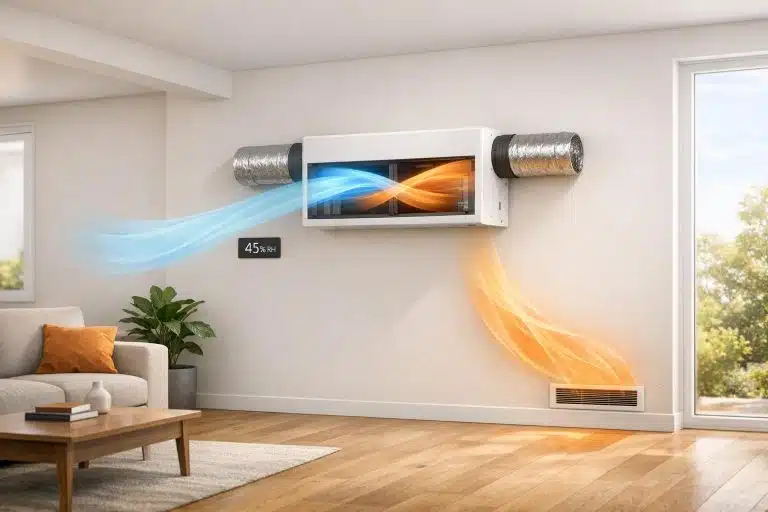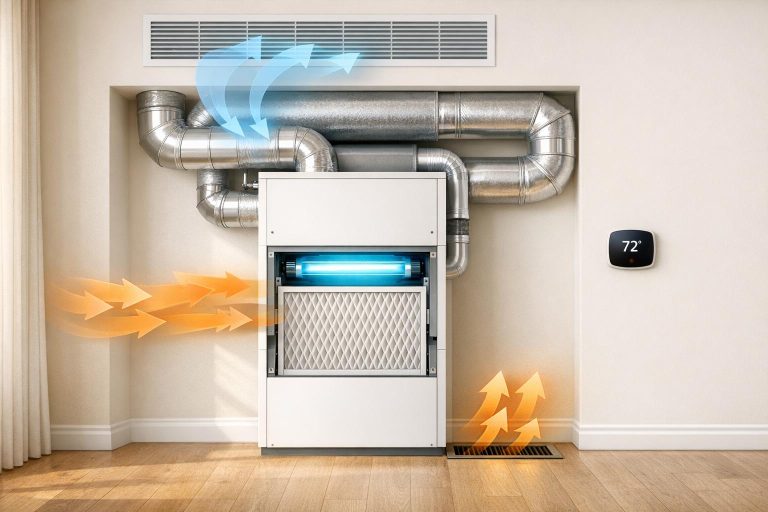

Energy Recovery Ventilators (ERVs) improve indoor air quality while conserving energy by exchanging stale indoor air with filtered outdoor air. They precondition incoming air – warming or cooling it – using a heat exchanger, which transfers heat and moisture without mixing air streams. This reduces HVAC system strain, lowers energy costs, and maintains balanced humidity levels.
Key Points:
- Improves Air Quality: Removes indoor pollutants like VOCs, carbon dioxide, and allergens.
- Energy Efficiency: Recovers 60%-95% of heating/cooling energy from outgoing air.
- Year-Round Comfort: Regulates humidity – removing excess moisture in summer and retaining it in winter.
- Low Maintenance: Requires regular filter cleaning, core vacuuming, and annual inspections.
- Quiet Operation: Modern ERVs operate below 1.0 sone.
ERV Components:
- Heat Exchanger Core: Transfers heat and moisture between air streams.
- Fans and Filters: Ensure balanced airflow and trap particles.
- Smart Controls: Adjust settings based on occupancy, CO2 levels, or humidity.
Seasonal Performance:
- Winter: Preheats and humidifies incoming air.
- Summer: Precools and dehumidifies incoming air, reducing HVAC load.
ERV systems come in two types: static-plate core systems (low maintenance, high efficiency) and rotating-wheel core systems (higher capacity, more upkeep). Proper installation and regular maintenance are essential for optimal performance and longevity.
For installation or upkeep, professionals like Envirosmart Solution ensure correct sizing, integration, and compliance with energy standards. They also assist with rebates for energy-efficient upgrades.
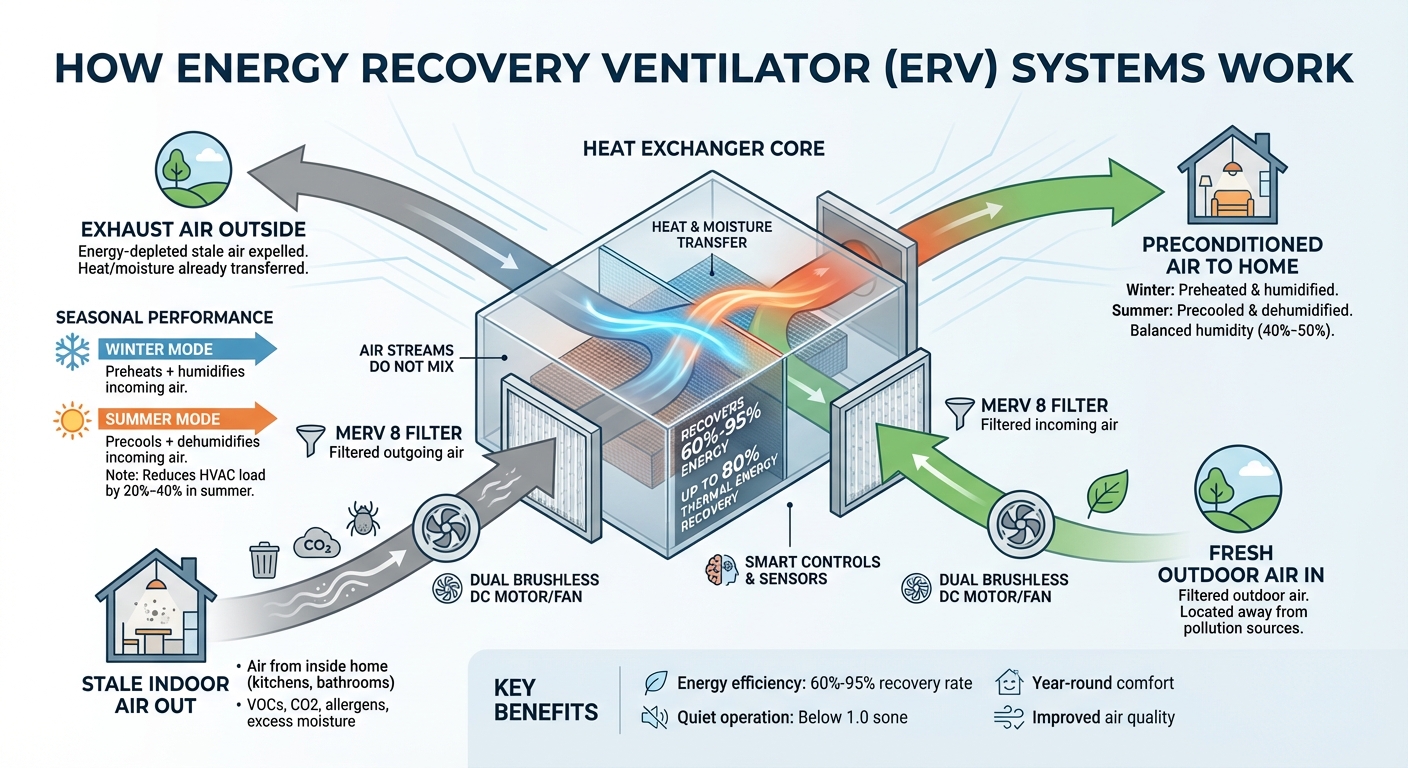
How ERV Systems Work: Air Flow and Energy Transfer Process
Main Parts of an ERV System
Ductwork and Airflow Pathways
ERV systems rely on dedicated ductwork to keep fresh and stale air completely separate. These systems operate with two distinct pathways: one draws outdoor air into your home, while the other expels indoor air.
Proper duct placement is key. Fresh air intakes should be located away from sources of pollution, such as driveways, laundry vents, or furnace exhausts. Return outlets are most effective in areas with high moisture levels, like kitchens and bathrooms, but they should be positioned at least 10 feet from ovens or cooktops to avoid grease vapor clogging the energy recovery core. Additionally, ductwork running through unheated spaces must be insulated and sealed at every joint to prevent energy loss.
With the airflow pathways set, the next focus is the core component that handles energy transfer.
Heat Exchanger Core
The heat exchanger core is the centerpiece of any ERV system. This component enables the transfer of both heat and moisture between the incoming and outgoing air streams without allowing them to mix. Panasonic Eco Systems describes it as follows:
At the heart of every ERV is an enthalpy core (often made of advanced polymer plates) where heat and moisture pass between air streams without mixing the air itself.
The process is straightforward: heat moves naturally from warmer air to cooler air. In the winter, the warm outgoing air preheats the incoming cold air. During summer, the cool outgoing air precools the incoming warm air. Moisture transfer occurs through small channels or permeable membranes in the core material, helping to regulate indoor humidity throughout the year. Impressively, ERV systems can recover up to 80% of the thermal energy that would otherwise be lost with standard ventilation.
Once the core does its job, fans, filters, and controls take over to fine-tune the system’s operation.
Fans, Filters, and Controls
To complete the system, fans, filters, and controls work together to maintain energy efficiency and ensure clean, healthy indoor air.
Fans power the system, using dual brushless DC motors to maintain balanced airflow. These motors operate quietly and can adjust airflow in precise 10 CFM increments, ranging from 30 to 100 CFM.
Filters play a vital role in capturing dust, pollen, and other particles before they can enter your living space or clog the heat exchanger core. Most ERVs use MERV 8 filters, which protect the core from debris that could hinder its performance. To keep the system running smoothly, filters should be vacuumed or replaced every three to six months as part of your annual air duct cleaning.
Smart controls and sensors further enhance performance by automatically adjusting fan speeds based on factors like occupancy, indoor CO2 levels, or outdoor humidity. These features prevent over-ventilation, maintain balanced indoor air pressure, and reduce energy waste. Many units also include a "Boost" mode for times of higher demand, such as crowded gatherings or humid conditions, automatically returning to normal operation afterward.
sbb-itb-8db64ac
How Does Energy Recovery Ventilation Work? | This Old House

How ERV Systems Work in Different Seasons
ERV systems are designed to handle indoor air management efficiently, no matter the season. These systems adjust automatically to seasonal changes, reversing the energy transfer process to maintain comfort throughout the year. Whether you’re dealing with freezing winters or sweltering summers, ERVs perform best under extreme weather conditions, ensuring energy-efficient climate control in your home. Here’s a closer look at how ERVs operate during winter and summer.
Winter Operation
During the cold months, an ERV captures heat and moisture from the indoor air being vented out and transfers it to the cold, dry air coming in from outside. The heat exchanger core plays a key role here, helping to maintain indoor humidity levels between 40% and 50%, which can prevent the dryness often experienced in tightly sealed homes.
This process significantly reduces the workload on your heating system. In extremely cold conditions, the ERV may adjust fan speeds or temporarily pause operation to prevent frost buildup on the heat exchanger. Advanced models, like double-core HRV & ERV systems, are designed to function efficiently even in temperatures as low as -40°F.
Summer Operation
When summer rolls around, the ERV flips its function. The heat exchanger core works to transfer heat from the incoming hot outdoor air to the cooler exhaust air leaving your home. At the same time, it removes moisture from the humid incoming air, transferring it to the drier outgoing air. This process pre-cools and dehumidifies the fresh air before it enters your living areas.
This pre-conditioning is particularly important in hot and humid climates, where cooling and dehumidifying fresh air can account for 20% to 40% of the total HVAC energy load. By taking on this task passively, the ERV reduces the strain on your air conditioning system. Some advanced enthalpy recovery ventilators have achieved a Coefficient of Performance (COP) as high as 33 during summer, making them a highly efficient option for cutting cooling costs.
Types of ERV Systems
Energy Recovery Ventilation (ERV) systems come in two main types: static-plate core systems and rotating-wheel core systems. Each operates differently to transfer heat and moisture between air streams, so understanding how they work can help you decide which is best for your needs.
Static-plate core systems are a popular choice for homes. They have no moving parts and use thin plates – made from materials like aluminum, polymer, or semi-permeable membranes – to separate incoming and outgoing air streams. These plates allow heat and moisture to transfer through their surfaces. The design can follow either a crossflow pattern, where air streams move perpendicularly, or a counterflow pattern, where streams move in opposite directions. Crossflow systems typically achieve 60% to 70% heat-recovery efficiency, making them a solid option for smaller spaces like apartments. Counterflow systems, with their longer air paths, can reach up to 90% sensible recovery efficiency, making them ideal for energy-efficient or passive house designs.
Rotating-wheel core systems, often called enthalpy wheels, take a different approach. These systems feature a slowly spinning cylinder filled with an air-permeable matrix coated with a desiccant material, such as silica gel. As the wheel rotates between exhaust and supply air streams, it transfers energy effectively. With energy-recovery rates ranging from 70% to 85%, these systems are better suited for buildings requiring higher air volumes. However, they do require regular maintenance, including inspections of motors and belts.
The choice between these systems often depends on maintenance needs and air separation. Static-plate systems are low-maintenance, requiring only periodic filter changes and occasional cleaning of the core. They also provide excellent air stream separation, ensuring no cross-contamination between fresh and exhaust air. On the other hand, rotating-wheel systems, while efficient, involve more upkeep due to their motors, belts, and bearings. Additionally, their design can lead to "volumetric crossover", where small amounts of exhaust air may mix with incoming fresh air.
For most homes, static-plate systems strike a good balance between efficiency and ease of maintenance. Rotating-wheel systems, meanwhile, are better suited for larger buildings with high air volume needs.
Maintenance and Care for ERV Systems
To keep your ERV system running smoothly and efficiently, regular upkeep is essential. One of the most important tasks? Keeping an eye on your filters. Check them monthly and clean or replace them every 1–3 months, depending on how many people live in your home and the quality of the outdoor air. If the filters look dark or dusty, it’s time for a change – clogged filters can overwork the system, preventing it from delivering the fresh air your home needs. Beyond filters, there are several other tasks to ensure your system stays in top shape.
Filter Cleaning and Replacement
The energy recovery core should be vacuumed every six months using a household vacuum. At the same interval, clean the condensate drains and pans to avoid water buildup. Inspect the exterior intake hoods and screens every 1–3 months for obstructions like debris, ice, or bird nests. These blockages can create negative static pressure, which can strain the motor and shorten its lifespan. According to the International Mechanical Code (Section 401.5), these screens must use corrosion-resistant mesh with openings no larger than 1/4 inch. While these tasks are manageable for most homeowners, don’t overlook the importance of professional servicing.
Annual Inspections and Servicing
Once a year, schedule a professional inspection. A qualified HVAC contractor will handle tasks like cleaning internal fans and grills, checking for ductwork leaks, and ensuring the system is balanced. Proper balancing means the supply and exhaust airflows are equal, which is critical for maintaining efficiency. The contractor will also inspect the heat exchanger core for dust buildup or membrane wear and test defrost controls to ensure everything is functioning as it should.
Common Maintenance Mistakes to Avoid
Skipping filter changes is one of the most frequent mistakes people make, and it can significantly reduce airflow and system performance. Another common error is placing return outlets too close to ovens or cooktops, as vaporized grease can clog the energy recovery core. Neglecting to clean the condensate drains every six months can lead to moisture problems. Lastly, assuming the system is balanced without professional verification can cause pressure imbalances throughout your home.
| Maintenance Task | How Often | Who Does It |
|---|---|---|
| Filter Cleaning/Replacement | Every 1–3 months | Homeowner |
| Energy Recovery Core Cleaning | Every 6 months | Homeowner/Professional |
| Condensate Drain/Pan Cleaning | Every 6 months | Homeowner/Professional |
| Exterior Hood/Screen Inspection | Every 1–3 months | Homeowner |
| Full System Inspection & Balancing | Annually | Professional Contractor |
Working with Envirosmart Solution for ERV Installation and Maintenance

Properly installing an ERV requires careful attention to sizing, ductwork integration, and ongoing maintenance over its 10 to 20-year lifespan. Following professional guidelines is crucial for ensuring the system performs efficiently and lasts as intended. Skilled installation not only guarantees technical precision but also helps you take advantage of financial incentives tied to energy-efficient upgrades.
Services for Home Efficiency
Envirosmart Solution offers HVAC and ventilation services across the Pacific Northwest, specializing in ERV installation and maintenance. Their technicians assess factors like your home’s size, the number of occupants, and the local climate to determine the right airflow capacity (measured in CFM) for your space. They seamlessly integrate the ERV into your home’s existing ductwork or create dedicated ventilation lines, placing the unit near your HVAC air handler and ensuring all penetrations are properly sealed.
Beyond installation, Envirosmart Solution provides ongoing care, including filter cleaning and replacement, annual inspections of the heat exchanger core, and checks on exterior hoods to clear any blockages caused by debris, snow, or pests. They offer a comprehensive maintenance package, SMART GOLD™, for $699 per year. This package combines essential services with a 20% discount on additional work, making it easier to maintain a comfortable and energy-efficient home.
Their services also extend to helping homeowners navigate rebates and incentives, further improving the affordability of energy-efficient upgrades.
Help with Rebates and Incentives
A standout feature of working with Envirosmart Solution is their expertise in helping homeowners access rebates and incentives for energy-efficient upgrades. They guide you in selecting ENERGY STAR® certified ERV models, which are often required for utility-sponsored rebate programs, and ensure installations meet ASHRAE 62.2 standards and local building codes. Additionally, they align their work with sustainability benchmarks like LEED and Net Zero, opening doors to performance grants and tax credits.
ERV systems can recover up to 80% of the thermal energy from exhausted air, making them a practical solution for meeting energy-reduction goals tied to many incentive programs. Envirosmart Solution serves as a one-stop resource, handling both the technical installation and the often-complicated paperwork required to claim rebates. By doing so, they ensure you maximize the financial benefits of your energy-efficient investment.
Conclusion
The Value of Energy Recovery Ventilation
Energy Recovery Ventilation (ERV) systems can reclaim up to 80% of thermal energy, which translates into lower energy costs, reduced strain on HVAC systems, and improved indoor air quality. By continuously replacing stale indoor air with fresh, filtered outdoor air, ERVs help eliminate pollutants, allergens, and odors that often build up in modern, tightly sealed homes.
Additionally, ERVs help maintain balanced indoor humidity levels, enhancing comfort while protecting the structural integrity of your home. With their reliable performance over decades, these systems offer a practical way to enhance home efficiency and create a healthier living environment.
Why Choose Envirosmart Solution
To enjoy the full benefits of an ERV system, professional installation and maintenance are essential. Envirosmart Solution specializes in ERV services across the Pacific Northwest, ensuring installations meet ASHRAE 62.2 standards and local regulations. Their technicians carefully size and integrate each system to meet the unique requirements of your home.
For ongoing care, their SMART GOLD™ package is available at $699 per year. This plan includes annual inspections, filter maintenance, and a 20% discount on additional services, making it easier to keep your ERV in peak condition. Envirosmart Solution also helps homeowners navigate rebate programs and incentives, guiding them toward ENERGY STAR® certified models and handling the necessary paperwork to maximize savings. For those looking to improve air quality, reduce energy expenses, and receive expert support, Envirosmart Solution delivers a complete solution tailored to long-term home efficiency.
FAQs
Do I need an ERV or an HRV for my home?
Choosing between an ERV (Energy Recovery Ventilator) and an HRV (Heat Recovery Ventilator) comes down to your climate and specific indoor air quality needs.
If you live in a colder region, an HRV is often the better choice. It focuses on recovering heat, helping to maintain a warm indoor environment during chilly winters. On the other hand, an ERV is designed to handle both heat and moisture, making it a better fit for humid or fluctuating climates where controlling indoor humidity is just as important as temperature.
When deciding, think about factors like your local humidity levels, the size of your home, and how much ventilation your space requires. These details can help you pick the system that fits your needs best.
How do I know what ERV size (CFM) I need?
To figure out the right ERV size (measured in CFM) for your home, you’ll need to think about a few key factors: the square footage of your space, the number of people living there, and your overall ventilation needs. The idea is to pick a unit that provides enough airflow to keep your home comfortable and efficient, without putting unnecessary strain on the system. For the best results, consider reaching out to a professional or using a sizing calculator to find the perfect capacity. This ensures you maintain good indoor air quality while meeting any required building codes.
Can an ERV make my home too dry or too humid?
An ERV won’t make your home too dry or too humid. Its job is to help balance indoor humidity by lowering excess moisture during the summer and assisting with humidity control throughout the year. That said, it’s not a replacement for a dedicated dehumidifier or humidifier.