
Crawl spaces often go unnoticed, but they have a major impact on your home’s health, energy efficiency, and air quality. Neglecting this space can lead to costly repairs, mold growth, pest infestations, and higher energy bills. Regular inspections, costing around $300–$450, can prevent problems like structural damage or moisture issues that could otherwise cost $1,500 to $22,000 to fix.
Key Benefits of Annual Crawl Space Inspections:
- Protect Your Home’s Structure: Catch foundation cracks, wood rot, or sagging joists early.
- Improve Air Quality: Prevent mold, radon gas, and allergens from affecting indoor air.
- Lower Energy Costs: Ensure insulation and ventilation function properly.
- Prevent Pest Infestations: Address signs of rodents, termites, or other pests.
Annual checkups help keep your home safe, lower repair costs, and maintain indoor comfort. If you’ve noticed musty odors, uneven floors, or rising energy bills, it’s time to schedule an inspection.
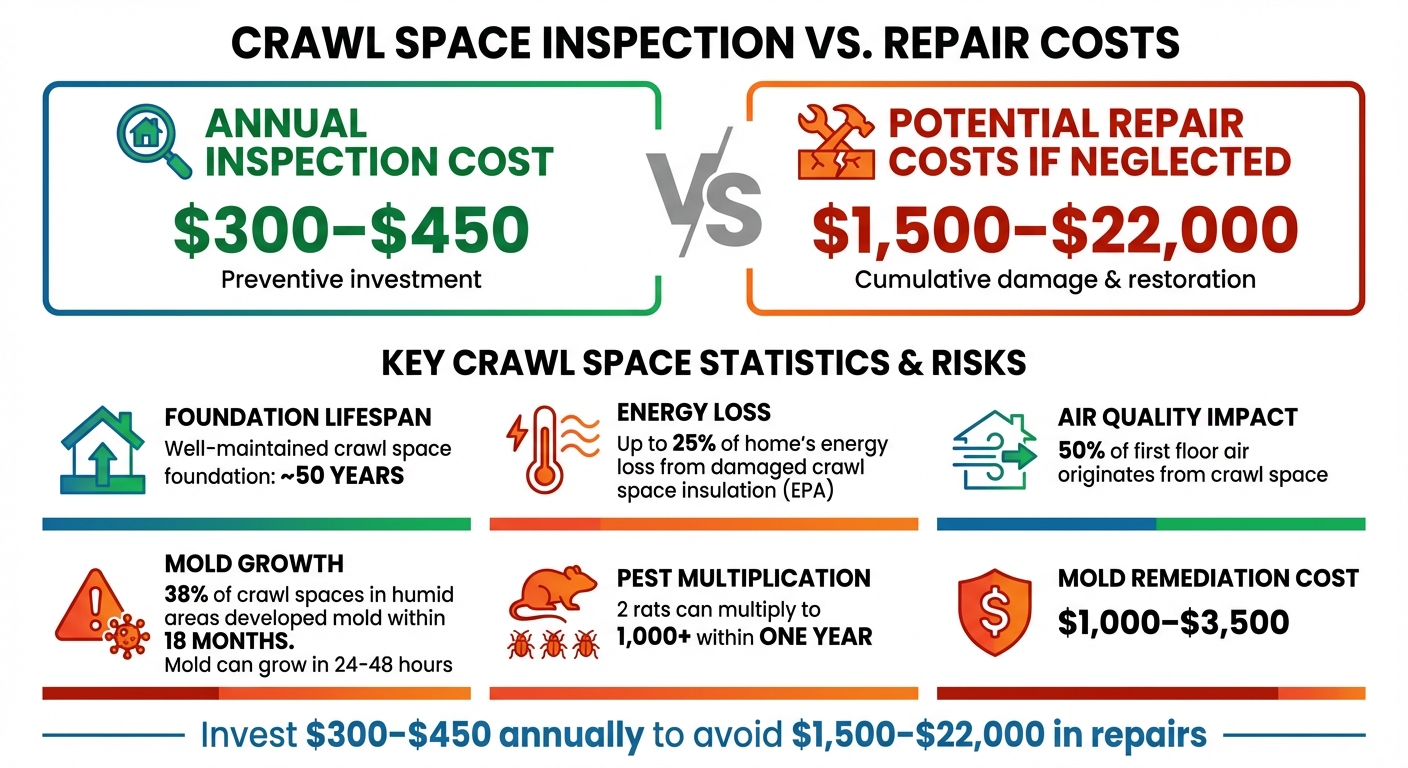
Crawl Space Inspection Costs vs Repair Costs Comparison
DIY Crawl Space Inspection – Avoid These Critical Mistakes
What Happens During a Crawl Space Inspection?
Getting a professional crawl space inspection, which typically costs between $300 and $450 as part of a standard home inspection, involves a detailed evaluation of your home’s foundation and crawl space. Inspectors start by examining the exterior of your home for any signs of foundation shifts. Once inside, they use protective gear to safely assess the area for potential problems. This initial survey sets the stage for a deeper, more thorough inspection.
"The crawl space is where I’m most likely to find important foundation issues, plumbing leaks and pests, among other things."
– Rick Bunzel, Principal Inspector, Pacific Crest Inspections
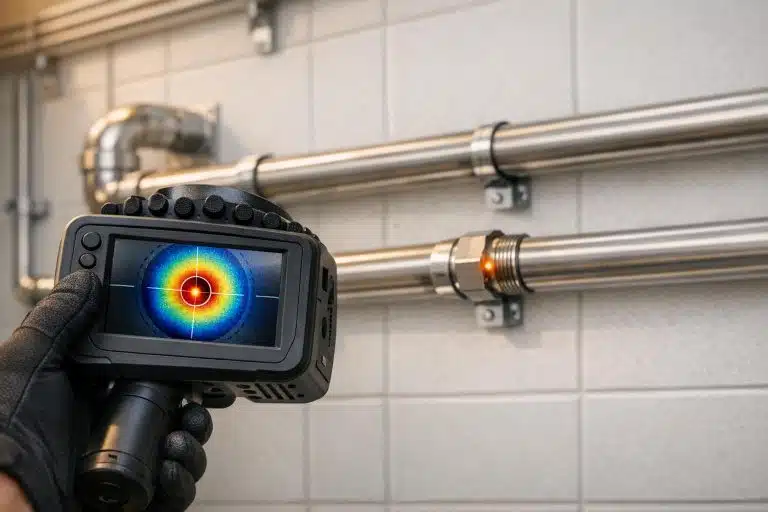
During the inspection, professionals focus on five key areas: the structure, moisture levels, insulation and ventilation, pest activity, and air quality. To uncover hidden issues, they rely on tools like moisture meters, thermal imaging cameras, and high-powered flashlights.
Foundation and Structural Integrity Checks
Inspectors carefully examine the foundation walls for cracks, buckling, or shifting that could compromise the stability of your home. They also inspect floor joists for signs of warping or sagging and check beams, posts, and piers for rot. Using tools like a pry bar, they test for decay that might not be immediately visible. These structural assessments are crucial since a well-maintained crawl space foundation can last around 50 years, but neglecting problems can significantly reduce that lifespan.
Moisture and Vapor Barrier Assessment
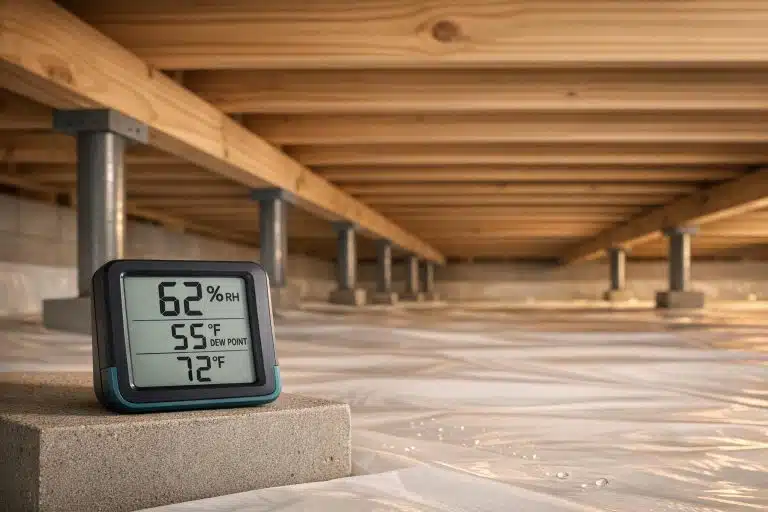
Moisture is a major concern in crawl spaces. Inspectors use tools like moisture meters and humidity gauges to identify damp spots and evaluate the effectiveness of the vapor barrier. They look for standing water, condensation, and stains on surfaces. A 2023 NAHB study revealed that 38% of crawl spaces with fiberglass insulation in humid areas developed mold within 18 months, underscoring the importance of managing moisture effectively.
Insulation and Ventilation Examination
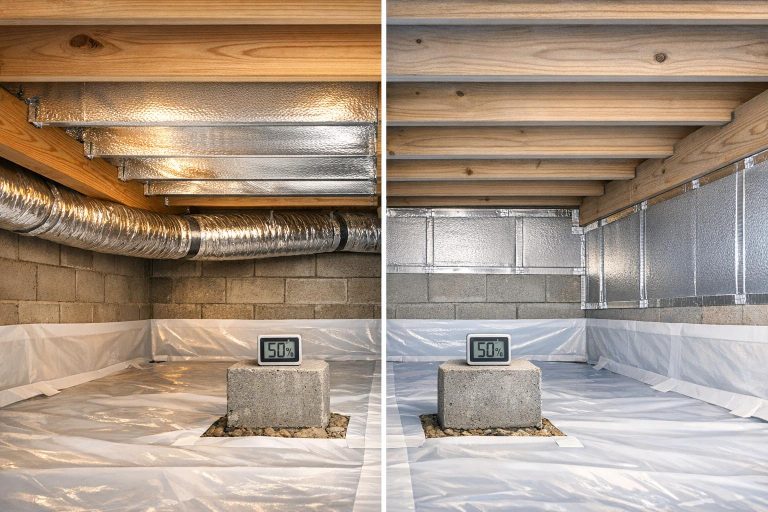
Proper insulation is critical for energy efficiency. Inspectors ensure that insulation is dry, intact, and installed correctly, with the vapor barrier facing the heated side of the home. They also check vents for cleanliness and proper airflow. According to the EPA, up to 25% of a home’s energy loss can result from damaged or improperly installed crawl space insulation.
Pest and Mold Inspection
Inspectors also search for signs of pests, such as termite mud tubes, rodent nests, droppings, or wood gnaw marks. They check for mold by looking for discoloration in shades of black, green, brown, gray, or white, as well as musty odors. Addressing these issues is critical – just two rats in a crawl space can multiply to over 1,000 within a year if left unchecked.
Radon and Air Quality Testing
Radon testing is another essential step. Inspectors place radon detector kits in the crawl space for a period ranging from several days to three months, then send the samples to a lab for analysis. Additionally, they evaluate the overall air quality by identifying biological hazards and ensuring that the space is properly ventilated. These findings directly impact indoor air quality and the overall health of your home.
Why Annual Crawl Space Inspections Matter
Getting your crawl space inspected every year is one of the smartest ways to protect your home and avoid expensive repairs. A well-maintained crawl space foundation can last around 50 years, but that longevity depends on catching problems before they spiral out of control. Regular monitoring helps keep your home sturdy, energy-efficient, and safe from hidden issues. Plus, it plays a big role in maintaining good indoor air quality.
"If there’s a leak in your crawl space, you may not know about it for decades."
– Nick Gromicko, Founder, International Association of Certified Home Inspectors
Early Detection of Moisture and Water Damage
Water damage can sneak up on you, but annual inspections help spot trouble before it gets serious. Professionals use tools like moisture meters and humidity gauges to find leaks, condensation, or groundwater issues that might not be obvious. They also dig deeper to uncover the root causes of these problems – like poor drainage, bad ventilation, or failing vapor barriers.
Mold is another major concern. It can start growing in as little as 24 to 48 hours under the right conditions. And once homeowners notice it, 41% of them seek waterproofing services within just two weeks. By that point, mold remediation can cost anywhere from $1,000 to $3,500. Regular inspections also ensure that previous fixes, like encapsulation or dehumidifiers, are still doing their job. Spotting moisture issues early not only saves money but also keeps your home’s structure intact.
Preventing Structural Damage
Your crawl space is the backbone of your home. Annual inspections can catch early signs of trouble like foundation cracks, sagging floor joists, or wood rot – issues that could eventually threaten your home’s stability. Inspectors also look for uneven floors and deteriorating beams, which could lead to more serious structural problems if ignored.
"Look for signs like cracks in the walls, floors, or foundation itself, doors and windows that stick or don’t close properly, and uneven floors. If you see any of these, it’s time for a professional inspection."
– Tim O’Shea, The Build Pros
Pests can also wreak havoc on your crawl space. Infestations often go unnoticed until the damage is done – chewed wiring, ruined insulation, and even weakened wooden supports. Regular inspections help catch these issues before they escalate.
Improving Indoor Air Quality
Your crawl space has a direct impact on the air you breathe. Air from below can carry mold spores, allergens, and even radon gas into your living spaces. Annual inspections help identify damp insulation, water stains, and other conditions where mold thrives, keeping harmful spores out of your home’s air supply.
Radon gas, which naturally seeps from the soil, is another potential hazard. Professional testing during inspections can detect radon levels and prevent long-term health risks. Inspections also uncover pest droppings and other biological contaminants that can trigger allergies or respiratory issues. If your indoor humidity consistently stays above 50%, it could signal moisture problems in your crawl space. Regular check-ups ensure proper ventilation and address these air quality concerns before they affect your family’s well-being.
sbb-itb-8db64ac
Signs Your Crawl Space Needs Immediate Attention
Crawl space problems often give themselves away through noticeable warning signs. Spotting these early can save you from expensive repairs down the line.
Visible Mold or Musty Odors
That lingering, musty smell in your home could be more than just an annoyance – it’s often a sign of mold or mildew growth. Thanks to the stack effect, about 50% of the air on your first floor originates from your crawl space. If you’re noticing musty odors or worsening respiratory symptoms, your crawl space might be to blame.
Sometimes, the smell isn’t just mold. Strong, foul odors could point to pest droppings or even decomposing animals. Either way, the root cause is likely high moisture levels – over 60% – which create the perfect environment for mold to thrive. Beyond the health concerns, poor air quality can also drive up energy costs and attract pests.
Increased Energy Bills
Crawl space issues don’t just affect air quality – they can also take a toll on your wallet. If your heating or cooling bills suddenly spike, your crawl space might be part of the problem. High humidity below your home forces your HVAC system to work harder, as humid air is more difficult to heat or cool.
"Your HVAC system will have to work on overdrive to keep equilibrium, resulting in higher than normal energy bills."
– Groundworks
Damaged insulation in your crawl space only makes things worse. When moisture seeps into the insulation, it loses its ability to regulate temperature effectively. This can lead to heat loss during winter and heat gain in summer. If your floors feel unusually cold in winter, it’s another clue that your crawl space insulation might be compromised.
Pest Infestations
Dark, damp crawl spaces are like paradise for pests such as rodents, termites, and insects. One telltale sign of termites is thin mud tubes along your foundation walls, which signal subterranean termite activity.
These pests don’t always stay below ground – they can invade your living spaces, leaving droppings that may worsen allergies or respiratory issues. Spotting these signs early highlights the importance of scheduling regular inspections to maintain your home’s structure and comfort.
How Envirosmart Solution Simplifies Crawl Space Maintenance

Keeping your crawl space in good shape doesn’t have to be complicated. With clear, proactive plans, Envirosmart Solution helps homeowners in the Pacific Northwest maintain their crawl spaces efficiently. These structured plans not only build on the importance of annual inspections but also prevent small problems from turning into expensive repairs. It’s a simple way to keep your home safe, comfortable, and running smoothly.
Annual Maintenance Plans
Envirosmart Solution offers a range of maintenance plans tailored to meet different needs. The Crawl Space Maintenance Assurance Essential plan costs $199 per year and includes a single annual inspection. This inspection covers structural checks, sealing entry points to keep pests out, sanitation and debris removal, and reviews of vapor barriers and insulation. Plus, you’ll get a 15% discount on any recommended upgrades or repairs.
For homes with mechanical systems like sump pumps, fans, or dehumidifiers, the Crawl Space Maintenance Assurance Premium plan, priced at $334.99 per year, includes two annual inspections. These inspections ensure that critical components are functioning properly.
Looking for a more comprehensive solution? The SMART GOLD™ Complete Care package starts at $699 per year. This plan combines crawl space maintenance with attic care, furnace inspections, air duct cleaning, and dryer vent cleaning. Gold members also enjoy a 20% discount on additional services and receive priority emergency support when needed.
Energy Efficiency and Rebate Assistance
Beyond maintenance, Envirosmart Solution helps homeowners save on energy costs. Their team checks insulation to ensure it meets optimal R-values and identifies air leaks in ductwork, vents, or piping that could be driving up your utility bills.
They also guide homeowners through Seattle-specific, state, and federal rebate programs, including those for heat pumps and income-based incentives.
"Having new insulation installed will be more energy efficient and lower your utility bills for both heating and cooling." – Envirosmart Solution
This rebate assistance can significantly reduce the cost of upgrades, potentially saving you hundreds of dollars.
Integrated Solutions for Home Care
Envirosmart Solution doesn’t just focus on crawl spaces – they take a whole-home approach. Their integrated packages address crawl spaces, attics, HVAC systems, and ductwork together, ensuring no part of your home gets overlooked. This method helps catch issues early, such as moisture problems affecting insulation or duct leaks that strain your HVAC system.
"Our all-inclusive package can save you hundreds if not thousands of dollars in repair costs." – Envirosmart Solution
Every maintenance plan includes a 100% satisfaction guarantee, priority repair scheduling, and transferable memberships – an added perk if you decide to sell your home.
Conclusion
Your crawl space might be out of sight, but it plays a crucial role in your home’s safety, comfort, and value. As Nick Gromicko, Founder of the International Association of Certified Home Inspectors, puts it:
"If there’s a leak in your crawl space, you may not know about it for decades".
Annual inspections are key to spotting hidden issues – like moisture damage, structural weakening, or pest infestations – before they spiral into costly repairs. Taking action early not only saves money but also ensures your home remains a comfortable and safe place to live.
Maintaining your crawl space does more than protect your foundation. It helps improve indoor air quality, prevents mold from spreading into your living areas, and ensures your insulation and ventilation systems work efficiently, keeping energy costs under control. Over time, this regular care helps preserve the structural integrity of your home, aligning with the strategies mentioned earlier to enhance energy efficiency and air quality.
Envirosmart Solution offers a hassle-free way to stay on top of maintenance, with customized plans starting at $199 per year. Their licensed technicians handle everything from structural assessments and pest prevention to vapor barrier checks, energy improvements, and even navigating rebates.
If you’ve noticed musty odors, doors that stick, or higher energy bills, it might be time for an inspection. Schedule your annual crawl space checkup today to protect your foundation, indoor air quality, and overall efficiency. With Envirosmart Solution’s 100% satisfaction guarantee and thorough approach to home care, you’re making a smart investment in your home’s future.
FAQs
What are the warning signs that my crawl space needs immediate attention?
If you detect musty smells or notice mold and mildew, it’s often a sign of moisture problems in your crawl space. These issues can impact your home’s air quality and even pose health risks. Keep an eye out for water stains, damp areas, or even standing water – these are warning signs that, if left unchecked, could lead to wood rot, structural damage, or pest infestations.
Other indicators to be aware of include cold floors, drafts, or an HVAC system that seems to be working harder than usual. These could hint at insulation issues or air leaks. Additionally, signs of pest activity like rodents or insects, along with foundation cracks or uneven floors, may point to structural concerns that need immediate attention. Tackling these problems early on can save you from expensive repairs and help maintain a safe, comfortable home.
How can annual crawl space inspections improve the air quality in my home?
Regular crawl space inspections are essential for maintaining healthier indoor air. They tackle hidden problems like moisture, mold, and pests before these issues can affect your living environment. When left unchecked, mold growth, pest infestations, or poor insulation in the crawl space can release airborne contaminants. These particles often make their way into your home, potentially triggering allergies, asthma, or other respiratory problems.
Scheduling yearly inspections helps you spot early warning signs like moisture buildup, structural damage, or pest activity. Addressing these issues promptly – whether by sealing gaps, improving ventilation, or repairing insulation – can stop harmful particles from entering your home. A clean, dry, and well-maintained crawl space directly contributes to better air quality for you and your family.
What tools are used during a crawl space inspection?
Inspectors use a range of tools to get a clear picture of what’s happening in crawl spaces. Moisture meters are a go-to for spotting hidden water or high humidity, which can lead to mold growth or damage to the structure. Infrared cameras come in handy for detecting temperature changes, often signaling issues like poor insulation, hidden moisture, or air leaks. To detect harmful substances, gas detectors are key for identifying things like mold spores or sewage gases.
For areas that are tough to access or potentially unsafe, professionals often rely on remote-controlled cameras or specialized crawl space robots. These advanced tools make it easier to evaluate critical aspects such as structural stability, moisture levels, pest activity, and the overall air quality – helping ensure your crawl space stays in good shape.