
A crawl space vapor barrier prevents moisture from seeping into your home, reducing humidity and protecting against mold, wood rot, and poor air quality. The right material depends on durability, cost, and climate. Here’s a quick breakdown:
- 6-Mil Polyethylene: Budget-friendly ($0.10–$0.15/sq. ft.) but prone to tearing; lasts 5–10 years.
- 10-12 Mil Polyethylene: Better durability ($0.15–$0.30/sq. ft.); lasts 10–15 years.
- Reinforced Polyethylene (12-20 Mil): Stronger and tear-resistant ($0.30–$0.70/sq. ft.); lasts 20+ years.
- StegoCrawl Wrap 15-Mil: Premium, flexible material ($0.30–$0.70/sq. ft.); lasts 25+ years.
- Polyguard Underslab TRM: High-end, self-healing barrier with termite protection; pricing varies.
Key Tips: Address water issues before installation, choose materials suited to your climate, and consider professional installation for complex setups. Properly installed barriers can last decades, offering long-term protection and improved air quality.
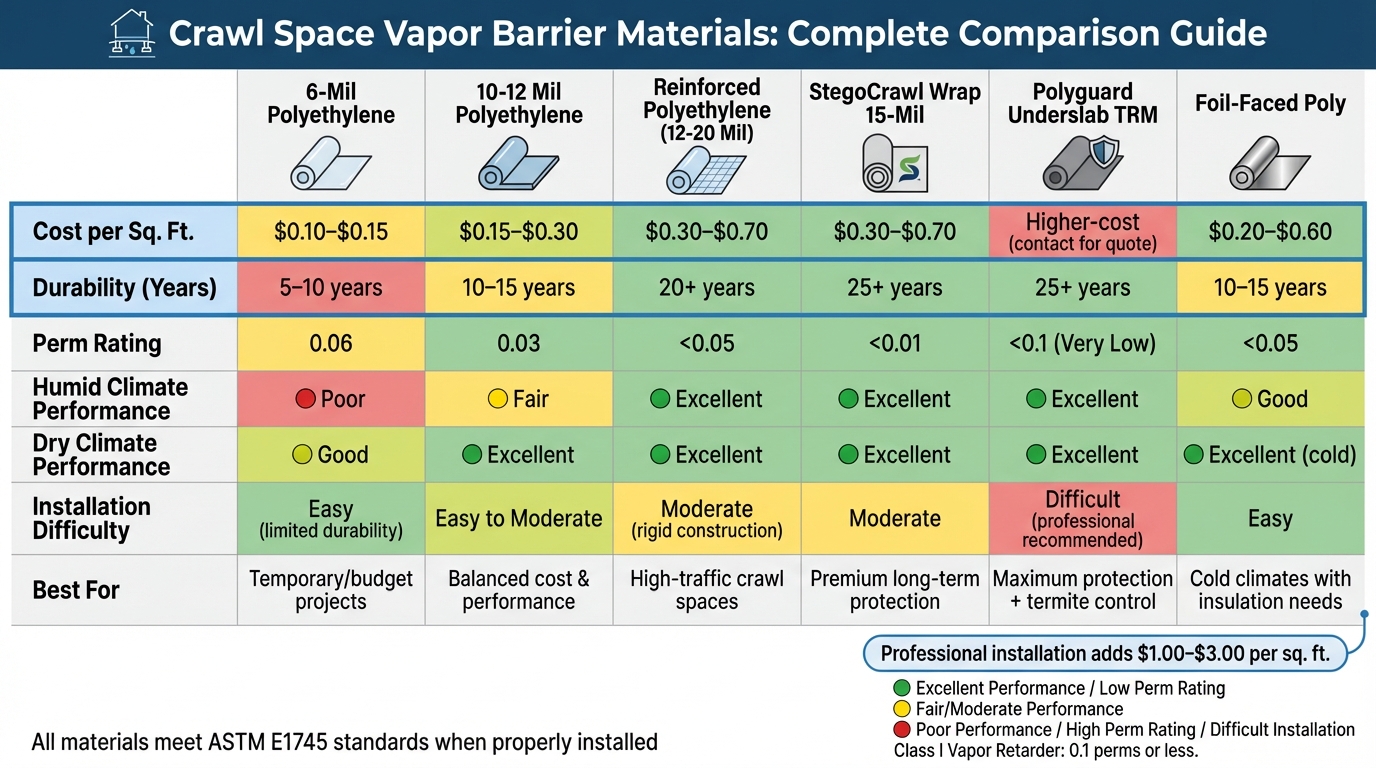
Crawl Space Vapor Barrier Materials Comparison: Cost, Durability & Performance
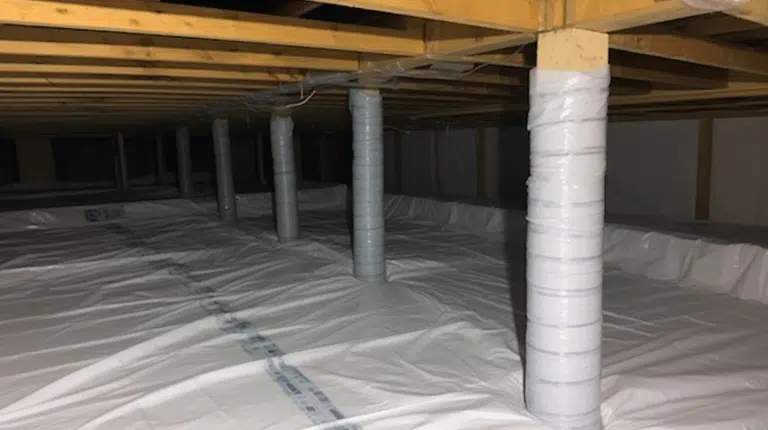
Stego crawl space vapor barrier install EP 55
sbb-itb-8db64ac
1. Polyethylene Sheeting (6-12 Mil)
Polyethylene sheeting within the 6-12 mil thickness range is often the most budget-friendly option for crawl space vapor barriers. While 6-mil polyethylene meets the minimum building code in many areas, it’s considered too fragile for crawl space floors. It’s prone to tearing during installation or maintenance, which can lead to frequent repairs. On the other hand, 10-12 mil sheeting provides a better balance of durability and cost, making it suitable for smoother crawl space floors and under-slab applications where concrete will cover the material.
Durability
Durability varies widely within this range. Basic 6-mil sheeting lacks the internal scrim reinforcement found in higher-quality options, which means tears can easily spread across the sheet. A 6-mil sheet typically lasts 5–10 years, while the sturdier 10–12 mil versions can last up to 10–15 years. For crawl spaces that see regular foot traffic, 6-mil sheeting is not a practical choice – it just can’t handle the wear and tear.
Cost
The thickness you choose directly affects both cost and lifespan. Polyethylene sheeting in this range typically costs $0.10 to $0.50 per square foot, making it the most affordable vapor barrier option. Here’s a breakdown of costs:
- 6-mil sheeting: $0.10-$0.15 per square foot
- 10-mil sheeting: $0.15-$0.25 per square foot
- 12-mil reinforced sheeting: $0.25-$0.45 per square foot
For an 800-1,200 square foot crawl space, materials alone will cost approximately $80–$250. If you opt for professional installation, labor costs add an additional $1.00-$3.00 per square foot.
Permeance
All polyethylene sheeting in this category qualifies as a Class I vapor retarder, with perm ratings between 0.01 and 0.06. This ensures it effectively blocks nearly all moisture vapor, meeting the 2021 International Residential Code (R408.3) standard of 0.1 perms or less for unvented crawl spaces. When installed correctly, these barriers can lower crawl space humidity by 20-40% and block up to 99% of ground moisture.
Climate Suitability
Polyethylene sheeting performs well in various climates, provided it’s installed correctly. Carrie Powers from Polyguard explains:
"In cold climates, vapor control membranes are typically placed on the interior side of insulation… (which may require professional insulation services if existing material is damaged) In hot-humid zones, the opposite is true: the barrier must keep external humidity from penetrating air-conditioned interiors".
Before installation, it’s essential to remove sharp debris from the area to prevent punctures. Overlap seams by at least 6-12 inches and seal them with appropriate tape. With this groundwork laid, let’s move on to evaluating another advanced material option.
2. Reinforced Polyethylene (12-20 Mil)
Reinforced polyethylene vapor barriers step up performance by integrating a woven scrim or mesh layer between plastic sheets. This layer acts like a built-in safety net – if a sharp object punctures the material, the damage is contained rather than spreading across the entire sheet. As explained by The Basement Guide Staff:
"The woven scrim reinforcement… prevents tears from propagating. If a rock or sharp object punctures the barrier, the tear stays small rather than ripping across the sheet".
Durability
The added scrim makes reinforced polyethylene the go-to choice for crawl space encapsulation. It’s built to handle foot traffic, tools, and even storage. A 12-mil reinforced barrier typically lasts 15–20 years, while the heavy-duty 20-mil version can hold up for over 25 years. However, multi-layer barriers that rely on adhesives may eventually delaminate, which can reduce their effectiveness and lead to earlier replacement needs.
Cost
Reinforced polyethylene costs about twice as much as basic plastic sheeting. Pricing varies depending on thickness:
- 12-mil: $0.25–$0.45 per square foot
- 15- to 20-mil: $0.30–$0.75 per square foot
For an average crawl space (800 to 1,200 square feet), material costs range from $240 to $840. Professional installation – including proper seaming and fastening – adds another $1.00 to $3.00 per square foot. As Polyguard points out:
"Since failures beneath a slab are difficult and expensive to fix, the upfront investment pays off in long-term reliability".
Beyond price, the barrier’s ability to block moisture is a key factor in its overall value.
Permeance
Reinforced polyethylene is classified as a Class I vapor retarder, with perm ratings typically between 0.01 and 0.05. Many high-quality options also meet ASTM E1745 Class A standards for tensile strength and puncture resistance. When installed correctly, these barriers can block up to 99% of ground moisture.
Climate Suitability
Thanks to its moisture-blocking capabilities, reinforced polyethylene works well in a variety of climates. In colder regions, installing the barrier on the interior (warm) side of insulation helps prevent condensation. In hot, humid areas like the Pacific Northwest, placing the barrier on the exterior side stops outdoor moisture from seeping into air-conditioned spaces. For locations prone to flooding or extreme moisture swings, the extra durability of 15- to 20-mil barriers offers added protection.
Ease of Installation
At 12 mils, the material is tough yet flexible enough to wrap around piers and corners. However, at 20 mils, it becomes stiffer, making it harder to work with in tight spaces. Proper seaming is essential – use manufacturer-approved vapor barrier tape and overlap seams by at least 12 inches. The reinforced design not only boosts strength but also ensures reliable moisture control, making it a dependable choice for long-term crawl space encapsulation.
3. StegoCrawl Wrap 15-Mil
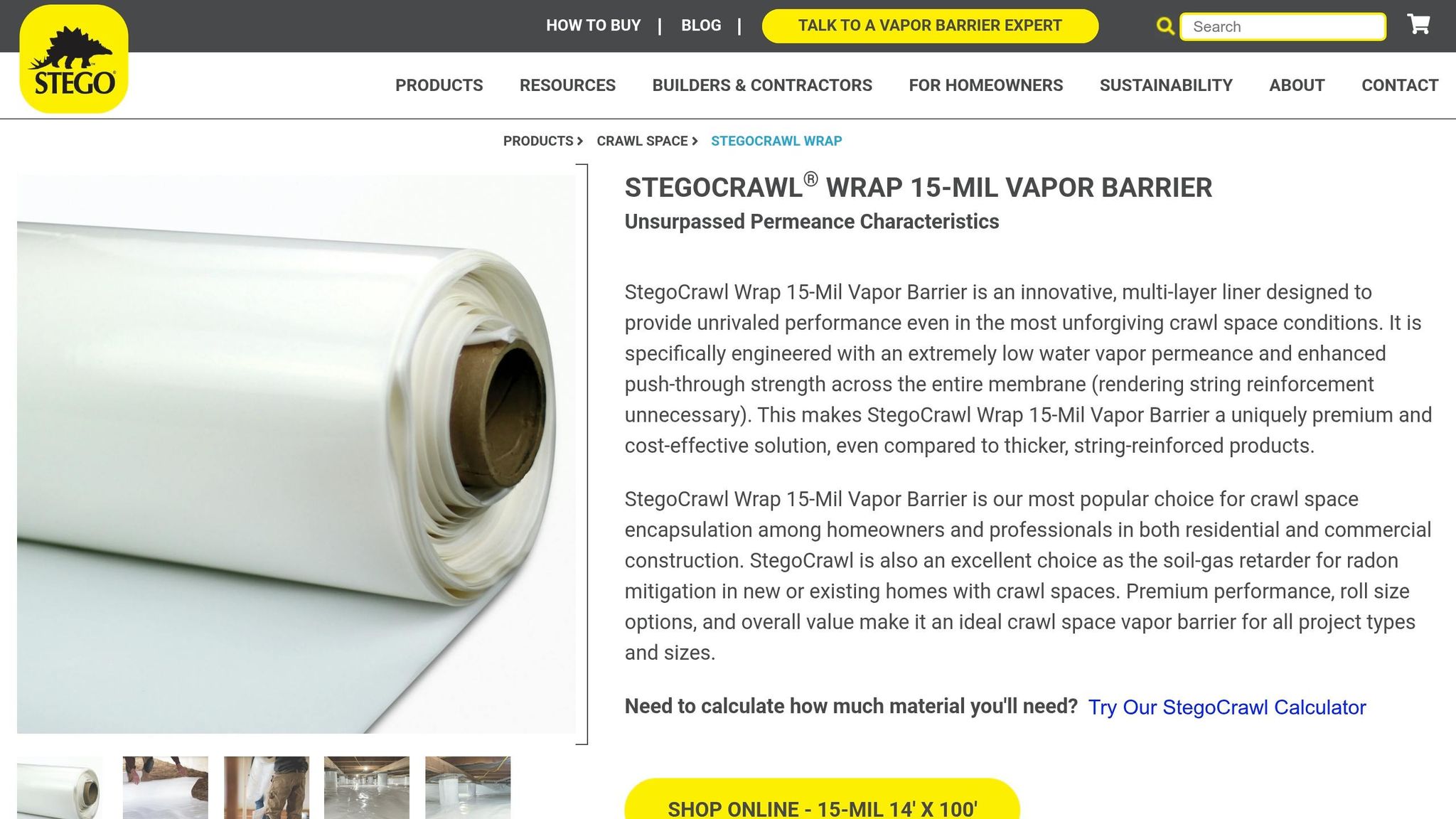
StegoCrawl Wrap 15-Mil is a heavy-duty vapor barrier specifically designed for challenging crawl spaces. Unlike standard polyethylene sheeting, it’s crafted using a multi-layer extrusion process with virgin polyolefin resins. With a puncture resistance of 203.8 newtons, it eliminates the need for string reinforcement while maintaining flexibility. Below, we’ll break down how these features contribute to its long-lasting performance.
Durability
StegoCrawl Wrap exceeds ASTM E1745 Class A standards and is built to last 25 years or more, far exceeding the lifespan of typical polyethylene alternatives. The multi-layer design ensures that any punctures remain localized, preventing tears from spreading across the material. As noted by The Basement Guide Staff:
"Stego Wrap is the industry standard among professional crawl space encapsulation contractors".
The product has received a 4.8 out of 5-star rating from 54 reviews, with users frequently highlighting its thickness and long-term dependability.
Cost
A 14′ x 100′ roll (1,400 sq ft) is priced at approximately $476.95, with sale prices bringing it down to about $448.33. This translates to a cost of $0.30 to $0.70 per square foot. The 14-foot width is a significant advantage, as it allows many homes to be covered using just two sheets, reducing the need for seams and saving time during installation. Buyers have noted that this wide format simplifies the installation process and minimizes seam work.
Permeance
With a water vapor permeance of less than 0.01 perms, StegoCrawl Wrap qualifies as a Class I vapor retarder, far surpassing the 0.1 perm requirement. This exceptionally low permeance effectively blocks moisture from migrating upward, protecting floor joists and lowering the strain on HVAC systems. One customer shared that their crawl space humidity dropped from 92% to 45% after installation, aided by a dehumidifier.
Climate Suitability
This vapor barrier performs well in a variety of climates, including hot-humid, mixed-humid, and cold regions. In humid areas like the Pacific Northwest, it stabilizes crawl spaces by preventing moisture diffusion, which helps reduce comfort fluctuations. In colder climates, combining the barrier with insulate the foundation walls helps prevent condensation during winter. Additionally, its radon diffusion coefficient of 8.5 x 10⁻¹² m²/second makes it an effective soil-gas membrane, adding another layer of protection.
Ease of Installation
The 14-foot width reduces the number of seams, speeding up installation compared to narrower rolls. Sheets should overlap by 6–12 inches and be sealed with specialized vapor barrier tape. Extend the material 6–12 inches up foundation walls and secure it with a termination bar and double-sided adhesive to ensure a tight seal. The bright white finish improves visibility in dark crawl spaces, making inspections easier. Each roll weighs 105 pounds, so handling typically requires two people. However, the material’s flexibility makes it easy to wrap around piers and corners without difficulty.
These features make StegoCrawl Wrap 15-Mil a reliable choice for creating a durable and effective vapor barrier in crawl spaces. Its thoughtful design simplifies installation while delivering robust moisture protection.
4. Polyguard Underslab TRM
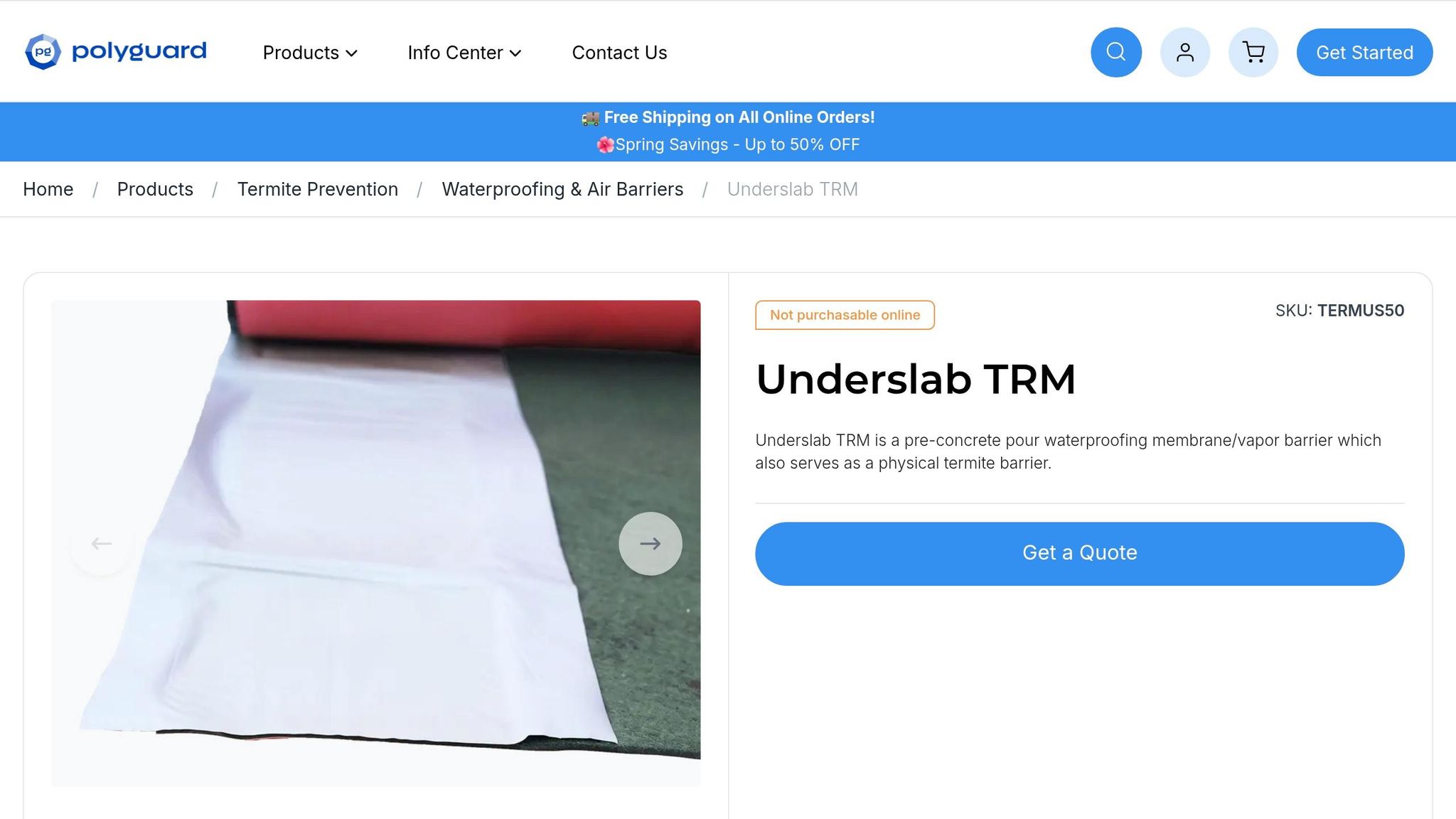
Polyguard Underslab TRM is a 95-mil, three-layer vapor barrier. It combines an 8.5-mil polyethylene backing, a 69-mil self-healing sealant, and a non-woven geotextile top layer. This product is certified to provide over 20 years of termite protection.
Durability
Built to handle tough conditions, Underslab TRM resists punctures up to 224 pounds and hydrostatic pressure as high as 231 feet. Its geotextile top and polyethylene backing boost its resilience, while it can endure up to 30 days of UV exposure. It also limits methane permeation, as verified by ASTM D1434 standards. Carrie Powers emphasizes:
"Durability doesn’t just mean surviving install day. It means holding up over time against environmental pressures, chemical interactions, and material fatigue".
Cost
Pricing for Underslab TRM isn’t readily available online. To get a quote, you’ll need to contact Polyguard or an authorized distributor. While the product comes with a premium price tag, its dual function as both a moisture barrier and termite protection system justifies the higher upfront cost. Its exceptional moisture control capabilities, discussed below, further support the investment.
Permeance
As a Class I vapor barrier, Underslab TRM achieves a permeance rating of 0.1 perms or less. This low rating effectively blocks vapor diffusion, preventing condensation issues in winter and keeping external humidity from infiltrating air-conditioned spaces during summer. Carrie Powers points out that in hot, humid climates, improper installation can trap moisture instead of blocking it, underscoring the importance of careful sealing.
Climate Suitability
Underslab TRM is designed to perform well in a variety of climates, from cold regions to hot, humid areas. In high-humidity zones like the Pacific Northwest, its low permeance and methane resistance make it especially effective for crawl space encapsulation. The self-healing sealant layer adds another layer of protection by automatically sealing small punctures, reducing the likelihood of moisture-related issues like mold or structural decay.
Ease of Installation
Underslab TRM is built for efficient installation. It features a 4-inch wide self-adhesive overlap seam with a removable release sheet, enabling watertight joints. Its 95-mil thickness makes it heavier than standard sheeting, so proper preparation is key. The substrate should be dry, compacted, and free of debris, with installation temperatures above 30°F (-1°C). Using a roller or squeegee to press seams and eliminate air pockets is recommended. For better adhesion, Polyguard suggests applying 650 LT Liquid Adhesive and using specialized corner boots and fabric tape to seal penetrations and corners – areas that are often weak points in vapor barrier systems.
5. Envirosmart Solution‘s Vapor Barrier Services

Envirosmart Solution provides expert crawl space vapor barrier installation services across the Pacific Northwest. They use 15- to 20-mil high-quality materials made from reinforced scrim polyethylene, which features a woven mesh to prevent tears from spreading. This ensures reliable, long-term protection against moisture intrusion and is a key part of their comprehensive crawl space moisture control strategy.
Durability
The company focuses on durability by using virgin polyethylene resin instead of recycled materials. This choice ensures the vapor barriers maintain their integrity over time. Their reinforced construction is built to handle foot traffic, rocky soil, and the physical demands of installation, making them a reliable, long-lasting solution.
Cost
The cost of a professional vapor barrier installation with Envirosmart Solution ranges from $1,200 to $4,000 for a standard crawl space. Labor costs typically add $1.00 to $3.00 per square foot. For those seeking a more comprehensive solution, full encapsulation services are available. This option includes vapor barrier installation along with vent sealing, insulation, and dehumidification. While full encapsulation requires a higher initial investment, it provides a more thorough approach to moisture control.
To help offset costs, Envirosmart Solution assists property owners in taking advantage of available rebates and incentives for energy efficiency upgrades, making the investment more affordable.
Climate Suitability
Given the Pacific Northwest’s fluctuating climate, Envirosmart Solution employs a coordinated approach to moisture management. This includes installing ground membranes, wall insulation, and dehumidification systems. For homes with irregular stone foundation walls, they use at least 2 inches of closed-cell spray foam. This creates a seamless, airtight vapor barrier that effectively adapts to uneven surfaces.
Advantages and Disadvantages
When choosing vapor barrier materials, it’s essential to weigh their strengths and weaknesses. These materials differ in cost, durability, and ease of use, making it important to match the right product to your specific needs.
6-mil polyethylene is the most affordable option, costing just $0.10–$0.15 per square foot. However, it’s prone to tearing during installation and typically lasts only 5–10 years. This makes it more suitable for temporary setups or dry climates with minimal foot traffic rather than for crawl spaces with rocky terrain or debris.
Reinforced polyethylene, on the other hand, offers over 20 years of durability but at roughly double the cost of basic sheeting. Its rigid structure can make handling and installation more challenging.
Premium products like StegoCrawl Wrap and Polyguard Underslab TRM provide top-tier performance at higher price points. StegoCrawl Wrap features a 15-mil thickness with reinforced scrim, ensuring strong tear resistance for $0.30–$0.70 per square foot. Meanwhile, Polyguard Underslab TRM, with its 95-mil thickness and self-healing properties, offers unmatched durability but is heavier and typically requires professional installation due to its complexity.
Here’s a quick comparison of the key options:
| Material Type | Cost per Sq. Ft. | Durability (Years) | Perm Rating | Humid Climate | Dry Climate | Installation Difficulty |
|---|---|---|---|---|---|---|
| 6‑Mil Polyethylene | $0.10–$0.15 | 5–10 | 0.06 | Poor | Good | Easy; limited durability |
| 10‑12 Mil Poly | $0.15–$0.30 | 10–15 | 0.03 | Fair | Excellent | Easy to Moderate |
| Reinforced Poly (12–20 Mil) | $0.30–$0.70 | 20+ | <0.05 | Excellent | Excellent | Moderate; rigid construction |
| StegoCrawl Wrap 15‑Mil | $0.30–$0.70 | 20+ | <0.05 | Excellent | Excellent | Moderate |
| Polyguard Underslab TRM | Higher-cost | 25+ | Very Low | Excellent | Excellent | Difficult; professional installation |
| Foil‑Faced Poly | $0.20–$0.60 | 10–15 | <0.05 | Good | Excellent (cold) | Easy |
For high-humidity environments, Class I vapor retarders with perm ratings below 0.1 are ideal, as they prevent condensation on pipes and foundation walls. In drier regions, like Flagstaff, Arizona, sealing crawl spaces with the right vapor barrier can save up to 15% annually on energy bills (you can calculate your potential savings on energy upgrades online) by reducing ground moisture migration.
While professional installation can add $1.00–$3.00 per square foot in labor costs, a DIY approach can cut total project expenses by 40–60% for those comfortable working in tight spaces. These factors play a critical role in determining the long-term performance and maintenance of your vapor barrier.
Conclusion
The breakdown above highlights that each vapor barrier type is tailored to specific needs and conditions. If you’re working with a tight budget, 10-mil to 12-mil polyethylene strikes a great balance between affordability and durability, costing around $0.15–$0.30 per square foot. It also offers much better tear resistance compared to the 6-mil code minimum. For spaces with high moisture levels or heavy foot traffic, 15-mil to 20-mil reinforced polyethylene is a smart choice. These materials can last over 25 years and stand up to punctures caused by tools, rocks, or stored items.
"A properly installed vapor barrier stops this moisture migration at the source. It is one of the most cost-effective moisture control investments you can make, costing $100 to $500 in materials for a typical basement or crawl space and lasting 20 or more years." – The Basement Guide Staff
For homeowners in the Pacific Northwest dealing with ongoing moisture issues, professional crawl space services from Envirosmart Solution (https://envirosmartsolution.com) can ensure your crawl space is sealed effectively. Their services go beyond installation by addressing drainage, mold remediation, and energy efficiency improvements, all tailored to the region’s specific climate. Choosing the right vapor barrier and installation method will provide lasting protection and peace of mind.
FAQs
Do I need a vapor barrier if my crawl space is vented?
Yes, using a vapor barrier is a good idea, even for vented crawl spaces. While vents can help with airflow, they don’t fully address moisture problems. Excess moisture can still lead to mold growth and potentially harm your home’s foundation. A vapor barrier works to control moisture levels, keeping the space dry and protecting your home from long-term damage.
What thickness vapor barrier is best for a rocky or high-traffic crawl space?
A 12-mil or thicker vapor barrier is the best choice for rocky or high-traffic crawl spaces. Its thickness provides the durability needed to withstand tough conditions while effectively managing moisture levels.
Should a crawl space vapor barrier go up the walls, and how far?
Yes, a crawl space vapor barrier should extend up the walls, generally between 6 to 12 inches. To ensure it works effectively, it needs to be securely sealed to the foundation. This helps prevent moisture and vapor from seeping into the space, protecting your home from potential damage.