
Poor insulation can cost you big on energy bills. It allows heat to escape in winter and enter in summer, making your HVAC system work harder. This inefficiency leads to higher costs, uneven indoor temperatures, and more wear on your heating and cooling equipment. Here’s how poor insulation impacts your home and what you can do to fix it:
- Attic Heat Loss: Warm air escapes through the attic in winter, while summer heat seeps in. Solution: Seal air leaks and upgrade to at least R-30 insulation.
- Air Leaks in Walls and Floors: Cracks and gaps allow drafts and heat loss. Solution: Use caulk, foam, or insulation to seal problem areas.
- Overworked HVAC System: Air leakage forces your system to run longer, increasing energy use. Solution: Seal leaks around ducts, vents, and windows.
- Leaky Ductwork: Up to 30% of air can escape through poorly sealed ducts. Solution: Apply mastic or foil tape and insulate ducts in unconditioned spaces.
- Shorter HVAC Lifespan: Constant cycling due to poor insulation wears out your system faster. Solution: Improve insulation in crawl spaces, attics, and walls.
Quick Tip: Fixing insulation and sealing air leaks can save you up to 15% on heating and cooling costs annually. Addressing these issues not only lowers bills but also makes your home more comfortable year-round.
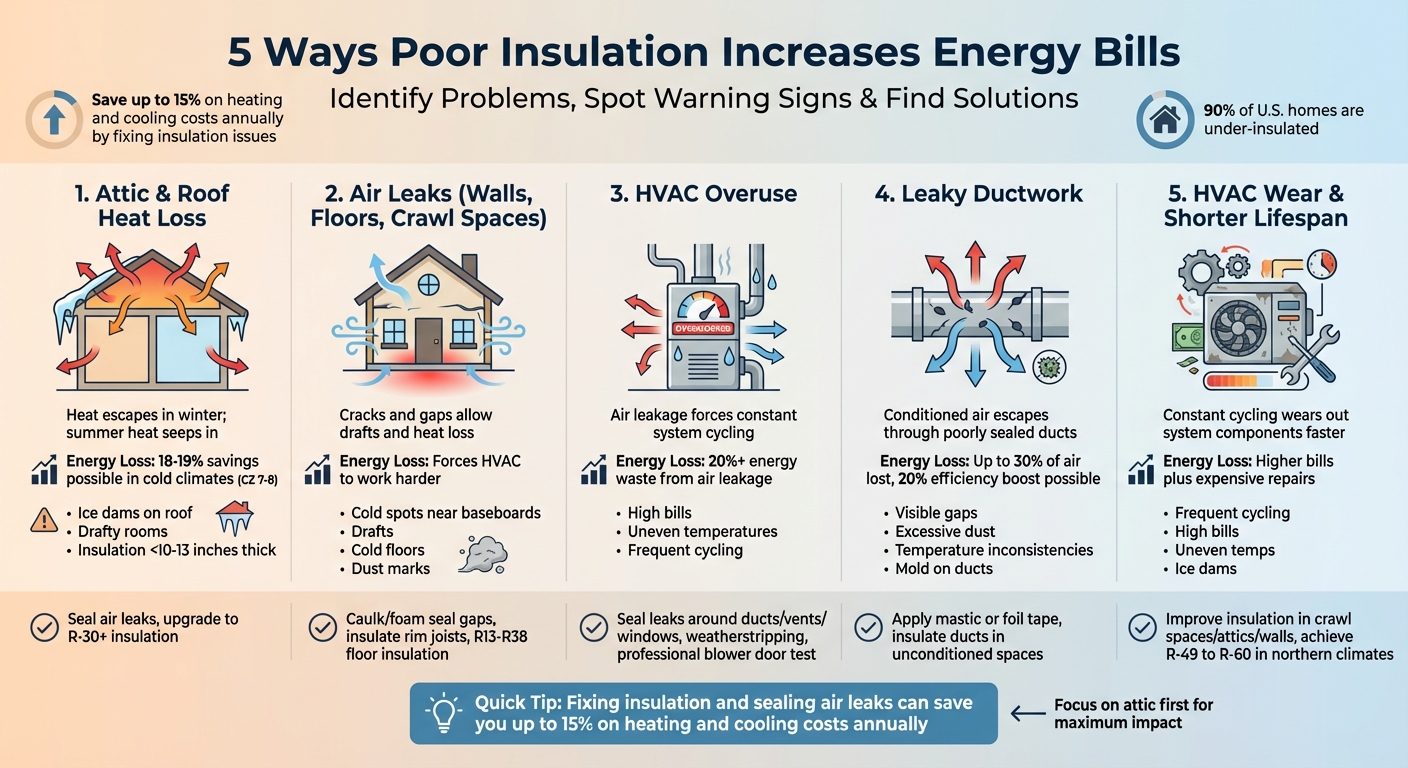
5 Ways Poor Insulation Increases Energy Bills: Problems, Warning Signs & Solutions
1. Heat Loss Through the Attic and Roof
Impact on Energy Efficiency and Heating/Cooling Costs
When it comes to energy loss in a home, the attic often plays a starring role. Why? Because heat rises. In the winter, warm air escapes through the attic and roof, while in the summer, the sun’s heat can seep into your living spaces. This constant exchange forces your HVAC system to work harder, driving up energy bills.
But insulation isn’t the only issue. Hidden air leaks – like those around plumbing, wiring, fixtures, and chimneys – are sneaky culprits that let conditioned air escape. By sealing these leaks and upgrading to the best attic insulation, homeowners can cut heating and cooling demands significantly. For those living in the coldest U.S. climate zones (CZ 7–8), these improvements can lead to savings of 18% to 19% on energy costs.
Common Warning Signs Homeowners Can Identify
Not sure if your attic is the problem? Here’s what to look for: If your attic insulation is less than 10–13 inches thick (equivalent to R-30), or if you can spot the floor joists, it’s time for an upgrade. These gaps mean your HVAC system is working overtime to make up for lost air.
Outside, ice dams forming on your roof during winter are a major red flag that heat is escaping into the attic. Inside, drafty rooms, uneven temperatures, cold floors, difficulty managing humidity, and even increased dust or pests can point to poor insulation.
Recommended Solutions or Upgrades to Address the Issue
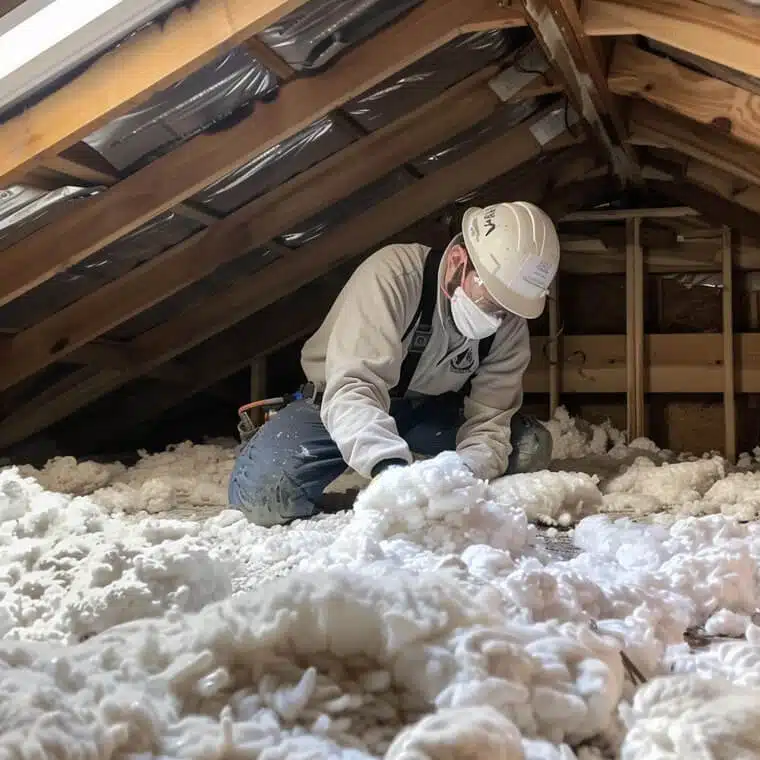
To tackle the problem, start with air leaks. Seal gaps around plumbing vents, electrical chases, and chimneys using spray foam or caulk. For recessed light fixtures, install fire-rated covers to prevent heat loss. Once the leaks are sealed, add insulation. Materials like fiberglass, cellulose, or mineral wool (with an R-value of 3.0 to 3.5 per inch) are great options. Loose-fill or blown-in insulation works particularly well for covering irregular spaces efficiently.
sbb-itb-8db64ac
2. Air Leaks in Walls, Floors, and Crawl Spaces
Impact on Energy Efficiency and Heating/Cooling Costs
Air leaks in walls, floors, and crawl spaces can quietly drain energy without homeowners even noticing. When warm or cool air escapes through cracks and openings in your home’s structure, outdoor air sneaks in to take its place. This process forces your heating or cooling system to work harder, driving up energy costs. For instance, during winter, heated air from your living spaces can seep into unheated areas like basements or crawl spaces. In summer, the opposite happens – hot outdoor air infiltrates your home, making it harder to keep things cool. These leaks often occur at connection points in the building, such as where walls meet floors, ceilings meet interior walls, or where the foundation meets the siding. Over time, these seemingly minor gaps add up, creating a noticeable impact on your energy bills.
Common Warning Signs Homeowners Can Identify
Spotting air leaks doesn’t always require fancy tools. Start by checking for drafts or cold spots near baseboards and where walls meet floors. If your floors feel unusually chilly in winter, that’s often a clue. You might also see visible signs, like dust marks on carpets or insulation, which indicate air is sneaking through gaps. Don’t forget to inspect areas around outlets, switch plates, and spots where pipes, gas lines, or wires pass through walls and floors. For a quick DIY test, turn on all your exhaust fans and wave a lit incense stick near potential leak areas. If the smoke shifts or wavers, you’ve likely found a draft. Other red flags include an increase in insects or pollen indoors, or persistently high humidity levels inside your home.
Recommended Solutions or Upgrades to Address the Issue
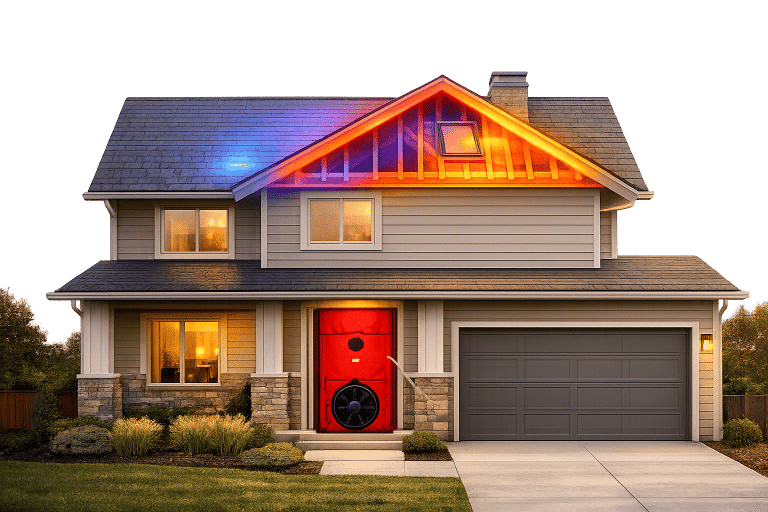
Sealing air leaks can significantly improve your home’s efficiency. Start by addressing gaps where pipes, ducts, or wires pass through walls and floors. Use caulk or low-expansion spray foam for smaller openings, and install foam gaskets behind electrical outlets and switch plates on exterior walls to block hidden pathways. For larger gaps, like those around baseboards, foam sealant works well. Pay special attention to rim joists – the area where the house frame meets the foundation. Sealing and insulating this spot with spray or rigid foam can make a big difference. Another effective step is adding insulation to floors above unheated crawl spaces or basements. Depending on your location, aim for R-values between R13 in southern climates and R38 in northern regions. If you suspect there are still hidden leaks, hiring a professional for a blower door test can help pinpoint problem areas. While this service involves an upfront cost, the energy savings it generates often cover the expense within a year. Tackling these issues not only reduces energy waste but also lays the groundwork for optimizing your HVAC system’s performance.
3. HVAC Overuse Due to Air Leakage
Impact on Energy Efficiency and Heating/Cooling Costs
When air leaks into or out of your home, it forces your HVAC system to work overtime just to keep things comfortable. Heat naturally moves from warmer areas to cooler ones, which means in winter, warm air escapes outside, and in summer, hot air sneaks in. This constant exchange makes your HVAC system run almost non-stop, trying to replace conditioned air that’s being lost. ENERGY STAR estimates that air leakage, combined with poorly installed insulation, can waste more than 20% of the energy used to heat or cool your home.
This inefficiency doesn’t just harm the environment – it also hits your wallet. By sealing air leaks and upgrading insulation, homeowners can cut heating and cooling costs by an average of 15%. The savings are even greater in colder northern climates (Climate Zones 7–8), where they can climb to 18% or 19%. In contrast, southern regions (Climate Zones 1–2) typically see savings of around 7% to 9%. While gaps around windows and doors are obvious culprits, hidden leaks – like those around plumbing, wiring, lighting fixtures, and ductwork – often go unnoticed, quietly pushing your HVAC system into overdrive.
Common Warning Signs Homeowners Can Identify
Your home often gives clear hints when air leaks are overworking your HVAC system. Keep an eye out for unexplained spikes in energy bills, uneven temperatures across rooms, drafts near windows or doors, and cold floors during winter. Ice dams on your roof or eaves in colder months can also signal warm air escaping through the attic.
Recommended Solutions or Upgrades to Address the Issue
Once you spot these warning signs, it’s time to take action. Start by sealing leaks to reduce the strain on your HVAC system. Begin in the attic by sealing gaps around pipes, wires, and ductwork, then upgrade the insulation. For smaller gaps (less than 1 inch) around windows and doors, use caulk, and apply weatherstripping to moving parts like doors and operable windows.
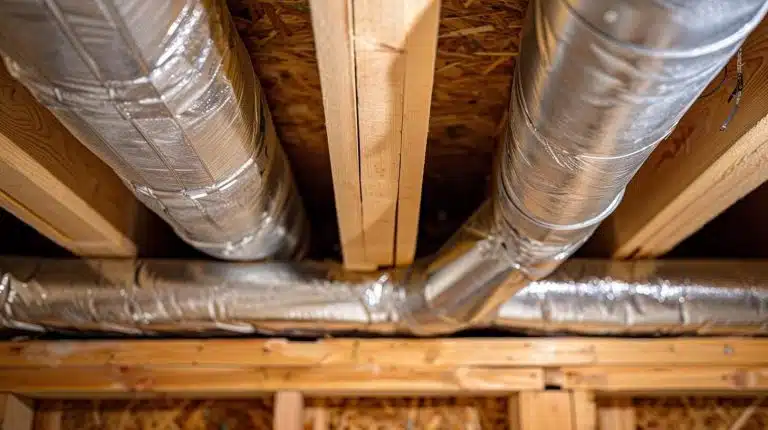
For larger gaps, such as those around rim joists where the house frame meets the foundation, spray foam works well to create an airtight seal. Don’t forget hidden air pathways – install foam gaskets behind outlet plates on exterior walls. If your ductwork runs through unconditioned spaces like crawl spaces or attics, seal the joints with mastic sealant or metal-backed tape and wrap the ducts in fiberglass insulation.
For a more thorough solution, consider professional blower door testing. This test measures air infiltration and identifies problem areas with precision. While there’s an upfront cost for this service, the long-term energy savings often make it a worthwhile investment. Just remember, sealing your home too tightly without proper ventilation can trap pollutants or cause issues like backdrafting with combustion appliances. A professional can help you find the right balance between energy efficiency and indoor air quality.
4. Energy Loss Through Leaky, Uninsulated Ducts
Impact on Energy Efficiency and Heating/Cooling Costs
Your ductwork plays a crucial role in delivering heated or cooled air throughout your home. But when those ducts are leaky or lack proper insulation, they can become a major source of energy waste. In fact, duct leaks can result in up to 30% of conditioned air being lost, which can translate to hundreds of extra dollars on your annual heating and cooling bills.
Leaky supply ducts allow conditioned air to escape, while leaky return ducts pull in unconditioned air, forcing your HVAC system to work overtime. This problem is even worse when ducts are located in unconditioned spaces like attics, garages, or vented crawlspaces. As the Department of Energy puts it:
"Your air ducts are one of the most important systems in your home, and if the ducts are poorly sealed or insulated they are likely contributing to higher energy bills."
Before diving into repairs, it’s important to understand how these energy losses occur and what to look for in your system.
Common Warning Signs Homeowners Can Identify
Certain telltale signs can help you spot duct problems early. Start by inspecting for visible gaps, disconnected sections, or rust. Damp spots or mold on duct insulation often indicate leaks. If you notice excessive dust around air registers or floating in the air, it could mean unconditioned air is being pulled into your ducts from areas like crawlspaces or attics.
Temperature inconsistencies are another clue. If some rooms are noticeably harder to heat or cool than others, your ducts may be leaking. You can also test for pressure imbalances: with the air handler running and interior doors closed, watch for doors that move on their own – this often signals restricted return airflow. Lastly, check for old cloth-backed duct tape, which tends to fail quickly. Its presence might indicate a past repair that wasn’t done properly and needs attention.
By addressing these warning signs early, you can prevent further energy loss and improve your system’s performance.
Recommended Solutions or Upgrades to Address the Issue
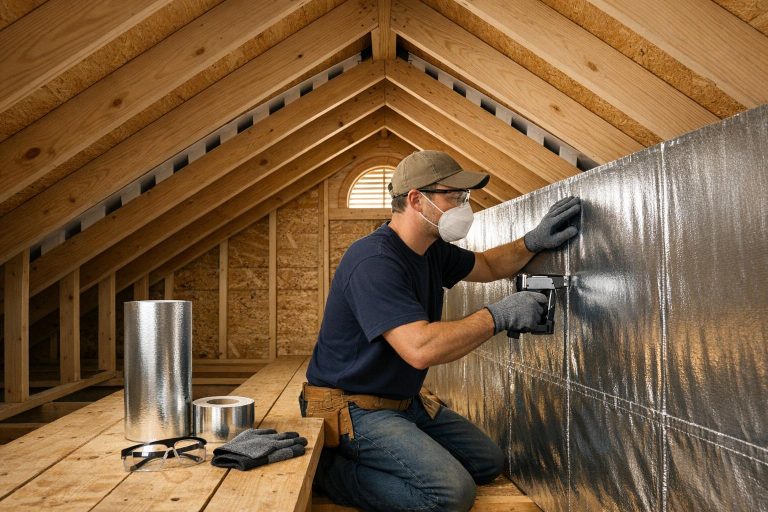
Sealing and insulating your ductwork can boost your HVAC system’s efficiency by up to 20%. For sealing, duct mastic is your best bet – it’s long-lasting and creates a flexible, airtight seal. For gaps larger than 1/4 inch, use web-type drywall tape as a bridge before applying the mastic. If you prefer tape, stick with UL-listed foil tape or butyl tape, as standard duct tape isn’t reliable for long-term fixes.
For ducts in unconditioned spaces like attics or crawlspaces, wrap them in fiberglass insulation after sealing to minimize thermal loss. If the leaks are in hard-to-reach areas behind walls or ceilings, professionals can use aerosol-based sealants to coat the inside of the ducts. And for rooms with insufficient airflow, installing jumper ducts or trimming doors can help balance the pressure throughout your home.
Safety tip: If your basement has fuel-burning appliances, always install a carbon monoxide detector before sealing ducts. This ensures you’re alerted to any backdrafting or dangerous CO levels. For expert assistance, reach out to Envirosmart Solution for professional duct sealing and insulation to help lower your energy bills and improve efficiency.
5. Increased HVAC Wear and Shorter Equipment Lifespan
Impact on Energy Efficiency and Heating/Cooling Costs
When your home lacks proper insulation, your HVAC system ends up working overtime. Heat loss during winter or heat gain in summer forces the system to cycle more frequently just to keep your home at a comfortable temperature. As the U.S. Department of Energy points out:
"To maintain comfort, the heat lost in the winter must be replaced by your heating system and the heat gained in the summer must be removed by your cooling system. Properly insulating your home will decrease this heat flow."
This nonstop cycling wears down critical components like the compressor and blower motor, increasing the risk of breakdowns and expensive repairs. On top of that, you’ll see rising energy bills and a shorter lifespan for your HVAC system. Over time, these issues become more noticeable through specific performance problems.
Common Warning Signs Homeowners Can Identify
Your HVAC system often gives you clues when it’s overworked due to poor insulation. Pay attention to signs like higher-than-usual utility bills, uneven temperatures across rooms, frequent system cycling, cold floors during winter, or even ice dams forming on your roof. These symptoms often point to air leaks and inadequate insulation, which cause your system to struggle with rapid temperature fluctuations.
Recommended Solutions or Upgrades
To reduce strain on your HVAC system, improving insulation is a smart move. Start with your attic by sealing air leaks and adding insulation to meet recommended R-values (for northern climates, this usually means R-49 to R-60). According to estimates, sealing air leaks and upgrading insulation in attics and crawl spaces can save homeowners around 15% on heating and cooling costs annually.
Don’t overlook other problem areas like basement rim joists and crawlspace floors, which are common culprits for heat transfer. If you live in a warmer climate, installing radiant barriers can help by reflecting heat away from your home, easing the load on your air conditioner. With nearly 90% of U.S. homes under-insulated, there’s significant potential for improvement in most households.
For more comprehensive solutions, professional services can make a big difference. Envirosmart Solution offers insulation upgrades and maintenance plans designed to extend your HVAC system’s lifespan. Their FURNACE CARE™ program ($199 annually) includes heat exchanger cleaning and system checks, while the SMART GOLD™ package ($699 annually) adds attic and crawl space inspections to address insulation issues before they lead to costly equipment damage.
Home Insulation Tips for Lower Energy Bills
Comparison Table
Here’s a quick breakdown of five major areas where poor insulation can drive up energy costs:
| Problem Area | How It Wastes Energy | Warning Signs | Recommended Fixes |
|---|---|---|---|
| Attic & Roof | Heat escapes through the ceiling in winter, while summer heat raises indoor temps. | Ice dams on the roof, drafty rooms, or temperature inconsistencies on the upper floor. | Seal air leaks with foam or caulk; add loose-fill or batt insulation to achieve R-30+. |
| Walls, Floors & Crawl Spaces | Cold air seeps in through uninsulated areas, and heat escapes via thermal bridging. | Cold walls, persistent drafts, uneven room temperatures, or cold floors during winter. | Use dense-pack blow-in insulation for walls. Insulate rim joists and seal crawl space areas. |
| HVAC System (Overuse) | Poor insulation forces longer HVAC cycles to regulate indoor temperatures. | Frequent cycling, difficulty maintaining comfort during extreme weather, or high energy bills. | Reduce HVAC strain by sealing air leaks and improving insulation throughout your home. |
| Ductwork | Conditioned air escapes through cracks or loses efficiency in uninsulated ducts. | High utility bills, dust or odors near ducts, or inconsistent comfort levels in rooms. | Seal joints with mastic or foil tape, and insulate ducts in unconditioned spaces with fiberglass. |
| Windows & Doors | Gaps around frames let conditioned air out and outside air in. | Drafts, rattling panes, visible gaps, or breezy spots near closed windows and doors. | Apply weatherstripping, caulk around stationary trim, or use window film/plastic covers. |
Conclusion
Did you know that poor insulation can lead to wasted energy, higher utility bills, and an overworked HVAC system? By tackling common culprits like heat loss through the attic, sealing air leaks in walls and crawl spaces, fixing leaky ductwork, and minimizing unnecessary HVAC cycling, you could save around 15% on heating and cooling costs – equivalent to about 11% of your total annual energy expenses.
Beyond the financial perks, proper insulation improves your home’s overall performance. It creates a cozier, more comfortable living space and helps your HVAC system last longer by reducing the strain caused by constant cycling. With nearly 90% of U.S. homes under-insulated, there’s a significant opportunity for many households to make impactful improvements.
To maximize savings, focus on sealing air leaks and ensuring your insulation meets the standards for your climate zone. Professional assessments are a smart move – they can identify hidden leaks and insulation gaps that might otherwise go unnoticed.
If you’re looking for expert help, Envirosmart Solution offers detailed inspections to locate insulation gaps, determine the ideal R-values for your area, and provide professional installation services. Reach out to Envirosmart Solution today for a comprehensive whole-house energy assessment and start making your home more energy-efficient!
FAQs
How can I tell if my home’s insulation isn’t doing its job?
If your heating or cooling system never seems to take a break, your energy bills are climbing higher than usual, or certain rooms in your home are noticeably too hot or too cold, you could be dealing with insufficient insulation. Other telltale signs include drafts near windows, doors, or outlets, chilly floors during the winter, or even ice dams forming along your roofline. You might also experience uneven temperatures throughout your home, leaving it feeling uncomfortable overall.
A simple DIY inspection can help you pinpoint these problems. Start by feeling for cold spots on walls, ceilings, or in the attic – these could signal areas with missing or ineffective insulation. Check the depth of your attic insulation and compare it to the recommended R-value for your area. Look closely for visible gaps or cracks around joists, rim boards, and where walls meet floors. If you spot multiple red flags, upgrading your insulation or sealing those gaps could reduce energy costs and make your home much more comfortable.
What are the best ways to improve home insulation without breaking the bank?
Improving your home’s insulation doesn’t have to break the bank. A good starting point is air-sealing, which helps block drafts and prevent heat loss. Simple steps like applying weather-stripping to doors, caulking gaps around windows, and sealing cracks near outlets, pipes, or recessed lighting can make a noticeable difference. These quick fixes can lower your annual energy bills by about 10% while keeping your home more comfortable throughout the year.
For even bigger savings, focus on heat-loss hotspots like the attic, crawl space, and basement rim joists. These areas are notorious for energy loss. Adding insulation – whether it’s fiberglass batts, blown-in cellulose, or spray foam – can help your home reach the recommended R-value for your climate. Best of all, this investment often pays for itself within a few years, cutting heating and cooling costs by as much as 15%.
Not sure where to begin? Start by identifying the most obvious trouble spots, such as drafty rooms or unusually high energy bills. Even without a professional energy audit, sealing visible leaks and upgrading attic insulation are cost-effective ways to improve energy efficiency and save money.
How does poor insulation shorten the lifespan of my HVAC system?
Poor insulation forces your HVAC system to work overtime just to keep your home at a comfortable temperature. When heat escapes through poorly insulated walls, ceilings, or the attic, your system has to run longer and cycle on and off more often. This constant effort puts extra stress on key parts like compressors, motors, and coils, which can shave several years off the system’s lifespan.
On top of that, the added strain can cause components to overheat and lubricants to degrade faster, meaning you’ll likely face more frequent repairs and the need for a replacement sooner than expected. Upgrading your insulation or sealing gaps can ease this burden, helping your HVAC system run more efficiently and last longer.