
Dirty air ducts can cost you hundreds of dollars a year in wasted energy. When dust, pet hair, and debris clog your HVAC system, it has to work harder to heat or cool your home. This lowers efficiency, increases wear on components, and drives up your utility bills.
Key Takeaways:
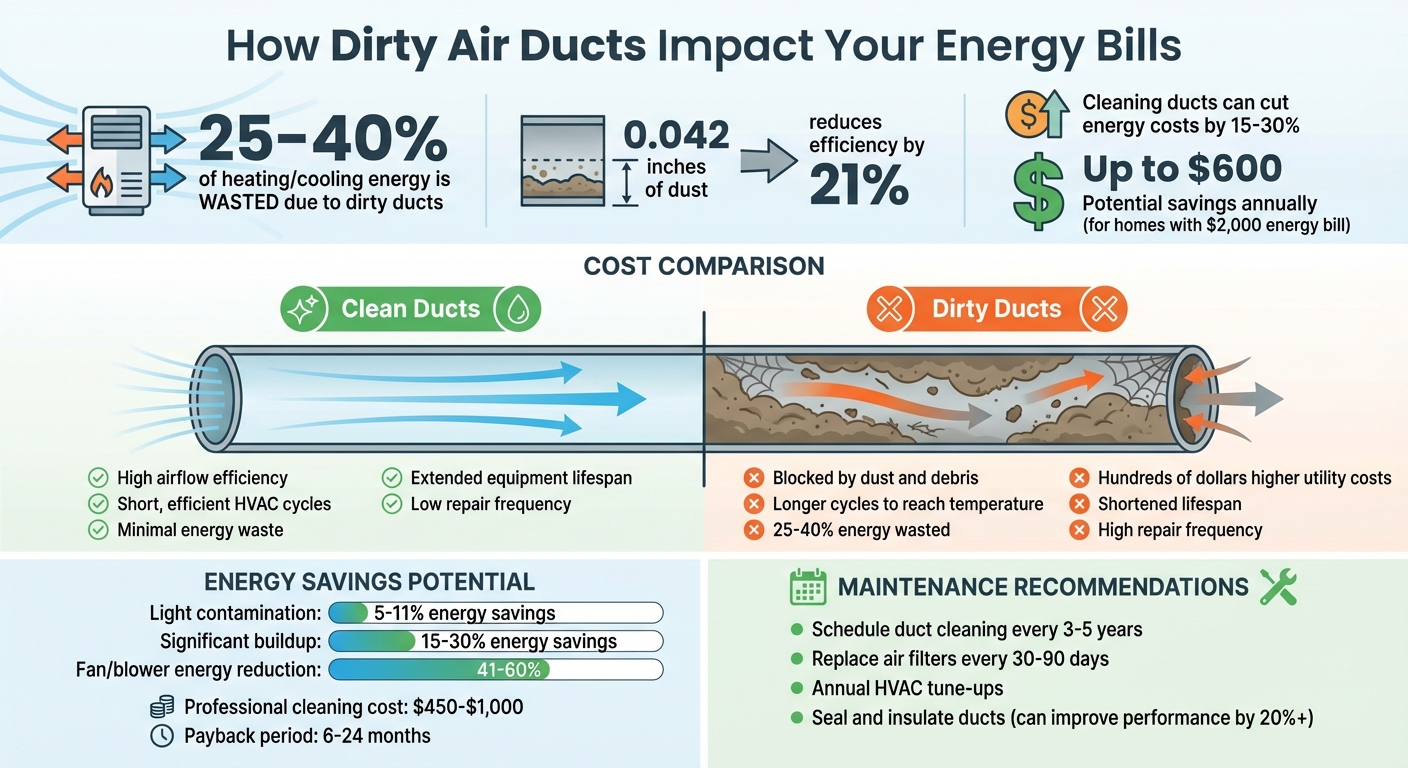
- 25%–40% of energy used for heating/cooling is wasted due to dirty or poorly maintained ducts.
- Just 0.042 inches of dust on a heating coil can reduce efficiency by 21%.
- Cleaning ducts can cut energy costs by 15%–30%, saving up to $600 annually for homes with a $2,000 energy bill.
- Professional duct cleaning costs $450–$1,000 but often pays for itself within 6–24 months.
Regular maintenance, like cleaning ducts every 3–5 years and replacing air filters every 30–90 days, can improve airflow, extend HVAC lifespan, and lower your bills. Don’t let dirty ducts drain your wallet – take action today.
How Dirty Air Ducts Impact Energy Bills and HVAC Efficiency
How Much Does Air Duct Cleaning Cost? – PartsHnC
How Dirty Ducts Increase Energy Consumption
When dust, pet dander, and pollen build up in your ductwork, they create resistance that forces your HVAC system to use more energy. Think of it like trying to breathe through a straw – restricted airflow means your system has to work much harder.
The National Air Duct Cleaners Association puts it like this:
"Your home’s source of heat and air is the lungs of your house, taking air in and breathing it back out through a series of air duct pathways".
When those pathways are clogged, your system struggles to function efficiently. In fact, contaminants are re-circulated through your HVAC system 5 to 7 times a day, meaning that buildup can occur much faster than most people realize.
Dirty ducts force your HVAC system to go into overdrive, leading to wasted energy and strain on various components.
Restricted Airflow and Longer HVAC Cycles
Dust and debris narrow the pathways in your ductwork, reducing the amount of air that reaches your living spaces. To compensate, your system runs longer cycles to meet the temperature set on your thermostat. This not only wastes energy but also causes uneven temperatures throughout your home.
Energy Star highlights this issue:
"A dirty filter will slow down air flow and make the system work harder to keep you warm or cool – wasting energy".
This principle applies to your entire duct system, not just the filter. When airflow is restricted, your HVAC system has to work overtime, which translates to higher utility bills.
Increased Wear on HVAC Components
Dust and debris don’t just stay in the ducts – they also settle on critical HVAC components like blower motors, evaporator coils, and heat exchangers. When these parts are coated in grime, they face increased friction and electrical demand. For example, a blower motor may require 5% to 15% more electricity just to push air through dirty coils and clogged pathways.
This additional strain accelerates wear and tear. Motors run hotter, bearings degrade faster, and components operate under stress, which shortens the lifespan of your HVAC system. The inefficiency doesn’t stop there – it also hits your wallet with higher electricity bills.
| HVAC Component | Energy Efficiency Impact When Clean |
|---|---|
| Evaporator Coils | 15–30% improvement in heat transfer efficiency |
| Blower Motor | 5–15% reduction in electrical consumption |
| Heat Exchanger | 10–25% improvement in heating efficiency |
| Supply/Return Registers | Improved airflow dynamics and reduced resistance |
Impact on Temperature Regulation and Insulation
Dust acts as an unintended insulator when it coats heating and cooling coils. Even a thin layer can disrupt your system’s ability to transfer heat effectively. This means the air passing over dirty coils isn’t heated or cooled as efficiently, forcing your system to work longer to condition the same amount of air.
The combined effects of restricted airflow, component strain, and reduced heat transfer can increase energy consumption by 15% or more. For systems with heavy contamination, the energy drain can reach 30% or higher, potentially costing you hundreds of dollars in wasted energy each year. These inefficiencies compound over time, driving up your utility bills and putting more stress on your HVAC system.
The Financial Impact of Dirty Ducts on Energy Bills
According to the U.S. Department of Energy (DOE), 25%–40% of heating and cooling energy is wasted in many homes. For a household with a $2,000 annual energy bill, that’s an extra $500–$800 lost each year. On top of that, poorly maintained or leaky ductwork can add hundreds more to annual costs.
Clean vs. Dirty Duct Cost Comparison
The difference between clean and dirty ducts isn’t just about airflow – it’s about how efficiently your HVAC system runs, how often it needs repairs, and how much you pay in energy bills.
| Metric | Clean Duct System | Dirty Duct System |
|---|---|---|
| Airflow Efficiency | High; smooth air circulation | Blocked by dust and debris |
| HVAC Runtime | Short, efficient cycles | Longer cycles to meet temperature settings |
| Energy Waste | Minimal | 25%–40% wasted |
| Annual Utility Costs | Standard/baseline | Hundreds of dollars higher |
| Equipment Lifespan | Extended due to reduced strain | Shortened by excessive wear |
| Repair Frequency | Low with routine maintenance | High due to increased strain and failures |
Professional duct cleaning typically costs $450 to $1,000, but the benefits can outweigh the expense. Homeowners often see a 10% to 15% improvement in HVAC efficiency after cleaning. That means the service can pay for itself within a year or two through lower energy bills. Over time, the savings only grow as inefficiencies are eliminated.
Long-Term Cost Implications
Neglecting duct cleaning doesn’t just affect monthly bills – it adds up to bigger expenses over the years. As dust and debris accumulate, your HVAC system has to work harder, leading to faster wear and tear. This not only shortens the system’s lifespan but also increases the likelihood of costly repairs or premature replacement.
The U.S. DOE emphasizes the importance of proper maintenance:
"Homeowners can cut their energy bill by as much as 20% to 30% by simply doing proper HVAC system maintenance, including air duct cleaning."
For a household spending $2,000 annually on energy, this translates to $400 to $600 in yearly savings. Over a typical HVAC system’s 15-year lifespan, that’s a total of $6,000 to $9,000 saved – money that would otherwise be wasted on inefficiency.
sbb-itb-8db64ac
Solutions: Professional Air Duct Cleaning and Maintenance
Dirty air ducts can drain energy and inflate costs, but professional cleaning offers an effective solution.
Improved Airflow and Energy Efficiency
When professionals clean your ducts, they remove dust and debris that force your HVAC system to work harder than necessary. This restores proper airflow, reduces energy use, and helps your system operate more efficiently. By clearing away accumulated contaminants, your HVAC no longer has to push air through layers of dirt, making it easier to heat or cool your home.
The result? Shorter heating and cooling cycles. Your system reaches the desired temperature faster, runs less often, and lowers your monthly energy bills. Clean mechanical components also mean less strain on your equipment, which can extend its lifespan.
For homes with light duct contamination, energy savings typically range from 5% to 11%. However, systems with significant buildup can cut energy use by 15% to 30%. A January 2025 study revealed even greater potential, showing that regular HVAC cleaning can reduce fan and blower energy consumption by 41% to 60%. While professional cleaning services cost between $450 and $1,000, most homeowners recover this expense within 6 to 24 months thanks to lower utility bills.
Health and Comfort Benefits
Beyond energy efficiency, professional duct cleaning also improves indoor comfort and air quality. Allergens like pollen, dust mites, mold spores, and pet dander often accumulate in ductwork, contributing to sneezing, coughing, and other respiratory issues. Removing these contaminants can make a noticeable difference for allergy sufferers.
Clean ducts also help eliminate uneven airflow that causes hot and cold spots, ensuring consistent temperatures throughout your home. You’ll likely notice less dust on furniture too, as fewer particles are blown out of registers. Additionally, musty odors often disappear after cleaning, as mold, mildew, and pet dander are removed from the system.
Jodi Araujo, CEO of NADCA, emphasized the dual benefits of routine cleaning:
"This study represents a significant step forward in understanding the benefits of energy savings and enhanced indoor air quality through routine HVAC cleaning. It highlights the importance of maintaining clean and efficient systems for the health of both buildings and their occupants."
Envirosmart Solution‘s Air Duct Cleaning Services

Envirosmart Solution offers comprehensive air duct cleaning services across the Pacific Northwest, adhering to NADCA industry standards. Their technicians clean all components of your system, including supply and return ducts, registers, grilles, evaporator coils, and blower motors, to prevent rapid re-contamination.
The SMART DUCTS™ annual maintenance package ($199) includes deep cleaning, a camera inspection, disinfectant treatment, filter maintenance, and priority scheduling. For a more extensive service, the SMART GOLD™ package ($699) combines air duct cleaning with furnace servicing, dryer vent cleaning, and attic and crawl space inspections, along with a 20% discount on additional services.
Envirosmart Solution also helps property owners take advantage of rebates and incentives for energy efficiency upgrades. By bundling duct cleaning with other services like insulation improvements or HVAC repairs, you can maximize financial incentives and reduce out-of-pocket costs – all in one convenient process.
Preventive Measures to Maintain Clean Ducts
Once you’ve had your ducts professionally cleaned, keeping them in good condition requires regular upkeep. Consistent maintenance not only helps prevent debris buildup but also protects your energy savings.
Regular Maintenance and Cleaning Schedules
Check your air filters monthly, especially during high-usage seasons. A clogged filter restricts airflow, forcing your system to work harder and use more energy. Replace filters every three months – or sooner if they appear dirty. Opt for the highest efficiency filter recommended by the manufacturer to ensure effective filtration without compromising airflow.
An annual HVAC tune-up is crucial for maintaining system efficiency and spotting potential issues early. For fuel-burning furnaces, schedule inspections before each heating season to ensure safety and optimal performance. Between professional cleanings, vacuum registers to remove dust, and ensure vents aren’t blocked by furniture.
Seal and insulate ducts in unconditioned spaces like attics or crawl spaces. In many homes, 20% to 30% of the air moving through ductwork is lost due to leaks or poor connections. Properly sealed ducts not only improve efficiency but can also enhance heating and cooling performance by 20% or more.
These simple steps go a long way in maintaining a clean and efficient HVAC system.
Complete Home Care with SMART GOLD™
For a more streamlined approach to home maintenance, consider an all-inclusive service package. Envirosmart Solution offers the SMART GOLD™ package for $699, which provides a comprehensive annual maintenance plan. This package covers everything from air duct cleaning to furnace servicing, dryer vent cleaning, and inspections of attics and crawl spaces.
The service includes deep duct cleaning with camera inspections, heat exchanger cleaning, burner checks, insulation assessments, and rodent inspections – all in one visit. Plus, it comes with perks like priority scheduling and a 20% discount on additional services.
Using Rebates and Incentives for Energy Upgrades
You can also cut costs by combining maintenance with eligible energy efficiency upgrades. While duct cleaning alone isn’t typically covered by federal rebates, pairing it with duct sealing or insulation improvements can unlock significant savings. For example, the Home Electrification and Appliances Rebate (HEAR) program offers up to $1,600 for insulation, air sealing, and ventilation upgrades for qualifying households.
Envirosmart Solution simplifies this process by bundling duct cleaning with eligible upgrades like air sealing or insulation installation. They even handle the paperwork to ensure compliance with rebate requirements, making it easy for homeowners to take advantage of these incentives. For households earning less than 150% of the area median income, the HEAR program can cover 50% to 100% of the project costs.
Conclusion
Dirty air ducts can drive up your energy bills significantly. When dust and debris clog your ductwork, your HVAC system has to work harder and run longer, using more energy. In fact, it’s estimated that 25%–40% of the energy used to heat or cool your home is wasted due to contaminants and system inefficiencies. For an average household, this could mean hundreds of dollars lost every year on avoidable energy expenses.
Here’s the bottom line: Professional duct cleaning can cut energy costs by 15%–30%. Most homeowners see the cleaning pay for itself within 6 to 24 months. Plus, beyond saving money, clean ducts mean better indoor air quality and a longer lifespan for your HVAC system.
To keep your system running efficiently, aim to schedule duct cleaning every 3–5 years, replace filters every 30–90 days, and seal any leaks in your ductwork promptly. For those in the Pacific Northwest, Envirosmart Solution offers thorough air duct cleaning services that address all HVAC components – from evaporator coils to heat exchangers – helping you achieve the best results.
Take action today for lower energy bills, a more comfortable home, and long-term efficiency.
FAQs
How often should you clean your air ducts to reduce energy costs?
To keep your energy bills manageable and ensure a cozy home environment, it’s a good idea to clean your air ducts every 3 to 5 years. Over time, dust, dirt, and other debris can accumulate, making your HVAC system work overtime and consume more energy.
That said, some situations call for more frequent cleanings. If you have pets, recently completed home renovations, or live with someone who has allergies or respiratory issues, you might need to clean your ducts sooner. Regular maintenance not only helps your system run more efficiently but also boosts indoor air quality and can even extend the life of your HVAC system.
What are the health benefits of cleaning your air ducts?
Cleaning your air ducts plays a key role in improving indoor air quality, which has a direct impact on your overall well-being. Over time, dust, mold, pet dander, and other pollutants can build up in your ductwork, circulating through your home and potentially worsening allergies, asthma, or other respiratory issues. Clearing out these contaminants allows you to enjoy cleaner air and reduces your exposure to irritants.
If there’s visible mold or signs of water damage in your ducts, addressing these issues is essential to limit the health risks linked to microbial growth and airborne pollutants. Regularly cleaning your air ducts helps create a healthier and more comfortable space for you and your family.
Can cleaning air ducts help my HVAC system last longer?
Regular air duct cleaning plays a key role in helping your HVAC system last longer. When ducts are clean, airflow improves, putting less strain on the system and allowing it to run more efficiently. This reduced strain can mean fewer breakdowns and lower repair bills in the long run.
Clean ducts also stop dust, debris, and allergens from piling up, which can otherwise hurt the system’s performance. A properly maintained HVAC system doesn’t just have a longer lifespan – it also keeps your home more comfortable while using energy more effectively.