
Looking to save on energy bills and improve your home’s comfort? Radiant barriers and attic insulation can help. With federal tax credits and local rebates, you can significantly reduce project costs. Here’s what you need to know:
- Federal Tax Credit: Claim 30% of material costs (up to $1,200 annually). Applies to primary residences only. Labor costs are excluded.
- Puget Sound Energy (PSE) Rebates: Get up to $1.75 per square foot for attic insulation, with a maximum rebate of $3,500. Additional bonuses available for combining upgrades.
- How to Qualify: Eligibility depends on insulation levels, contractor use (for PSE rebates), and compliance with specific standards.
1. Federal Energy Efficient Home Improvement Credit
Eligibility Requirements
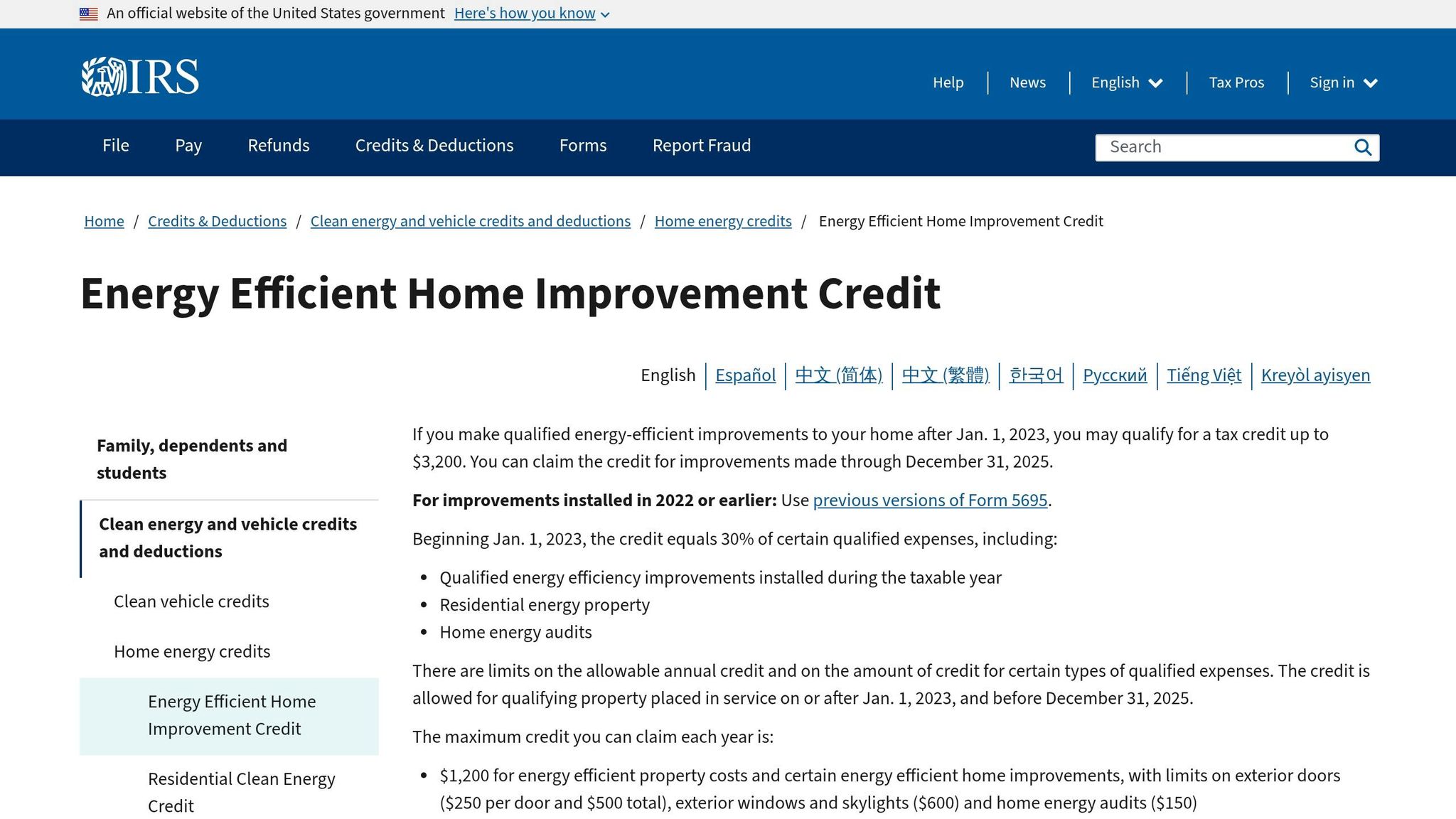
If you’re considering if a radiant barrier is worth it, understanding the Federal Energy Efficient Home Improvement Credit can help you cut costs. Radiant barriers fall under the category of "insulation and air sealing materials or systems". To qualify, your home must be an existing residence in the United States that serves as your primary dwelling. New construction and rental properties you don’t personally occupy are not eligible. For installations in 2025, the radiant barrier must meet the 2021 International Energy Conservation Code (IECC) standards. The product also needs to be new, have a lifespan of at least five years, and be designed to reduce heat transfer. Always confirm with the manufacturer that the product meets these criteria. Keep in mind, labor costs are not included in the credit. If your home is partially used for business, you can claim the full credit if business use is 20% or less. Otherwise, the credit must be prorated based on non-business use.
Rebate Value and Savings Potential
This credit allows you to claim 30% of material costs, with a yearly cap of $1,200 for building envelope improvements. For example, if you spend $4,000, the maximum credit you can claim is $1,200. The credit is non-refundable, meaning it can reduce your tax bill to zero but won’t result in a refund. The good news? There’s no lifetime limit. You can claim up to $1,200 each year through December 31, 2025, for qualifying improvements. By spreading your projects over several years, you can maximize the total savings.
Ease of Application and Support
Applying for this credit is simple. Use IRS Form 5695, Residential Energy Credits (Part II), when filing your federal tax return for the year you complete the installation. Be sure to keep all purchase and installation records in case of an audit. Unlike many other energy-efficient products, radiant barriers and similar insulation materials won’t require a Qualified Manufacturer Identification Number (QMID) starting in 2025. For extra help, you can use the Department of Energy‘s Tax Credit Product Lookup Tool or refer to IRS guides. Just remember to file Form 5695 for the relevant tax year and hold onto all your documentation for future reference.
sbb-itb-8db64ac
2. Puget Sound Energy (PSE) Rebates
Eligibility Requirements
Living in the Pacific Northwest means energy efficiency is more than just a buzzword – it’s a necessity. Puget Sound Energy (PSE) rebates can significantly cut costs for radiant barrier installations, provided they’re part of a full attic weatherization project (including insulation and air sealing). To qualify, you must be a residential PSE customer using electricity or natural gas as your main heating source. Eligible properties include single-family homes (with four units or fewer) or manufactured/mobile homes. For site-built homes, they must have been permitted or constructed in 1989 or earlier.
Keep in mind, all work must be done by a PSE Recommended Energy Professional (REP) or a PSE Trade Ally. DIY installations or contractors outside PSE’s network won’t meet the requirements. If you’re aiming for the top rebate of $1.75 per square foot for attic insulation, your current insulation must be R-11 or less (roughly 0 to 4 inches). Not sure if you qualify? PSE Energy Advisors can confirm your eligibility and help you find approved contractors.
Rebate Value and Savings Potential
PSE’s weatherization rebates are designed to make energy-saving upgrades more affordable. For instance, upgrading attic insulation from R-11 or less to R-49 qualifies for a rebate of $1.75 per square foot, up to $3,500. Add attic air sealing to the mix, and you can earn an extra $0.20 per square foot (up to $400). Starting in 2026, a 2,000-square-foot cap will apply to each insulated area.
The savings stack up even more when you combine multiple weatherization measures. Adding three qualifying upgrades earns you a $350 bonus, while four measures bump that bonus up to $500. For example, pairing attic insulation with air sealing, duct sealing, and floor insulation not only maximizes rebates but also boosts energy efficiency. In some cases, attic insulation rebates can cover as much as 65% of the total project cost.
Ease of Application and Support
PSE makes the rebate process simple by offering instant discounts applied directly to your final invoice. This means no extra forms or waiting for a check in the mail. As PSE puts it:
"Your contractor will deduct the instant rebate amount from your invoice, reducing your out-of-pocket cost."
To get started, gather estimates from PSE-recommended contractors. Compare their product details, warranties, and project timelines to find the best fit. If your household qualifies for the Efficiency Boost program based on income, you could be eligible for even higher rebates. According to PSE, about 50% of their customers meet the criteria for these enhanced rebates. To learn more or check your eligibility, visit the PSE website or contact an Energy Advisor at 1-800-562-1482 (Monday–Friday, 8 a.m. to 5 p.m.).
3. Envirosmart Solution Services
Eligibility Requirements
Envirosmart Solution offers expert support for Pacific Northwest energy rebate programs, ensuring your home meets all necessary qualifications. As a PSE Trade Ally, they guarantee that every installation aligns with the technical standards required for local, state, and federal incentives. To qualify, you need to be a current PSE residential customer using electric or natural gas as your primary heating source. Additionally, you must own a single-family home (up to four units) or a manufactured home.
Before starting any work, Envirosmart Solution evaluates your home’s current conditions, such as measuring insulation R-values, to confirm eligibility. This upfront verification prevents unexpected issues and ensures you qualify for the maximum rebates available.
Rebate Value and Savings Potential
Once your eligibility is confirmed, Envirosmart Solution helps you unlock the highest possible rebate values. They specialize in combining various incentives from government programs, local initiatives, and vendors to significantly reduce your costs. By incorporating their attic weatherization services – like radiant barrier installation, insulation upgrades, and air sealing – you can achieve impressive savings.
Here’s a breakdown of potential rebates:
- Attic insulation: $1.25 to $1.50 per square foot
- Wall insulation: $1.25 to $2.25 per square foot
- Floor insulation: $0.75 to $2.00 per square foot
These rebates apply to projects that include radiant barrier installations alongside other weatherization improvements. Considering that around 90% of homes are under-insulated, most Pacific Northwest homeowners can benefit from these programs while improving their home’s energy efficiency.
Ease of Application and Support
Envirosmart Solution takes the hassle out of the application process by handling all the necessary paperwork for you. As a certified contractor, they manage everything from submitting incentive applications to providing supporting documents like invoices and technical specifications.
Rebates are applied as instant discounts on your invoice, so you pay less upfront – no waiting around for refunds. For income-qualified programs, they also assist with submitting income verification forms, ensuring you access every available rebate. From the initial assessment to the final installation, Envirosmart Solution simplifies the entire process, making sure you capture every dollar of savings possible.
How to Get a Rebate on Insulation
Advantages and Disadvantages
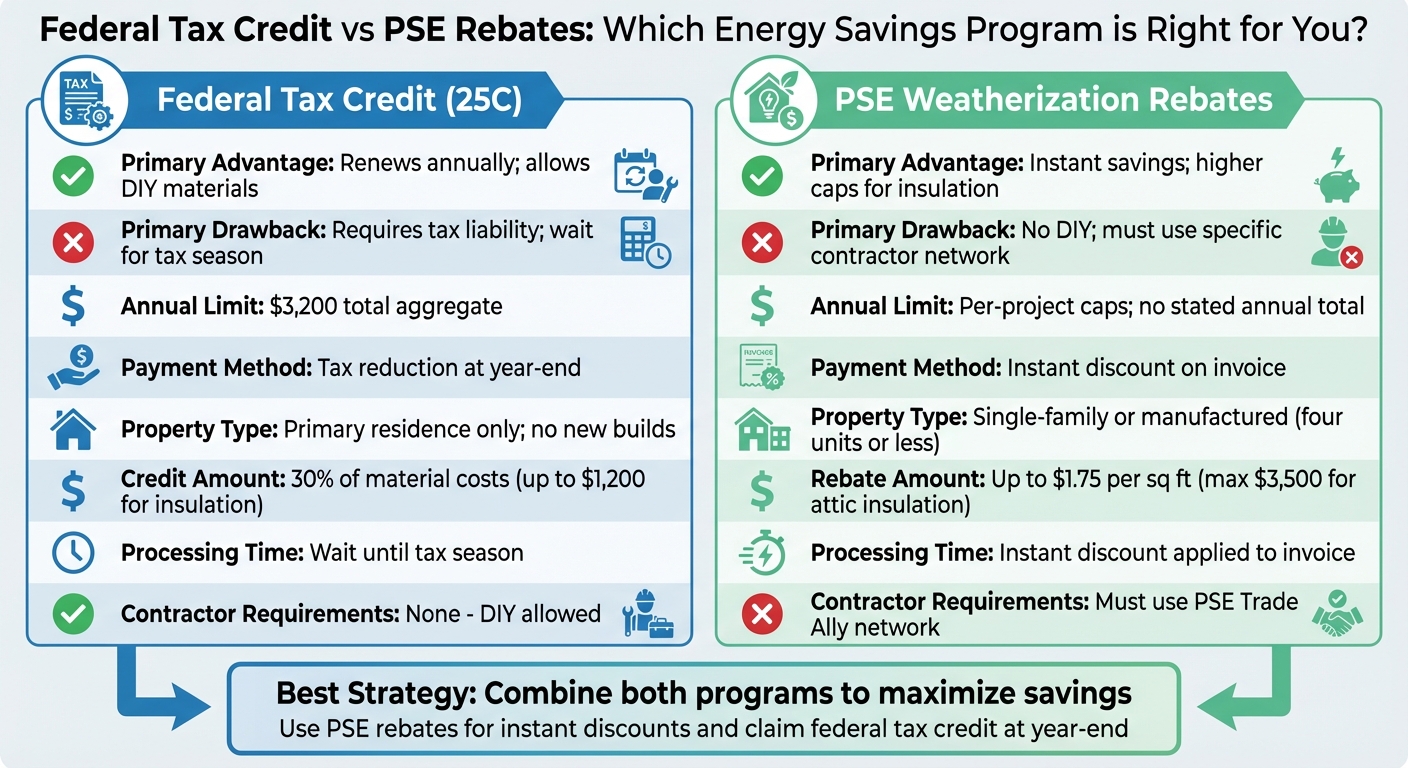
Federal Tax Credit vs PSE Rebates for Radiant Barriers Comparison
When weighing your options for energy-efficient upgrades, such as ductless heat pump installation, it’s essential to understand the pros and cons of each program, as they can impact your savings and project timelines in different ways.
The Federal Energy Efficient Home Improvement Credit offers a tax benefit of 30% of material costs, up to a yearly cap of $1,200 for insulation. However, this credit is nonrefundable, meaning it can reduce your tax bill to zero but won’t result in a refund beyond that. Plus, you’ll have to wait until tax season to claim it.
On the other hand, PSE rebates provide immediate savings, applied directly to your contractor’s invoice. These rebates can go as high as $3,500 for attic insulation, calculated at $1.75 per square foot. The catch? You must work with a contractor from PSE’s approved Trade Ally network, and your attic’s existing insulation must be R-11 or less to qualify for the highest rebate rate.
Here’s a quick comparison of the two programs:
| Feature | Federal Tax Credit (25C) | PSE Weatherization Rebates |
|---|---|---|
| Primary Advantage | Renews annually; allows DIY materials | Instant savings; higher caps for insulation |
| Primary Drawback | Requires tax liability; wait for tax season | No DIY; must use specific contractor network |
| Annual Limit | $3,200 total aggregate | Per-project caps; no stated annual total |
| Payment Method | Tax reduction at year-end | Instant discount on invoice |
| Property Type | Primary residence only; no new builds | Single-family or manufactured (four units or less) |
While federal tax credits allow for DIY projects and renew annually, they require you to wait for tax season and depend on your tax liability. PSE rebates, meanwhile, offer immediate discounts but limit your contractor choices and don’t allow for DIY installations.
Keep in mind that PSE rebates also come with a few additional considerations. Since they require certified Trade Ally contractors, you’re guaranteed professional installation, but your pool of contractors is limited. Rebate funds can also run out before your project is completed, so it’s crucial to submit your application within 60 days of installation. Processing rebates typically takes six to eight weeks.
To avoid surprises, check your attic’s current insulation R-value before starting. If it already exceeds program thresholds like R-18, you may not qualify for certain rebates. This step is especially important in the Pacific Northwest, where the unique climate makes proper insulation a key factor in maximizing energy efficiency.
Conclusion
Radiant barriers and proper insulation can lead to impressive savings, thanks to federal tax credits and local utility rebates. For instance, the Federal Energy Efficient Home Improvement Credit provides a 30% tax credit on materials, capped at $1,200 annually. On top of that, local utility programs offer cash rebates ranging from $0.75 to $2.25 per square foot for attic insulation upgrades. Homeowners who meet income qualifications may be eligible for even larger rebates.
However, taking full advantage of these savings requires careful attention to eligibility criteria. To maximize benefits, homeowners need to confirm utility program requirements, assess current insulation R-values, and ensure compliance with the necessary R-value standards. Combining federal tax credits with local rebates can result in substantial financial relief.
Envirosmart Solution simplifies this process by managing every step of your radiant barrier and insulation project. As a certified Trade Ally for multiple utility programs, they handle the technical details, from ensuring compliance to submitting paperwork and verifying eligibility. Their expertise in combining federal and local incentives allows you to enjoy a more energy-efficient home while they work to maximize your savings.
FAQs
Can I combine the federal tax credit with PSE rebates?
Yes, you can take advantage of both the federal tax credit and PSE rebates for energy-efficient home upgrades. These programs complement each other, allowing you to save more on eligible improvements while making your home more efficient.
How do I find out my attic’s current R-value?
To figure out your attic’s R-value, start by measuring the insulation’s thickness using a ruler or tape measure. Next, identify the type of insulation you have – common options include fiberglass or cellulose. Once you know the type, multiply the thickness by the material’s R-value per inch. For instance, if you have 12 inches of cellulose insulation, which has an R-value of 3.5 per inch, your total R-value would be 42. If you want an accurate assessment or advice on potential upgrades, it’s a good idea to consult a professional.
What receipts and documents should I keep for rebates and tax credits?
To make the most of rebates and tax credits, it’s crucial to keep thorough records of your home energy improvements. Hold onto receipts, invoices, and proof of payment for upgrades such as insulation, energy-efficient windows, HVAC systems, or solar panels. Also, don’t forget to save any certification documents or product identification numbers (PINs) needed to confirm eligibility. These records will play a key role when filing your taxes or applying for incentives, ensuring you can back up your claims without any hassle.